By
By Luoyang’s Enduring Buddhist Legacy: Beyond Sacred Structures
How did Buddhism’s profound influence in Luoyang extend far beyond the construction of its numerous temples, deeply embedding itself into the city’s cultural, intellectual, and economic fabric? This question often arises when exploring the historical significance of Luoyang, a city that served as a capital for multiple Chinese dynasties and became a pivotal hub for Buddhist expansion. Its transformation into a major Buddhist center was not merely an architectural feat but a complex interplay of linguistic, political, and social forces that reshaped urban life and intellectual thought for centuries. Understanding these broader impacts reveals a more complete picture of Luoyang’s historical trajectory.
The Transformative Roles of Translation, Imperial Patronage, and Pilgrimage in Luoyang’s Buddhist Ascendancy
The rise of Luoyang as a preeminent Buddhist center was driven by three distinct yet interconnected forces: the systematic translation of Buddhist scriptures, unwavering imperial patronage, and the constant flow of pilgrims. Each played a unique role, shaping not only the religious landscape but also the city’s broader development. Getting these elements right was crucial for Buddhism’s establishment; misunderstanding their practical effects can lead to an incomplete view of Luoyang’s historical dynamics.
The table below explains the distinct impact of each factor:
| Factor | Primary Role / Meaning | Practical Effects on Luoyang | Impact if Factor Was Weak or Absent |
|---|---|---|---|
| Translation | Converting Sanskrit/Pali Buddhist scriptures into Chinese texts. |
|
Buddhism would remain an esoteric foreign religion, lacking deep textual roots and widespread understanding in China. Luoyang would miss its role as an intellectual capital. |
| Imperial Patronage | Direct financial, political, and moral support from the Chinese emperors and imperial court. |
|
Buddhism would struggle for resources and legitimacy, potentially facing persecution or marginalization. Grand architectural projects and large-scale religious institutions would be impossible. |
| Pilgrimage | The journey of devotees to sacred sites, often involving arduous travel. |
|
Buddhism would remain an elite or localized phenomenon, lacking popular engagement and the economic stimulus of religious tourism. Luoyang would lose its broad spiritual appeal. |
These factors were not isolated but synergistic. Translation efforts required imperial backing for resources and protection, while the newly translated scriptures inspired pilgrims who then, in turn, often sought imperial favor or contributed to the local economy of Luoyang. The city thus evolved into a comprehensive ecosystem for Buddhist flourishing, shaping its identity far beyond its visible temples.
Cultural Integration and Artistic Innovation in Luoyang
The influx of Buddhist thought and practices into Luoyang catalyzed a profound cultural transformation, deeply influencing art, literature, and daily life. This was not merely an adoption of foreign elements but a creative synthesis that gave rise to distinctly Chinese Buddhist forms. The city became a crucible where Indian and Central Asian artistic styles merged with indigenous Chinese aesthetics, leading to an explosion of religious art and a flourishing of new literary genres.
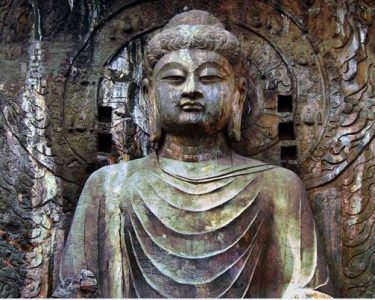
One of the most striking manifestations of this cultural integration is seen in the development of religious art. While the temples themselves housed numerous statues and murals, the impact extended to other mediums and public spaces. The rock-cut cave temples, often located in Luoyang’s vicinity, serve as enduring testaments to this artistic innovation. These sites feature thousands of Buddhist statues carved into cliffs, ranging from colossal Buddhas to intricate bas-reliefs depicting scenes from sutras. These artistic endeavors were monumental in scale and represented a significant investment of resources and skill, reflecting the deep devotion prevalent in Luoyang.
Key Elements of Buddhist Art in Luoyang
- Iconographic Blending: Early Buddhist art in Luoyang showed strong Indian and Gandharan influences, characterized by flowing drapery and idealized forms. Over time, these evolved to incorporate Chinese facial features, garment styles (e.g., broader robes), and narrative elements.
- Narrative Depictions: Murals and carvings frequently depicted Jataka tales (stories of the Buddha’s past lives), scenes from sutras, and portraits of donors. These served not only as devotional objects but also as visual teachings for the illiterate masses.
- Material Innovation: While stone carving was prominent, artists in Luoyang also excelled in bronze casting, clay sculpture, and painting on silk and plaster. The selection of materials often reflected available local resources and artistic traditions.
- Symbolic Motifs: Beyond direct representations of the Buddha and bodhisattvas, Buddhist art incorporated a rich array of symbolic motifs, such as lotuses (purity), dharmachakras (the wheel of dharma), and various auspicious animals, which permeated wider Chinese decorative arts.
- Architectural Harmony: Though not confined to temples, the principles of Buddhist architecture, with its emphasis on symmetry, monumental scale, and integration with the natural landscape, influenced other public structures and garden designs within and around Luoyang.
This artistic flourishing ensured that Buddhist teachings were not only read and heard but also seen and experienced, making them an integral part of the visual and aesthetic culture of Luoyang.
Economic and Urban Development Fueled by Luoyang’s Buddhist Identity
The establishment of Luoyang as a major Buddhist center had profound economic and urban consequences, transforming the city’s infrastructure and commercial landscape. Monasteries, far from being isolated religious enclaves, became significant economic actors and centers of urban activity, influencing trade, land ownership, and the growth of ancillary industries. This economic impetus was a crucial, often overlooked, aspect of Buddhism’s shaping of Luoyang.
The presence of large monastic communities and the constant flow of pilgrims created a sustained demand for goods and services. This included everything from construction materials for temples and stupas to food, lodging, and religious artifacts. Monasteries also acquired vast landholdings through donations, operating farms and workshops that contributed to the local economy. Their role as landowners and employers further integrated them into the city’s economic fabric.
Scenario: Tracing the Economic Footprint of a Pilgrim in Luoyang
Imagine a pilgrim arriving in Luoyang in the 6th century, seeking to visit a renowned monastery and perhaps commission a small offering. This seemingly simple act would trigger a chain of economic activities:
- Transportation: The pilgrim would have paid for transport, whether by cart, boat, or horse, supporting teamsters and stable owners operating along routes leading to Luoyang.
- Lodging and Sustenance: Upon arrival, the pilgrim would need accommodation in an inn or guesthouse and food from local markets, supporting innkeepers, farmers, and merchants.
- Religious Offerings: To make an offering at the monastery, they might purchase incense, candles, flowers, or even commission a small statue or carved plaque from local artisans and craftspeople.
- Guide Services: Navigating a large city like Luoyang and its numerous Buddhist sites might require a local guide, creating opportunities for knowledgeable residents.
- Ancillary Industries: The demand for religious texts would support scribes and papermakers. The need for construction and maintenance of monasteries would employ masons, carpenters, and laborers.
- Trade Networks: The presence of Luoyang as a Buddhist hub attracted merchants from across the Silk Road, dealing in exotic goods, spices, and precious materials often used in temple decoration or as offerings, further boosting the city’s international trade.
This scenario illustrates how the spiritual aspirations of individuals directly translated into tangible economic benefits for Luoyang. The city’s Buddhist identity was thus not just a matter of faith but a powerful engine for its growth and prosperity, intertwining sacred and secular aspects of life.
Luoyang’s Enduring Soft Power: A Hub of Buddhist Thought and Diplomacy
Beyond its internal development, Luoyang exerted significant “soft power” as a center of Buddhist thought, scholarship, and diplomacy. Its reputation as a place where profound Buddhist texts were translated and debated, where enlightened masters resided, and where grand religious ceremonies were held attracted scholars, envoys, and missionaries from across Asia. This intellectual and spiritual magnetism solidified Luoyang’s position as a crucial node in the broader Buddhist world, influencing regions far beyond China’s borders.
The city became a critical point for the transmission of Buddhism to Korea and Japan. Monks and scholars from these nascent Buddhist nations frequently traveled to Luoyang, studying under eminent Chinese masters and returning with scriptures, art, and philosophical insights. These interactions were not merely academic; they often had diplomatic implications, fostering cultural exchange and strengthening political ties between the Chinese court in Luoyang and neighboring kingdoms. The shared spiritual heritage facilitated dialogue and understanding, making Luoyang an unofficial cultural embassy for Chinese Buddhism.
Factors Contributing to Luoyang’s International Buddhist Influence
- Translational Authority: The sheer volume and quality of translated scriptures produced in Luoyang established its authority as the premier center for understanding and disseminating Buddhist teachings.
- Scholarly Prestige: Home to renowned Buddhist monks, philosophers, and commentators, Luoyang attracted students eager to learn from the greatest minds of their time.
- Imperial Endorsement: The consistent support from imperial dynasties lent an air of legitimacy and grandeur to Luoyang’s Buddhist institutions, making them attractive destinations for foreign dignitaries and scholars alike.
- Cosmopolitan Environment: As a major capital and a Silk Road nexus, Luoyang was already accustomed to diverse cultures, making it a welcoming environment for foreign monks and pilgrims.
- Architectural Grandeur: The impressive scale and beauty of Luoyang’s temples and associated grottoes served as powerful visual testaments to the strength and prosperity of Buddhism there, inspiring awe and respect from visitors.
This intricate web of intellectual, religious, and diplomatic connections ensured that the influence emanating from Luoyang profoundly shaped the cultural and spiritual landscape of East Asia, extending its legacy far beyond its formidable city walls.
For deeper insights into Luoyang’s historical significance and its role in shaping broader Asian culture, connect with our technical team for detailed research and analysis.