 By
By Luoyang’s Profound Role in Shaping Chinese Buddhism
Understanding the historical trajectory of Buddhism in China requires a deep dive into its earliest and most influential centers. Among these, Luoyang in China stands paramount. Far more than a collection of ancient sites, Luoyang served as a dynamic crucible where foreign spiritual traditions met indigenous culture, giving birth to a uniquely Chinese form of Buddhism. For researchers and history enthusiasts, appreciating Luoyang’s multifaceted contributions is essential to grasping the full scope of this religion’s integration and development within the Middle Kingdom. This article explores the specific ways Luoyang shaped Chinese Buddhism, from its initial arrival to its artistic expression.
The Dawn of Buddhism in Luoyang, China
The arrival of Buddhism in China is a story deeply intertwined with the city of Luoyang. While precise dates are debated, historical consensus points to the Han Dynasty as the period of its initial introduction, with Luoyang playing a central role. Legend suggests that Emperor Ming of Han, after a dream of a golden man, sent envoys to the West, who returned with Buddhist scriptures and two Indian monks, Kasyapa Matanga and Dharmaratna. This event, often dated to the 1st century CE, is traditionally associated with the founding of the White Horse Temple (Baima Si) in Luoyang.
The White Horse Temple is not merely an ancient structure; it represents the very first official Buddhist temple in China. Its establishment under imperial patronage provided a crucial foothold for the foreign religion. This early imperial endorsement was vital; it signaled a degree of acceptance that allowed Buddhism to begin its slow, complex process of assimilation. Without this initial, sanctioned entry point in a major imperial capital, Buddhism might have struggled to overcome initial cultural barriers. For those studying the spread of world religions, understanding this foundational moment in Luoyang is critical to tracing the subsequent propagation across East Asia.
Key Events in Early Buddhist Arrival
- 64 CE (Traditional): Emperor Ming of Han’s dream of a golden man, leading to the dispatch of envoys.
- 67 CE (Traditional): Return of envoys with Buddhist scriptures and monks Kasyapa Matanga and Dharmaratna.
- Late 1st Century CE: Founding of White Horse Temple in Luoyang, marking the first official Buddhist temple in China.
- Early 2nd Century CE: Initial translation efforts of Buddhist sutras begin at White Horse Temple.
- Impact: Established a legitimate, state-sanctioned presence for Buddhism, setting the stage for future growth and integration within Chinese society.
Luoyang as the Crucible of Buddhist Translation and Scholarship
Beyond its role as the entry point, Luoyang became an unparalleled center for the translation of Buddhist scriptures, a monumental undertaking that profoundly shaped Chinese thought and language. The sheer volume and complexity of Sanskrit and Pali texts required dedicated scholars and immense resources. Throughout the Han, Wei, and especially the Northern Wei Dynasties, Luoyang attracted a host of foreign monks and indigenous scholars who dedicated their lives to this arduous task.
Translators like Dharmaraksha (active late 3rd – early 4th century CE) and the later, highly influential Kumarajiva (early 5th century CE, though his primary work was in Chang’an, his methodology built on earlier Luoyang efforts) were pivotal figures. Their work at temples like the White Horse Temple and other monastic institutions in Luoyang transformed abstract Buddhist concepts into comprehensible Chinese terminology. This wasn’t merely linguistic conversion; it was a process of cultural adaptation, where Buddhist ideas were often reinterpreted through a Daoist or Confucian lens to resonate with the Chinese worldview.
The impact of these translation efforts cannot be overstated. Without accessible scriptures, the sophisticated philosophical and meditative practices of Buddhism would have remained largely inaccessible to the broader Chinese populace and literati. A failure in this translation effort—getting it “wrong” by producing inaccurate or culturally alienating texts—would have severely hampered Buddhism’s spread. Instead, Luoyang fostered an environment where the nuances of Buddhist thought could be accurately conveyed, fueling intellectual discourse and laying the groundwork for distinct Chinese Buddhist schools.
Comparison of Luoyang’s Roles in the Arrival, Translation, Patronage, and Visual Expression of Buddhism
Luoyang’s significance in Chinese Buddhism wasn’t monolithic; it encompassed several distinct yet interconnected roles. Each aspect contributed uniquely to the religion’s development, and understanding these individual contributions helps clarify the city’s comprehensive impact. Misinterpreting or overlooking any one of these roles would lead to an incomplete understanding of how Buddhism became so deeply rooted in China.
| Role | Description in Luoyang | Practical Impact on Buddhism | Consequence of Misunderstanding (Getting it Wrong) |
|---|---|---|---|
| Arrival | First official entry point (Han Dynasty, White Horse Temple). Imperial envoys brought scriptures and monks. | Provided initial legitimacy and a physical presence. Established a precedent for foreign religious integration. | Underestimates Buddhism’s early state endorsement, suggesting it was a purely grassroots movement initially. |
| Translation | Primary hub for translating Sanskrit/Pali texts into Chinese, attracting foreign monks and local scholars. | Made complex Buddhist philosophical and ethical concepts accessible to the Chinese literati and populace, enabling cultural assimilation. | Fails to appreciate the intellectual bridge-building required, oversimplifying the adoption of foreign doctrine. |
| Patronage | Received significant imperial and elite support, especially during the Northern Wei Dynasty, funding temples and art. | Provided vast resources for temple construction, monastic communities, and artistic endeavors, ensuring economic viability and social status. | Misses the crucial role of political and economic power in sustaining and promoting religious institutions. |
| Visual Expression | Home to monumental Buddhist art, notably the Longmen Grottoes, showcasing sculptural innovation and spiritual devotion. | Created tangible, awe-inspiring representations of Buddhist deities and narratives, making the religion visually impactful and publicly accessible. | Views grottoes merely as art, not understanding their profound religious, devotional, and political functions in their historical context. |
The Enduring Legacy of Luoyang’s Buddhist Art and Grottoes
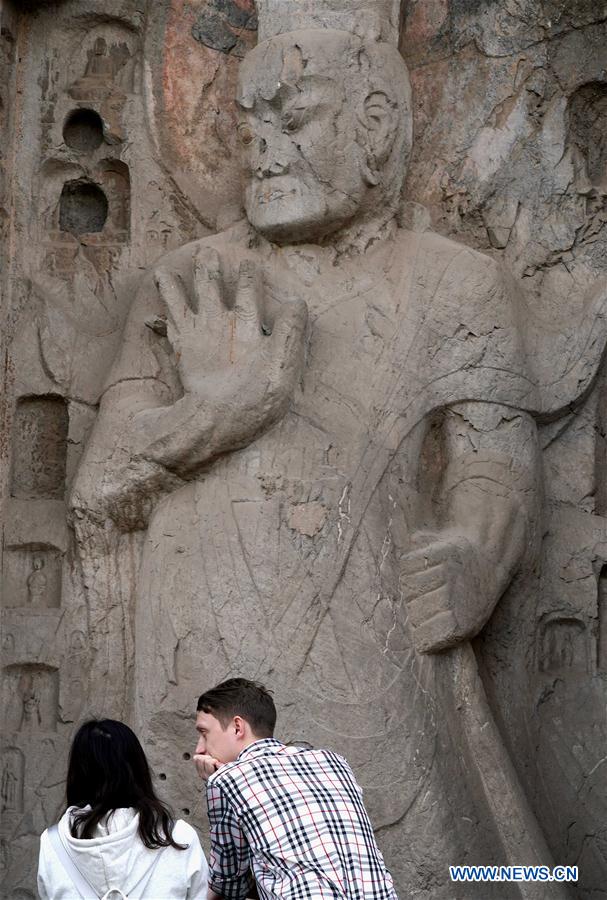
Perhaps the most visually striking testament to Luoyang’s Buddhist legacy is the Longmen Grottoes. Carved into the limestone cliffs along the Yi River, just south of the city, these grottoes represent one of the finest examples of Chinese Buddhist art. The majority of the carvings date from the late Northern Wei and Tang Dynasties, periods when Luoyang was a thriving imperial capital and a global crossroads.
The Longmen Grottoes illustrate the profound imperial patronage that Buddhism enjoyed in Luoyang. Grand projects like the Vairocana Buddha at Fengxian Temple, commissioned by Empress Wu Zetian, were not just acts of piety but also powerful statements of imperial authority and cultural influence. The evolution of style seen at Longmen—from the slender, elongated figures of the Northern Wei to the more robust, naturalistic forms of the Tang—mirrors the broader development of Chinese Buddhist aesthetics and its move away from purely Indian prototypes.
The grottoes served multiple functions: places of worship, sites for meditation, and public declarations of faith. For the common people, they offered a tangible connection to the divine, a visual narrative of Buddhist teachings. For the emperors and elite, they were acts of merit-making and displays of power. This confluence of religious devotion, artistic innovation, and political endorsement cemented Luoyang’s status as a spiritual and cultural heartland. The very scale of Longmen underscores the deep integration of Buddhism into the fabric of society in Luoyang in China, an integration that shaped both the physical landscape and the spiritual consciousness of the nation.
Navigating the Historical Significance of Luoyang Today
For those looking to engage with the profound Buddhist history of Luoyang, understanding its layers of significance is key to a meaningful experience. Visiting sites like the White Horse Temple and the Longmen Grottoes without historical context risks reducing them to mere tourist attractions rather than recognizing their pivotal roles in shaping a civilization.
A Researcher’s Checklist for Luoyang’s Buddhist Sites
- Contextualize the Arrival: While at White Horse Temple, consider its status as China’s first official temple and the implications of early imperial endorsement. How did this initial acceptance differ from Buddhism’s reception in other cultures?
- Appreciate Translation Efforts: Reflect on the immense intellectual labor undertaken in Luoyang to translate Buddhist scriptures. How did this linguistic and cultural bridge-building impact Chinese philosophy and language?
- Recognize Patronage: Observe the scale and grandeur of sites like Longmen Grottoes. Who funded these massive undertakings, and what did such patronage signify about the relationship between religion and state power?
- Analyze Visual Evolution: Study the stylistic changes in the grottoes’ sculptures. How do these shifts reflect evolving Chinese aesthetics and theological interpretations over centuries?
- Connect to the Silk Road: Remember Luoyang’s position as an eastern terminus of the Silk Road. How did this geographical advantage facilitate the influx of foreign ideas, goods, and people, including Buddhist missionaries?
- Consider Enduring Influence: Beyond the ruins, how have the foundational contributions of Luoyang continued to shape contemporary Chinese Buddhism and cultural identity?
By approaching Luoyang’s Buddhist heritage with these considerations, one moves beyond simple observation to a deeper comprehension of its unparalleled historical and cultural impact. Luoyang in China remains an essential pilgrimage for anyone seeking to truly grasp the story of Buddhism’s flourishing in the East.
To delve deeper into specific historical aspects or research inquiries, feel free to reach out.