 By
By How Did Lo Yang China Become a Buddhist Center?
The ancient city of Lo Yang, China, holds a pivotal place in the history of Chinese civilization, serving as a capital for numerous dynasties. Beyond its political and economic significance, Lo Yang China became an unparalleled center for Buddhism, a transformation driven by a unique confluence of imperial support, the establishment of foundational institutions, and the creation of monumental artistic expressions. Understanding this historical development requires examining the interplay of these forces, which collectively cemented Luoyang’s role as a spiritual and intellectual heartland for Buddhist faith.
The Dawn of Buddhism in Lo Yang China
Buddhism arrived in China from India via the Silk Road during the Eastern Han Dynasty (25-220 CE). While the exact date remains debated, tradition places its official introduction into the imperial court during the reign of Emperor Ming (58-75 CE). Lo Yang, as the capital, was naturally the first major urban center to encounter this new foreign religion.
The initial reception of Buddhism was cautious, yet the imperial court’s curiosity and a growing interest among the populace laid the groundwork for its acceptance. Early practitioners were often foreign monks and traders who brought scriptures and teachings. The process of translating these foreign texts into Chinese was crucial, bridging linguistic and cultural divides. Without these initial efforts, Buddhism might have remained an obscure belief system confined to foreign communities.
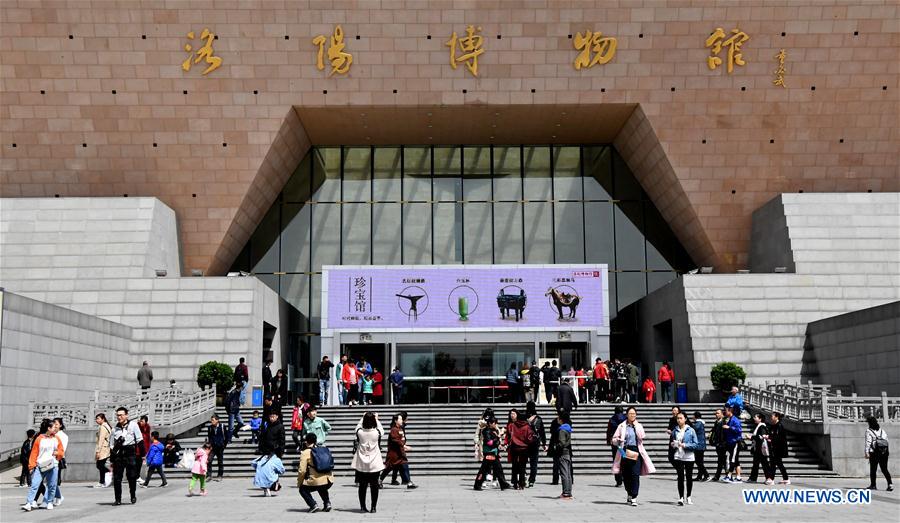
The establishment of the White Horse Temple (Baima Temple) in 68 CE marks a watershed moment. Often regarded as the “cradle of Chinese Buddhism,” this temple, situated just outside Lo Yang, was reportedly founded by Emperor Ming to house two Indian monks, Kasyapa Matanga and Dharmaratna. They are credited with translating the Sutra of Forty-two Chapters, one of the earliest Buddhist scriptures in Chinese. This initial institutional presence was vital for providing a physical space for worship, study, and the nascent monastic community.
Key Milestones in Early Luoyang Buddhism:
- 1st Century CE (Legendary): Traditional accounts suggest Emperor Ming’s dream and subsequent dispatch of envoys led to Buddhism’s introduction to the imperial court in Lo Yang itself.
- 68 CE: Establishment of the White Horse Temple (Baima Temple) near Lo Yang, becoming the first Buddhist temple in China. This provided a foundational institutional presence.
- 2nd-3rd Centuries CE: Early translation efforts by foreign monks like An Shigao and Dharmarakṣa in Lo Yang, making Buddhist scriptures accessible to Chinese scholars.
- 4th-5th Centuries CE: Increased imperial support, particularly during the Northern Wei Dynasty, led to a significant expansion of monastic communities and temple construction within and around Lo Yang.
Imperial Patronage, Early Institutions, and the Longmen Grottoes: A Confluence of Influence
The transformation of Lo Yang into a preeminent Buddhist center was not a singular event but a sustained process, deeply intertwined with three critical factors: consistent imperial patronage, the development of robust early Buddhist institutions, and the monumental artistic undertaking of the Longmen Cave network. Each element played a distinct, yet interconnected, role in shaping the city’s spiritual landscape.
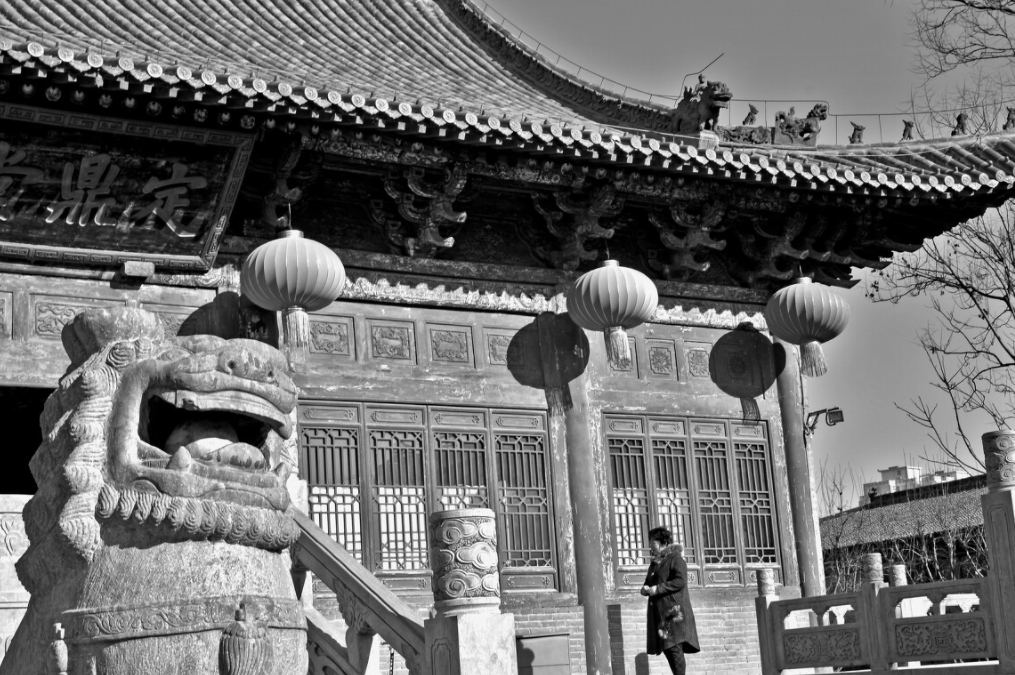
Imperial patronage was perhaps the most decisive factor. Emperors, seeking spiritual legitimacy, social stability, or personal merit, invested heavily in Buddhism. This support manifested in various ways, from direct financial grants for temple construction and repairs to bestowing land and tax exemptions upon monasteries. Emperors also actively participated in Buddhist rituals and sponsored the translation of scriptures. This top-down endorsement provided the religion with official sanction, attracting converts from all social strata and allowing it to flourish on a grand scale. Without imperial backing, Buddhism would have struggled to gain widespread acceptance and resources, likely remaining a minor, localized belief system.
Parallel to imperial support, the early Buddhist institutions in Lo Yang evolved into sophisticated centers of learning and practice. Temples like the White Horse Temple and later numerous others served as more than just places of worship. They became critical hubs for:
- Scripture Translation: Housing diverse teams of foreign monks and Chinese scholars dedicated to rendering Sanskrit and Pali texts into Chinese.
- Monastic Training: Educating generations of Chinese monks and nuns, who would then disseminate Buddhist teachings across the country.
- Scholarly Exchange: Fostering lively intellectual debates and the development of unique Chinese Buddhist schools of thought.
- Lay Worship and Community: Providing spiritual guidance and fostering a sense of community for lay followers.
These institutions ensured the continuous study, propagation, and adaptation of Buddhist doctrines within Chinese culture. Without them, the knowledge dissemination would have been fragmented, and organized community life, essential for any religion’s sustained growth, would not have materialized.
The Longmen Cave network, located on the Yi River just south of Lo Yang, stands as the most tangible and awe-inspiring testament to the city’s Buddhist fervor. Carved primarily between the late 5th and mid-8th centuries CE, these grottoes house tens of thousands of Buddhist statues and inscriptions. The scale and artistic sophistication of Longmen reflect colossal imperial and private donations. The colossal Vairocana Buddha at Fengxian Temple, for instance, is said to have been commissioned by Empress Wu Zetian herself, vividly demonstrating the direct link between imperial power and Buddhist art. Longmen served multiple functions:
- Monumental Devotion: A public display of piety and merit accumulation for emperors, nobles, and commoners alike.
- Artistic Expression: A crucible for the development of distinct Chinese Buddhist artistic styles.
- Pilgrimage Site: Attracting devotees from across China and beyond, solidifying Luoyang’s reputation as a spiritual destination.
Without the Longmen Grottoes, Luoyang would lack such a grand, visible, and enduring symbol of its Buddhist legacy, diminishing its historical impact and public engagement with the faith.
The table below illustrates how each factor critically impacted Luoyang’s development as a Buddhist center. The “Consequence Without This Factor” column highlights what critical aspect would be missing if the factor were absent, akin to how a technical parameter, if incorrect, can lead to system failure.
| Factor | Contribution to Lo Yang’s Buddhist Center Status | Consequence Without This Factor (What could go wrong?) |
|---|---|---|
| Imperial Patronage | Provided widespread legitimacy, substantial funding for infrastructure (temples, monasteries), land grants, and protection. Enabled large-scale projects and official sanction. | Buddhism would likely remain an obscure foreign religion, lacking resources, broad social acceptance, and the ability to undertake monumental projects. Its integration into Chinese society would be severely hampered. |
| Early Buddhist Institutions | Served as organized centers for scripture translation, systematic monastic training, scholarly debate, and community worship. Ensured systematic knowledge transmission and doctrinal development. | Knowledge dissemination would be chaotic and fragmented. There would be no standardized training for monks, hindering the growth of an organized clergy and preventing the development of cohesive Chinese Buddhist schools of thought. |
| Longmen Cave Network | Created a monumental, enduring physical manifestation of devotion, imperial power, and artistic excellence. Attracted pilgrims, solidified public faith, and served as a lasting cultural legacy. | Lo Yang would lack a grand, visible, and tangible symbol of its profound Buddhist commitment. Public engagement would be less profound, and the city’s artistic and spiritual legacy would be significantly diminished. |
The Flourishing Era: Translation, Scholarship, and Cultural Exchange
During its zenith, particularly under the Northern Wei (386-534 CE) and Tang Dynasties (618-907 CE), Lo Yang was not merely a recipient of Buddhist teachings but a primary engine for their development and dissemination throughout East Asia. This era was characterized by intense translation activities and profound scholarship.
The city’s translation bureaus, often housed within imperial compounds or major temples, were sophisticated intellectual workshops. They brought together monks fluent in Sanskrit, Pali, and various Central Asian languages with highly educated Chinese literati. This collaborative effort was essential for not only translating the literal meaning but also adapting complex Buddhist philosophical concepts into a Chinese cultural context, often using Daoist and Confucian terminology as analogies.
Essential Components of Lo Yang’s Translation Bureaus:
- Foreign Monks (Source Text Experts): Individuals like Kumārajīva and later Xuanzang (though more active elsewhere, his influence was felt) who brought original scriptures and deep understanding of Indian Buddhist thought.
- Chinese Scribes & Scholars (Linguistic & Cultural Adapters): A team of Chinese literati who assisted in rendering the texts into eloquent and understandable Chinese, ensuring cultural resonance.
- Imperial or Noble Patronage (Resource Provision): Consistent funding, facilities, and protection for the extensive and multi-year process of translation, editing, and copying.
- Scriptorium & Libraries (Infrastructure): Dedicated physical spaces for the laborious copying of translated texts, their storage, and scholarly study.
- Dissemination Networks (Reach): Established mechanisms to distribute the newly translated and copied scriptures to other temples, monasteries, and scholars across China and into Korea and Japan.
These efforts produced a vast canon of Chinese Buddhist scriptures, which became the foundation for all subsequent Buddhist thought in China and influenced neighboring cultures significantly. Monks trained in Lo Yang traveled far and wide, spreading the teachings and establishing new centers. This intellectual dynamism further cemented Lo Yang’s reputation as the intellectual capital of Chinese Buddhism.
Legacy and Decline: Shifting Fortunes of a Buddhist Metropolis
Despite its incredible flourishing, Lo Yang’s prominence as a Buddhist center was not immune to the vicissitudes of history. Periods of anti-Buddhist persecution, notably the Great Anti-Buddhist Persecution of 845 CE during the Tang Dynasty, severely impacted monasteries, destroyed scriptures, and forced monks back into secular life. While Buddhism always recovered, such events inflicted lasting damage on institutions and reduced the overall scale of activities.
Political instability and the shifting of imperial capitals also contributed to Luoyang’s eventual decline as the undisputed Buddhist center. As dynasties rose and fell, and new capitals like Chang’an (Xi’an) or later Hangzhou and Beijing gained prominence, resources and focus gradually shifted. Other regions and cities developed their own strong Buddhist traditions, sometimes surpassing Luoyang in specific areas of scholarship or artistic creation.
Nevertheless, the legacy of Lo Yang China as a foundational Buddhist center remains indelible. The White Horse Temple continues to stand as a living monument, and the Longmen Grottoes are now a UNESCO World Heritage site, drawing visitors and scholars from around the globe. The city’s historical role in translating, propagating, and shaping Chinese Buddhism laid the groundwork for a faith that profoundly influenced Chinese culture, philosophy, art, and society for over a millennium. Its contributions were not merely local but had a lasting impact on the entire East Asian Buddhist world.
For a deeper understanding of historical contexts and their impact on cultural development, consider exploring expert historical research and analysis.