 By
By How Northern Wei and Tang Styles Differ at the Longmen Caves in AP Art History
Why do two Buddha carvings from the same cave complex look so different? That’s the question most students face the first time they study Longmen caves ap art history material side by side. One figure looks flat, stiff, almost weightless. The other looks solid, fleshy, alive. Both were carved into the same limestone cliffs along the Yi River in present-day Henan province, yet they represent two distinct dynasties, two different political messages, and two separate approaches to representing the human body in stone.
The short answer: the Northern Wei carvings (mostly 5th–early 6th century) favor linear, frontal, almost weightless bodies wrapped in stylized drapery, while Tang dynasty carvings (7th–8th century) favor naturalistic, muscular, monumental forms tied directly to imperial power. Understanding why requires looking at patronage, technique, and what each stylistic choice actually communicates — not just memorizing vocabulary.
Why the Political Context Behind Each Dynasty Shapes the Sculpture
The Northern Wei rulers who began carving at Longmen in 493 CE were a non-Han dynasty consolidating legitimacy through Buddhist patronage. Their sculptural program, especially in Guyang Cave, borrows visual conventions from earlier Gandharan and Central Asian Buddhist art — schematic drapery, elongated faces, and a deliberate rejection of naturalistic anatomy in favor of spiritual abstraction. The body becomes a vessel for symbolic meaning, not a physical presence.
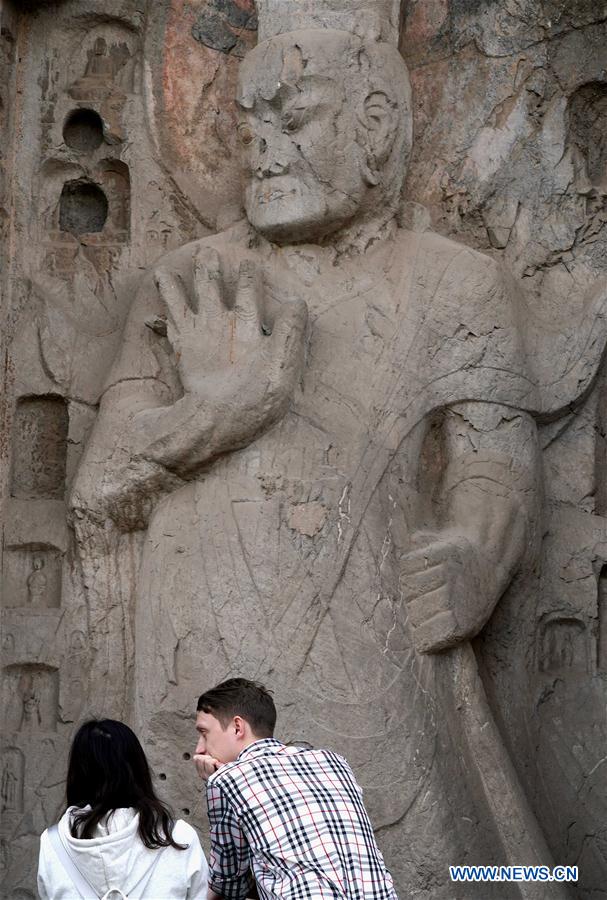
By contrast, the Tang dynasty, ruling from a stabilized and expansionist empire, used monumental Buddhist imagery to project earthly power alongside spiritual authority. The Fengxian Temple niche, commissioned under Emperor Gaozong and closely tied to Empress Wu Zetian, features a colossal Vairocana Buddha carved with fuller cheeks, naturalistic drapery folds, and a commanding physical presence. The scale itself was political — a visitor standing at the base of a 17-meter-tall Buddha experiences imperial power physically, not just symbolically.
If you misread this context on an exam, you’ll likely misattribute the purpose of a work. Northern Wei pieces are usually discussed in terms of religious transmission and stylistic borrowing from Central Asia; Tang pieces are discussed in terms of imperial patronage and dynastic self-representation. Getting the political framing wrong costs points even if you correctly identify the visual style.
Northern Wei Linear Style — What Each Feature Signals
- Frontal orientation: Figures face directly forward with little torsion. This signals a hieratic, symbolic presentation rather than a naturalistic pose — mistaking this for “static” or “unskilled” carving misses the intended devotional function.
- Linear, schematic drapery: Folds are carved as parallel incised lines rather than modeled fabric. This flattens the body and emphasizes pattern over volume — a direct inheritance from earlier Gandharan and Central Asian prototypes.
- Elongated proportions and thin bodies: The physical form is de-emphasized because the spiritual message, not the body, is the point. If a student describes these figures as “realistic,” that’s a factual error worth catching before the exam.
- Flattened relief carving: Figures often sit closer to the cave wall with less undercutting, producing a graphic, almost calligraphic quality.
Tang Naturalism, Monumentality, and Imperial Imagery — What Each Feature Signals
- Fuller, rounded bodies: Cheeks, torsos, and limbs are modeled with volume, reflecting a shift toward naturalistic anatomy and physical presence. This choice ties directly to Tang confidence and cosmopolitan exchange along trade routes.
- Deep, flowing drapery: Fabric appears to move and drape over the body rather than sit as flat pattern. This is a technical marker of increased carving depth and undercutting skill.
- Monumental scale: The Fengxian Temple’s Vairocana Buddha dwarfs the viewer physically. Scale here is not decorative — it’s a deliberate assertion of imperial and spiritual authority working together.
- Softer facial expression: Serene, approachable faces replace the more abstract expressions of earlier Northern Wei carvings, aligning with Tang interest in accessible, humanized divinity.
Side-by-Side Comparison Table: Northern Wei vs Tang at Longmen
| Feature | Northern Wei (5th–early 6th c.) | Tang Dynasty (7th–8th c.) |
|---|---|---|
| Body treatment | Linear, flattened, weightless | Naturalistic, fleshy, physically grounded |
| Drapery | Schematic, incised parallel lines | Flowing, deeply carved, fabric-like |
| Scale | Modest, cave-bound compositions | Monumental, dominating the viewer |
| Political message | Legitimizing a non-Han dynasty via Buddhist transmission | Projecting consolidated imperial and cosmopolitan power |
| Representative example | Guyang Cave reliefs | Fengxian Temple’s Vairocana Buddha niche |
| Facial expression | Abstract, elongated, distant | Rounded, serene, approachable |
This table is the core reference point for the Buddhist art comparison questions that show up repeatedly in AP Art History free-response sections. Memorizing individual facts matters less than being able to explain why each feature exists — examiners reward reasoning, not just labels.
A Worked Example: Comparing Two Specific Niches
Take Guyang Cave’s central Buddha (Northern Wei) against the Fengxian Temple Vairocana (Tang). Both are seated Buddha figures at Longmen, both carved directly into the cliff, both meant for public devotional viewing. Describe Guyang’s figure and you’d note the thin body, symmetrical seated posture, and drapery rendered as ridged lines rather than folds — a style inherited from earlier Central Asian Buddhist models entering China along trade routes. Describe Fengxian’s Vairocana and you’d note the broad shoulders, softened facial modeling, and colossal scale meant to be experienced from below, at a distance, by pilgrims and court visitors alike.
The comparison isn’t just “old vs new.” It’s “abstraction serving religious transmission” vs “naturalism serving imperial spectacle.” That distinction is what separates a surface-level answer from a strong one.
Common Mistakes Students Make on This Comparison
- Calling Northern Wei drapery “unskilled” instead of recognizing it as a deliberate stylistic choice tied to Central Asian influence.
- Describing Tang naturalism as simply “more advanced,” which ignores the political and cultural reasoning behind the shift.
- Confusing which dynasty commissioned Fengxian Temple — it’s Tang, not Northern Wei, and the date matters for period identification questions.
- Forgetting to mention patronage and political context, focusing only on visual description without connecting form to function.
- Overgeneralizing — not every Northern Wei carving at Longmen is identical, and later Northern Wei work sometimes shows early naturalistic tendencies as styles evolved.
A Quick Checklist Before the Exam
- Can you name one Northern Wei example and one Tang example from Longmen specifically?
- Can you describe drapery treatment for each in one sentence?
- Can you connect each style to its political or religious purpose, not just its appearance?
- Can you explain scale differences and why size mattered to Tang patrons?
- Can you avoid value judgments like “better” or “more skilled” and instead explain intent?
If you can answer all five without hesitation, the Northern Wei–Tang comparison at Longmen is one you’ve genuinely mastered rather than memorized.

For a printable version of the comparison table above, formatted as a study sheet you can annotate before your exam, reach out and we’ll send over a spec-ready reference chart.