 By
By How Han Records Qualify the Oldest Temple in China Claim
Can a site founded in 68 CE truly be called the oldest temple in china? The short answer is that the traditional claim has strong historical importance, but it needs careful wording. The site commonly associated with this date is White Horse Temple in Luoyang, traditionally linked to the introduction of Buddhism during the Eastern Han dynasty.
For visitors, educators, publishers, and heritage researchers, the key issue is not whether the tradition matters. It clearly does. The issue is whether the available evidence supports a statement about a temple’s founding, a Buddhist institution’s early history, or the survival of an original physical building. Those are three different claims.
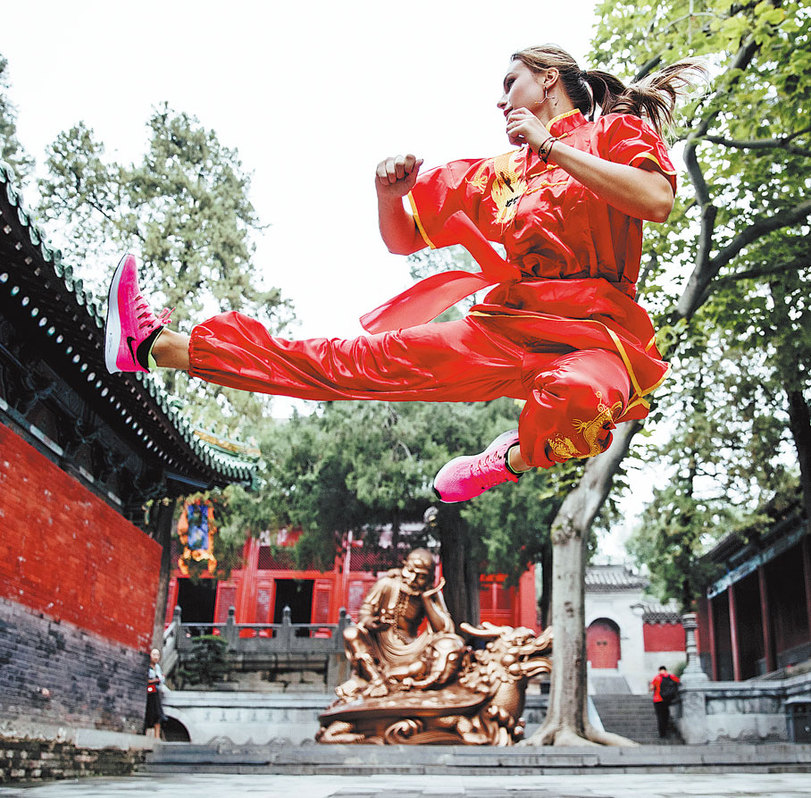
The oldest temple in china claim is therefore best treated as a historical attribution rather than a simple architectural fact. A reliable citation should state that White Horse Temple is traditionally dated to 68 CE and is widely regarded as China’s earliest Buddhist temple, while also recognizing that the surviving complex has been rebuilt and altered over many centuries.
What the 68 CE Date Actually Claims
The 68 CE date is generally associated with the traditional establishment of White Horse Temple, or Baima Si, in Luoyang. The story connects Emperor Ming of Han with a dream or vision that prompted an imperial mission westward in search of Buddhist teachings. According to the traditional narrative, Buddhist monks and scriptures later arrived in Luoyang on white horses, and a temple was established to house them.
This is why the oldest temple in china description is usually applied to the site. It refers primarily to its role in Chinese Buddhist memory and to its traditional foundation date. It does not mean that every current hall, gate, statue, or courtyard was standing during the Han dynasty.
| Claim being evaluated | How strongly the evidence supports it | Recommended wording | When the wording does not apply |
|---|---|---|---|
| White Horse Temple was traditionally founded in 68 CE | Supported by longstanding historical tradition and later textual accounts | “Traditionally founded in 68 CE” | Do not present the date as a surviving contemporary construction record |
| It is China’s earliest Buddhist temple | Widely used designation, but dependent on how “temple” is defined | “Widely regarded as China’s earliest Buddhist temple” | Do not use this wording for a claim about the oldest surviving building |
| The present complex is a Han-era structure | Not supported by the founding tradition alone | “A historic temple site with later rebuilding phases” | Do not describe current buildings as original Han fabric without building-specific evidence |
The practical conclusion is straightforward. Use the oldest temple in china phrase only when the context makes clear that it concerns an early Buddhist foundation tradition. If an article, tour guide, or educational caption focuses on ancient architecture, the phrase requires further qualification.
How Traditional Accounts, Reconstructions, and Historical Records Qualify 68 CE
The 68 CE date should be checked through three evidence layers: traditional founding accounts, later reconstructions of the site, and historical records written after the events they describe. Together, these sources support the importance of the date, but they also define its limits.
The most frequently cited textual framework is the Book of the Later Han, a later historical compilation covering the Eastern Han period. Its account of Emperor Ming’s interest in Buddhism is central to the traditional narrative. However, a later compilation is not the same thing as a surviving government document written in 68 CE.
| Evidence layer | What it contributes | What it cannot establish by itself | How to use it in a citation |
|---|---|---|---|
| Traditional founding account | Explains why 68 CE became linked to the temple and Buddhist arrival story | Cannot independently verify the exact day, construction sequence, or original layout | Use “according to tradition” or “traditionally dated” |
| Later historical record | Preserves early narratives about Emperor Ming, Buddhist teachings, and imperial interest | Does not function as a contemporary site-inspection report | Name the historical text and distinguish record date from event date |
| Later reconstruction history | Shows that the site retained religious and cultural importance after damage or rebuilding | Does not prove that current structures are Han originals | Describe the place as a continuously remembered or repeatedly rebuilt temple site when supported |
This comparison matters because readers often merge the three layers into one claim. They see 68 CE, assume a continuous untouched building, and then repeat that assumption in travel copy or school materials. That is not a reliable method.
A more accurate statement is: “White Horse Temple in Luoyang is traditionally dated to 68 CE and is widely regarded as the oldest temple in china in the Buddhist sense, although its present structures reflect later rebuilding.” This wording preserves the historical tradition without overstating the evidence.
How to Check the Claim Before Planning a Visit or Publishing It
A researcher evaluating the oldest temple in china claim should separate the source question from the travel question. A site can be historically important even when the visible architecture is much later than the founding tradition. That distinction helps visitors set realistic expectations and helps educators avoid misleading captions.
- Define the word “oldest.” Decide whether you mean the earliest traditional Buddhist foundation, the oldest continuously functioning religious site, or the oldest surviving structure. These categories are not interchangeable.
- Identify the site being discussed. For the 68 CE claim, confirm that the text concerns White Horse Temple in Luoyang rather than another early Chinese religious site.
- Check the source date. Ask when the cited historical account was compiled. A text about Han events may have been written centuries later.
- Separate foundation from construction. Look for whether a source discusses an institutional founding, a temple reconstruction, or a surviving building element.
- Use qualified language. Prefer “traditionally founded,” “associated with,” “widely regarded,” or “often described as” where the evidence is interpretive.
- Match the claim to the audience. A museum label, teaching guide, tourism itinerary, and academic citation require different levels of detail.
For a general visitor itinerary, “traditionally founded in 68 CE” is usually sufficient. For an educational article, add that the surviving site reflects later rebuilding. For formal research, cite the relevant historical source, identify its compilation date, and avoid treating tradition as direct contemporary documentation.
Common Citation Mistakes That Weaken Historical Reliability
Several errors appear repeatedly when the oldest temple in china label is used without source review. Each one can be avoided with a small change in wording.
- Mistake: Calling the existing buildings “Han dynasty originals.”
Why it fails: A temple’s founding date does not establish the age of every visible structure.
Better approach: Identify the site as traditionally founded in the Han period and note later reconstruction where relevant. - Mistake: Treating 68 CE as a universally uncontested archaeological date.
Why it fails: The date is rooted in historical tradition and later textual transmission, not simply a modern excavation finding.
Better approach: Use “traditionally dated to 68 CE.” - Mistake: Omitting the Buddhist context.
Why it fails: The oldest temple in china label is most meaningful when readers understand that it usually refers to a Buddhist temple tradition.
Better approach: Write “one of the earliest and most influential Buddhist temple sites in China” when broader context is needed. - Mistake: Using one source type as if it answers every question.
Why it fails: Historical texts, physical remains, and later renovation records answer different questions.
Better approach: State what each source can and cannot show. - Mistake: Repeating promotional wording without a boundary.
Why it fails: Phrases such as “the first temple ever built in China” can erase uncertainty and exclude other religious traditions.
Better approach: Keep the wording limited to the Buddhist context and the traditional claim.
FAQ About the Oldest Temple Tradition and Han Evidence
Is White Horse Temple definitely the oldest temple in China?
White Horse Temple is widely regarded as the oldest temple in china when the phrase refers to an early Buddhist temple foundation. The claim should not be read as proof that it is the oldest surviving religious building of every type or that its present buildings date from 68 CE.
What evidence supports the 68 CE date?
The date is supported by longstanding tradition tied to Emperor Ming of Han, the transmission of Buddhist teachings, and later historical accounts that preserve this narrative. The evidence supports a traditional foundation date more strongly than it supports a claim about surviving original architecture.
Are Han records contemporary proof that the temple was built in 68 CE?
No. Historical accounts concerning Han events were often compiled later. They are valuable sources for understanding the development of the tradition, but they should be described as later records of an earlier event rather than as a surviving construction document from the year itself.
Can the oldest temple in China claim be used in educational content?
Yes, provided the wording is qualified. A suitable classroom or museum sentence is: “White Horse Temple is traditionally dated to 68 CE and is widely regarded as the oldest temple in china associated with Buddhism.” This version gives readers the key claim and its historical boundary.
What should travelers expect at the site?
Travelers should expect a place valued for Buddhist history, cultural memory, and later architectural layers. They should not expect an untouched Han-period complex. That distinction makes a visit more informative because it directs attention to the site’s long religious history rather than an inaccurate expectation of original first-century structures.
Use a Citation Formula That Preserves Both Value and Accuracy
The strongest short-form description combines the date, the tradition, the religious context, and the rebuilding limitation. This approach respects why the oldest temple in china designation is important while preventing readers from drawing unsupported conclusions.
- For a travel page: “White Horse Temple in Luoyang is traditionally dated to 68 CE and is widely regarded as China’s earliest Buddhist temple.”
- For a school resource: “Tradition links White Horse Temple to the arrival of Buddhist teachings during the Eastern Han period; the site has undergone later rebuilding.”
- For a research note: “The 68 CE date should be treated as a traditional foundation date preserved through later historical accounts, not as evidence that the present structures are Han-era originals.”
- For a heritage caption: “The temple’s significance lies in its early Buddhist foundation tradition and enduring cultural role across successive reconstruction periods.”
Use this formula whenever the oldest temple in china claim appears in public-facing material: name the tradition, identify the Buddhist context, preserve the 68 CE date as a traditional foundation, and distinguish the institution’s age from the age of surviving structures.
For a citation-ready historical review before publication, seek selection advice from a qualified China-history librarian or scholar.