
Blog
Plan Luoyang City by Era for a Better Visit

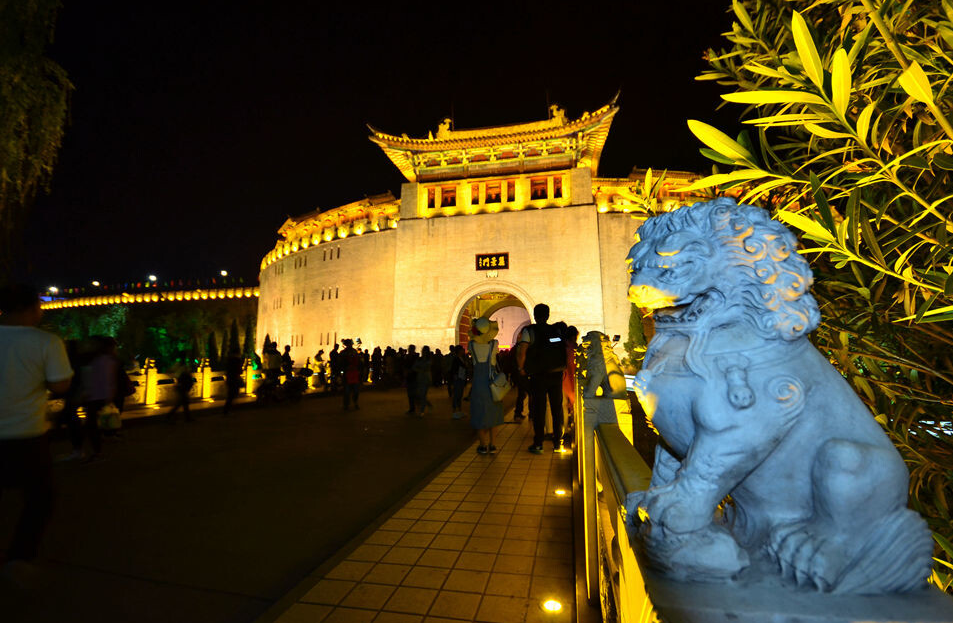
Plan Luoyang City by Era Instead of Chasing a Standard Attraction List
How can a traveler visit luoyang city without turning a major former capital into a rushed checklist of temples, caves, museums, and ruins? The most useful answer is to plan by historical era. This approach helps independent travelers understand why individual sites matter, how they relate to one another, and which places deserve a full morning rather than a brief stop between more famous landmarks.
A conventional attraction list usually places the best-known names first. That may work for a short sightseeing trip, but it often separates sites that belong to the same historical story. In luoyang city, the urban record spans early imperial rule, the Northern Wei court, Sui-Tang construction, and a modern city built around preserved layers of heritage. Grouping visits by period creates context before you arrive at each gate.
Start by deciding what you want to learn. A traveler focused on funerary art should not organize the same route as someone studying Buddhist patronage or capital-city planning. Luoyang city is especially well suited to this method because major sites reveal different functions of a capital: burial, religion, ceremonial architecture, city walls, marketplaces, and present-day cultural interpretation.
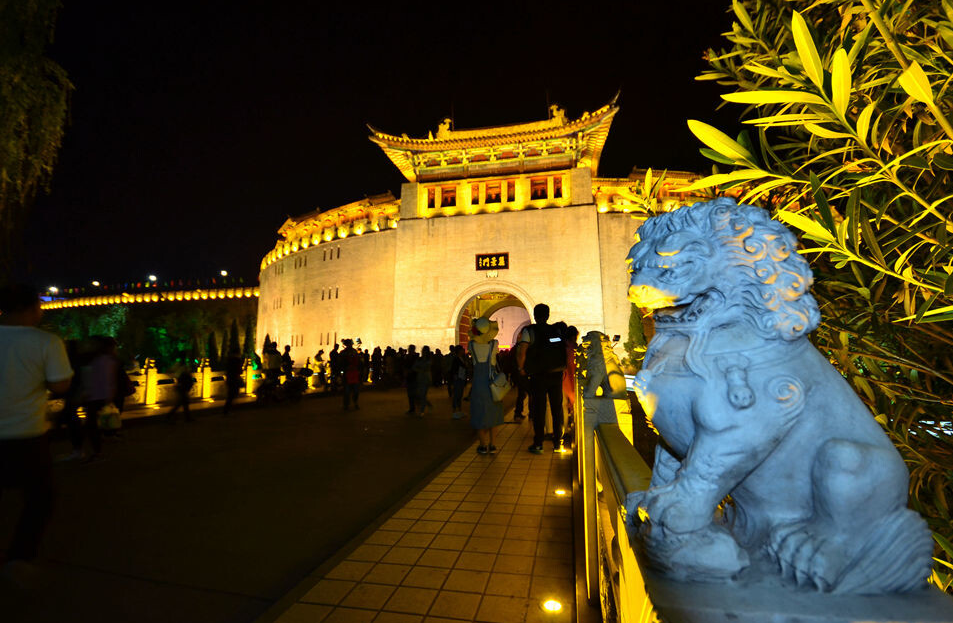
Use an action-based method for grouping major sites by Han, Wei, Sui-Tang, and modern-era context instead of using a standard attraction list
The core decision is simple: create four working folders in your itinerary—Han, Wei, Sui-Tang, and modern-era context—then assign each intended stop one primary historical purpose. Do not try to make every monument represent every dynasty. Several places have long histories, renovations, or later religious use. Give each site the role that best serves the question you are investigating.
This method fits travelers who want to read landscapes as evidence rather than collect landmark photos. It is less suitable for a very short visit focused only on one famous site, or for visitors who prefer an unstructured walk. For a first cultural-history trip to luoyang city, however, it prevents an itinerary from becoming a random sequence of transport decisions.
| Era folder | Primary planning question | Useful site types to group together | Action to take before visiting | Limit of the grouping |
|---|---|---|---|---|
| Han | How did imperial burial and early religious exchange shape the area? | Tombs, burial-art collections, early Buddhist locations | Choose whether funerary culture or religious history is your main lens. | A later building on an early site may not preserve Han-period fabric. |
| Wei | How did northern dynasties use the city as a political and Buddhist center? | Northern Wei urban remains, temple history, early cave sculpture | Separate Cao Wei references from Northern Wei evidence in your notes. | “Wei” covers more than one historical context and must not be treated as one uniform moment. |
| Sui-Tang | How was an eastern capital organized for ceremony, administration, and trade? | Archaeological parks, gates, palace-related displays, Tang-period sculpture | Map sites according to their function: entry, court, ritual, or urban layout. | Reconstructed displays can explain scale but are not identical to excavated remains. |
| Modern-era context | How is the historical city interpreted, protected, and experienced today? | Museums, old-city streets, interpretive centers, contemporary public spaces | Use this folder to review evidence after seeing the historical locations. | Modern presentation should not replace visits to the underlying archaeological or religious sites. |
The practical benefit is sequence. Rather than opening a map and asking which attraction is nearest, ask which site answers the next historical question. In luoyang city, that change produces a more coherent day and reduces the temptation to treat every stop as interchangeable.
Step 1: Write one research question for each era
Use questions that can be answered by a visit. For the Han folder, ask: “What does burial evidence show about belief, status, and visual culture?” For the Wei folder, ask: “How did court patronage shape Buddhist art and the capital’s religious landscape?” For Sui-Tang, ask: “What remains can explain the planned structure of an eastern capital?” For the modern folder, ask: “Which museum or interpretive stop will help me test what I think I saw?”
This step is most useful when planning two or more days in luoyang city. It does not apply if your purpose is purely scenic and you have no interest in chronological interpretation. The limit is also clear: a question should guide selection, not force a site into a story it cannot support.
Step 2: Assign each major site one main role
A single place may cross eras, but assigning one main role keeps your plan readable. For example, the Longmen Grottoes can serve as a focused study of Buddhist patronage and sculptural development rather than an all-purpose “must-see.” Its artistic sequence includes material associated with different periods, so read the site by phases instead of assuming every cave belongs to the same moment.
Similarly, use an archaeological park related to Sui-Tang urban planning to study capital infrastructure, while using a museum to compare objects and recover chronology. This division is useful because ruins and collections answer different questions. A ruin explains spatial scale; an object can reveal craftsmanship, ritual practice, or elite taste. Neither replaces the other.
Step 3: Build days around historical contrast, not maximum site count
Pair sites deliberately. A Han-focused tomb or museum visit can be followed by a modern interpretive stop where you review the chronology. A Wei-focused morning can be paired with a Buddhist-art visit, while a Sui-Tang day should combine an urban-layout location with a gate, palace, or archaeological display. This structure lets you compare evidence while it is still fresh.
Do not combine distant locations simply because they are famous. In luoyang city, a day with one major site, one supporting site, and time for notes is often more valuable than a day with many unrelated admissions. This recommendation is not a rule for travelers with limited mobility or a single free afternoon; in those cases, select one era and one anchor site.
Build a workable itinerary from anchor sites and supporting evidence
Choose one anchor site per day. An anchor site is the place that deserves your longest attention and determines the theme of the route. In luoyang city, an anchor might be a major grotto complex, an archaeological park, a museum collection, or a historically important religious site. Supporting stops should clarify the anchor, not compete with it.
- Select an era. Start with the period you are least willing to miss. If Buddhist sculpture is your priority, begin with the Wei and Sui-Tang folders. If mortuary culture interests you most, begin with Han evidence.
- Name one anchor site. Write down what it can reveal: art, burial, capital planning, ritual, or later interpretation.
- Add one supporting site. Select a nearby or logically connected location that provides contrast. Pair a monumental site with a museum or archaeological display when possible.
- Reserve an interpretation block. Use the end of the day to compare maps, object labels, and your own photographs. Record what is original, excavated, reconstructed, or displayed in a later setting.
- Keep one flexible slot. Use it for weather changes, crowds, fatigue, or a longer-than-expected museum visit. A rigid schedule can weaken the historical purpose of the trip.
This procedure suits self-directed travelers because it gives each day a clear purpose without requiring a guide. Its limit is that site access, routes, and exhibition arrangements can change. Confirm current opening information, reservation requirements, and local transport options before locking the order of your day.
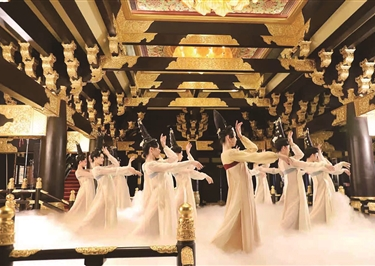
Match site types to the evidence you actually want to see
Not every historical question requires the same kind of place. Travelers planning luoyang city often make the mistake of treating an archaeological site, an active temple, a reconstruction, and a museum as comparable experiences. They are not. Each presents a different kind of evidence, and your itinerary should make that distinction explicit.
| If you want to understand | Prioritize | What to examine on site | When this choice does not fit |
|---|---|---|---|
| Urban scale and city organization | Archaeological parks, gates, city-site interpretation | Site plans, wall lines, road alignments, building footprints, explanatory models | Choose a museum instead if your time is too short for a large outdoor site. |
| Religious art and patronage | Cave temples, sculpture galleries, historic religious settings | Donor inscriptions, figure scale, iconography, cave sequence, later additions | Avoid relying only on exterior views if your goal is stylistic comparison. |
| Death, rank, and ritual | Tombs and funerary collections | Burial layout, wall decoration, objects, explanatory timelines, social distinctions | This focus may be unsuitable for travelers who prefer architecture over objects. |
| How heritage is presented now | Museums and contemporary cultural districts | Curatorial choices, maps, reconstruction labels, chronological framing | Do not let modern presentation become your only contact with the historical landscape. |
For a meaningful route through luoyang city, use the table as a filter. If a stop does not answer your day’s question, move it to another day or remove it. This makes room for slower observation at places that carry the strongest evidence.
Avoid the planning mistakes that flatten historical context
The most common failures are not failures of interest. They are failures of sequencing. A traveler may spend substantial time moving between well-known places and still leave without understanding why those locations mattered to different courts, communities, or later interpreters.
- Mistake: treating “Wei” as one simple label. The correction is to identify whether a display or site refers to Cao Wei, Northern Wei, or a later interpretation of Wei history. This matters because the political setting and artistic evidence can be very different. Use this distinction whenever you see “Wei” in a label; do not overcomplicate it if your visit is limited to a single clearly explained exhibit.
- Mistake: seeing Longmen only as a photo stop. The correction is to choose a small number of caves or sculptural groups to study closely and compare their dates, patrons, and visual style. This approach fits cultural-history readers. It may not fit travelers with very limited time, who should instead identify one primary viewing route.
- Mistake: treating reconstruction as untouched antiquity. The correction is to read all labels for excavation, restoration, and interpretive context. Reconstructions can make scale legible, especially for Sui-Tang planning, but they should be understood as educational tools rather than direct substitutes for surviving fabric.
- Mistake: placing all museums at the end as optional extras. The correction is to use a museum before or between major sites when chronology is unclear. This is especially helpful in luoyang city because object displays can clarify periods that are difficult to distinguish outdoors. Skip the extra museum only when it duplicates material you have already studied carefully.
- Mistake: planning by map distance alone. The correction is to prioritize historical connection first, then adjust for transport. Nearby places can belong to very different stories, while related evidence may require a separate day.
Use a final decision checklist before confirming your route
Before finalizing a trip to luoyang city, test your itinerary against the following checklist. Each item identifies a practical gap that can be fixed before you spend time in transit.
- Does every day have one stated era or one clear comparison between two eras?
- Have you assigned one anchor site and no more than two supporting stops for that day?
- Can you explain why each site belongs in the Han, Wei, Sui-Tang, or modern folder?
- Have you separated original remains, later religious use, museum objects, and reconstructed interpretation in your notes?
- Have you checked current visitor arrangements rather than assuming access from an old guidebook?
- Have you left time to revisit a question after seeing the evidence?
If you can answer these questions, your visit to luoyang city will have a stronger narrative than a standard attraction list can provide. You will also be able to adjust intelligently: remove a stop that does not fit your theme, spend longer at an anchor site, or use a museum as a bridge between periods rather than a backup plan.
Request itinerary-selection advice before finalizing your luoyang city travel dates.
