How to Trace Luoyang’s Ancient Capitals Through Its City Walls
For millennia, the region around modern Luoyang has been a political and cultural heartland of China, serving as the capital for numerous powerful dynasties. This long and layered history can be overwhelming for visitors. While guidebooks list famous monuments, they often miss the most fundamental story: the shifting footprint of the city itself. The key to understanding this imperial legacy lies in the ground beneath your feet—in the faint outlines and imposing remnants of its many ancient city walls.
This guide provides a practical framework for tracing the evolution of China’s great eastern capital. By learning to identify the walls and layouts of successive dynastic cities, you can transform your visit from a tour of isolated sites into a journey through time, reading the landscape to reveal the grandeur of past empires.
The Earliest Capitals: Foundations of an Empire
The story of Luoyang as a center of power begins long before the famous imperial dynasties. The fertile plains of the Luo River valley were a cradle of early Chinese civilization, and archaeological work has uncovered the foundational urban centers that set the stage for millennia of history. Exploring these sites requires a bit of imagination, as you are looking at the very birth of urban planning in the region.
The Erlitou Site: A Glimpse into the Xia Dynasty
Considered by many scholars to be the capital of the semi-legendary Xia dynasty, the Erlitou archaeological site (c. 1900–1500 BCE) is one of the most significant early urban discoveries in East Asia. Located in the Yanshi district, this is where the concept of a palatial city in China first took shape. Visitors to the site and its adjacent museum will not see towering walls, but rather the foundational evidence of a complex society. Archaeologists have unearthed the rammed-earth foundations of what is believed to be the earliest palace complex in China, along with workshops for bronze casting and turquoise artifacts. The “walls” here are the conceptual boundaries of a nascent state, a blueprint for the grander capitals to come.
Yanshi Shang City and Eastern Zhou’s Wangcheng
Following the Xia, the Shang dynasty also established a major settlement near modern Luoyang, known today as the Yanshi Shang City. This site, slightly northeast of Erlitou, shows a clear evolution in urban defense. Archaeologists have traced a large, roughly rectangular walled enclosure built with the hangtu (rammed-earth) technique. While only low mounds remain today, their scale hints at a significant and well-organized political center.
Later, during the Eastern Zhou dynasty (771–256 BCE), the capital known as Wangcheng (“City of the King”) was established. Its location is particularly significant as it sits partially beneath the modern city center, especially within the area of today’s Wangcheng Park. While centuries of subsequent construction have obscured most of its features, understanding that you are walking over the Zhou royal city adds a profound layer of historical depth to a stroll through downtown.
The Han-Wei Imperial City: A Sprawling Ruin East of Modernity
One of the most extensive and historically significant capital sites is the Han-Wei Luoyang City, located about 15 kilometers east of the present-day city center. This was the imperial capital for a series of powerful dynasties, including the Eastern Han, Cao Wei, Western Jin, and the Northern Wei. For nearly 500 years, this was one of the largest and most cosmopolitan cities in the world.
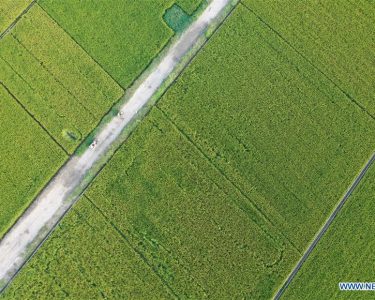
Unlike the Zhou capital, the Han-Wei city was not built over. After its final destruction, it was largely abandoned, leaving its massive footprint preserved as an open-air archaeological park. A visit here is a powerful experience, though it requires an appreciation for subtle landscapes. The primary visible features are the immense, undulating mounds of its rammed-earth city walls. Walking along these earthen ramparts, which once stood tall and were punctuated by grand gates, you can trace the city’s perimeter and grasp its enormous scale.
Identifying Key Features Within the Walls
The interior of the Han-Wei city site is now mostly farmland, but archaeological work has identified the layout of its key components. The city had a northern and southern palace, and the foundations of major avenues and ritual structures have been mapped. One of the most important areas was the spiritual terrace (Lingtai), an imperial observatory that was a center for astronomical and calendrical sciences.
The site museum offers invaluable context, with models and artifacts that bring the vast, empty space to life. By studying the map at the museum and then exploring the grounds, you can begin to mentally reconstruct the bustling metropolis that once stood here. This ancient city of Luoyang is a testament to the cycles of construction and destruction that define its history.
The Sui-Tang Grand Canal Hub: A Meticulously Planned Metropolis
After the decline of the Han-Wei city, the Sui dynasty established a new capital, which was further developed and expanded by the succeeding Tang dynasty. This Sui-Tang Luoyang City was a masterpiece of urban planning, serving as the “Eastern Capital” and, for a time under Empress Wu Zetian, the primary capital of the empire. Its location was shifted west from the Han-Wei site and partially overlaps with the modern city’s older districts.
The Sui-Tang capital was designed on a strict north-south axis with a symmetrical grid layout. This rational plan reflected imperial power and cosmic order. It was composed of several distinct walled enclosures:
- The Palace City (Gongcheng): The emperor’s residence, located in the north-central part of the city.
- The Imperial City (Huangcheng): Surrounding the Palace City, this area housed government offices and administrative buildings.
- The Outer City (Guocheng): The vast residential and commercial area, divided into more than 100 walled wards (fang) by a grid of wide avenues.
Finding the Tang Dynasty in the Modern City
While most of the Sui-Tang walls have disappeared, their influence is still visible. Some of modern Luoyang’s major streets, like Zhongzhou Road, follow the path of the grand Tang avenues. The most direct way to connect with this era is by visiting the reconstructed sites within the Sui-Tang Luoyang City National Archaeological Park.
The most prominent of these are the Mingtang (“Hall of Light”) and the Tiantang (“Heavenly Hall”), magnificent reconstructions of Empress Wu Zetian’s key imperial structures. These buildings stand on their original foundations, giving visitors a powerful sense of the scale and architectural splendor of the Tang capital’s central axis. Another key site is the museum at the former location of the Dingdingmen Gate, the main southern entrance to the Outer City. Here, you can see the gate’s original foundations and understand its strategic importance in the city’s layout.
A Practical Guide to Tracing the Walls
For travelers wishing to explore the layered history of these capitals, a strategic approach is essential. The sheer scale of the sites can be daunting, but with the right perspective, it becomes a fascinating puzzle.
Mapping Your Chronological Journey
A logical way to structure your exploration is chronologically. Start with the earliest sites, such as the Erlitou Site Museum, to understand the origins of urbanism in the region. Then, dedicate a significant portion of a day to the vast Han-Wei Luoyang City site to the east. Finally, explore the Sui-Tang sites, which are more integrated with the modern city, allowing you to see the direct lineage from the imperial past to the present.
What to Look For on the Ground
When visiting the archaeological parks, especially the Han-Wei site, attune your eyes to the landscape. Look for long, linear rises in the terrain—these are the remnants of the hangtu walls. Notice the distinct layers in any exposed cross-sections of earth, which show the marks of the ancient construction technique. In the city, pay attention to street names and historical markers that often provide clues to what lay beneath. The Luoyang Museum is an indispensable resource, offering comprehensive maps and models that overlay the different capital cities, helping you connect what you see on the ground with the historical record.
By focusing on the city walls—whether as excavated foundations, massive earthen mounds, or reconstructed gates—you gain a unique and powerful lens through which to view the immense history of this ancient capital. You are no longer just visiting a city; you are navigating the ghosts of many cities, each built upon the last, right in the heart of China.