
Blog
Understanding the Cliff-Carving Process at Longmen Caves China

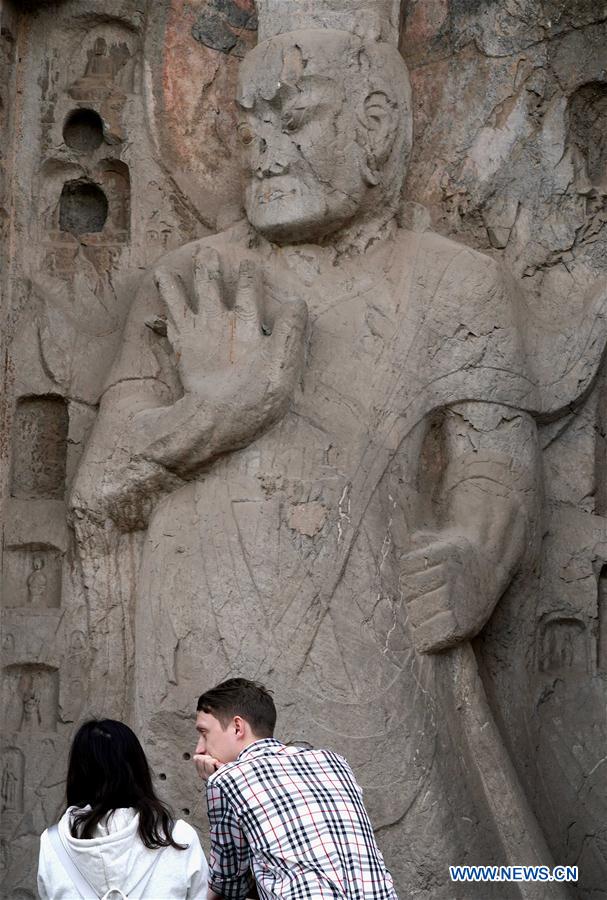
Understanding the Cliff-Carving Process at Longmen Caves China
How did ancient artisans, over a span of centuries, transform a sheer limestone cliff into one of the world’s most significant repositories of stone sculpture? The creation of the grottoes and statues at the Longmen Caves in China was not merely an act of artistic expression but a monumental feat of engineering, geology, and project management. Understanding the step-by-step process reveals the technical sophistication behind these masterworks and provides a deeper appreciation for the challenges overcome by their creators.
This technical guide moves beyond a simple travel overview to explain the practical methods used. We will examine how the site was chosen, how the raw caves were excavated from the living rock, and how the final, detailed figures were brought to life. This process, repeated for thousands of statues, defines the unique character of the Longmen Caves China, a designated UNESCO World Heritage Site.
Geological Suitability: Why This Specific Cliff Face Was Chosen
The location of the Longmen grottoes was not accidental. The selection of the limestone cliffs along the Yi River was a strategic decision based on geology, geography, and politics. The capital of the Northern Wei Dynasty had been moved to nearby Luoyang, making this prominent riverbank an ideal site for imperial patronage. However, the rock itself was the most critical technical factor.
The artisans required a material that was soft enough to be carved with hand tools yet dense and durable enough to hold fine detail and support its own weight in the form of massive statues and hollowed-out chambers. The grey limestone at Longmen met these criteria perfectly. It is a fine-grained sedimentary rock, which allows for smooth surfaces and crisp lines, essential for rendering the subtle expressions and intricate drapery seen in the sculptures. A coarser or more fractured stone would have made such detailed work impossible.
Before excavation could begin, artisans would have meticulously surveyed the cliff face for its stability and quality. This involved identifying and avoiding major geological faults, fracture lines, and areas of inconsistent rock density. The consequences of poor site selection are still visible today, where water seepage along natural cracks in the stone has led to significant erosion and damage to certain grottoes over the centuries.
Key Geological Considerations for Grotto Placement
- Rock Integrity: Artisans sounded the cliff face, likely by striking it with hammers, to listen for hollow or weak spots. A solid, uniform sound indicated stable rock suitable for a large-scale excavation. Areas with a dull thud would be avoided.
- Water Runoff: The natural contours of the cliff were studied to predict how rainwater would flow. Grottoes were ideally placed in areas sheltered from direct runoff or where natural overhangs could offer protection. The orientation of the cave entrance was also a factor in minimizing water ingress.
- Stratification: The horizontal layers (beds) of the limestone were assessed. Carving had to proceed in a way that did not undermine the structural integrity of these layers. Major statues were often planned so their mass was supported by the thickest, most stable rock beds.
- Accessibility: The location on the cliff had to be reachable. This required the construction of extensive scaffolding from timber, a massive undertaking in itself, which allowed workers and tools to be transported up and down the rock face.
The Artisan’s Process: From Raw Cliff to Finished Sculpture
Creating a grotto at the Longmen Caves China involved a systematic, multi-stage process that combined quarrying, sculpting, and fine finishing. Each step required different tools and skill sets, progressing from brute-force excavation to delicate, precise carving. This production line approach allowed for the simultaneous work on multiple caves and statues across the site, managed under the direction of master artisans and imperial or private patrons.
The entire process was executed without the aid of modern machinery, relying solely on human power and tools like iron chisels, points, hammers, and drills. The following steps outline the typical workflow for creating a cave chamber and its statuary.
A Step-by-Step Breakdown of Grotto Creation
- Site Preparation and Scaffolding: After a section of the cliff was approved, a robust network of wooden scaffolding was erected. This provided a stable platform for workers and a means to hoist tools and remove waste rock.
- Marking the Design: The master artisan would outline the primary design directly onto the rock face, possibly using charcoal or mineral pigments. This included the dimensions of the cave entrance, the planned depth, and the rough placement of the main figures.
- Rough Hewing (Excavation): This was the most labor-intensive phase. Workers used heavy iron points and mallets to break away large chunks of limestone, slowly hollowing out the chamber. The goal was to remove bulk material to create the basic interior space. The figures of Buddhas and bodhisattvas were not carved separately and placed inside; they were left as solid blocks of the original stone as the rock around them was cleared away. This is known as monolithic sculpture.
- Shaping the Figures: Once the chamber was excavated and the main statue blocks were defined, sculptors began to shape them. Using smaller chisels and hammers, they would refine the general forms of the figures—the posture, the head, the torso, and the limbs—working from large forms down to smaller ones.
- Detailed Carving and Reliefs: With the primary forms established, highly skilled artisans took over. They used a variety of fine-pointed and flat-edged chisels to execute the intricate details: the folds of the robes, the facial features, the jewelry, and the hand gestures (mudras). The surrounding walls were also carved with smaller figures, halos (mandorlas), and decorative motifs.
- Finishing and Polishing: The surfaces of the statues and reliefs were then smoothed. This may have been done using abrasive materials like sand and water, or finer polishing stones, to remove chisel marks and create a uniform texture ready for painting.
- Painting and Gilding: The final step, and one often lost to time, was the application of vibrant mineral pigments. The sculptures were not originally bare stone; they were brightly painted. Traces of red, blue, green, and black pigments can still be found in protected crevices. Key figures or details may also have been gilded with gold leaf to enhance their divine appearance.
Common Challenges and Constraints Faced by Longmen Artisans
The artisans of the Longmen Caves did not work in ideal conditions. Their success was a testament to their ability to adapt to numerous technical and logistical challenges. Understanding these constraints highlights the ingenuity required to complete such a monumental project over many generations. For anyone studying ancient engineering or large-scale masonry, the solutions developed at this site are highly instructive.
The table below outlines some of the primary obstacles and the likely methods artisans used to overcome them, ensuring the project’s continuity and the structural longevity of the grottoes.
| Challenge | Description | Artisan’s Solution or Mitigation |
|---|---|---|
| Geological Faults & Cracks | Encountering a hidden crack or a weak vein of rock mid-carving could compromise the stability of a statue or the entire cave ceiling. | Master carvers would “read the stone” as they worked. If a fault was found, the design might be altered on the spot, or the affected area would be carved away and left as negative space to prevent future collapse. |
| Tool Wear and Hardness | The iron and early steel tools of the period were relatively soft and would dull or break quickly against the limestone, especially harder inclusions. | On-site forges were essential for continuously sharpening, repairing, and re-tempering chisels and points. A constant supply of well-maintained tools was critical to maintaining productivity. |
| Inconsistent Patronage | Work on the grottoes was funded by imperial edict or private donation. A change in emperor, a war, or economic downturn could halt funding abruptly, leaving caves unfinished. | Work was often phased. Artisans would focus on completing the main deity first, ensuring the core religious purpose of the grotto was fulfilled. Secondary figures and reliefs could be added later if and when funding resumed. Many caves show evidence of this multi-generational work. |
| Removing Waste Material | Excavating a single large cave generated tons of limestone rubble, which had to be safely removed from the cliff face without endangering workers below. | Chutes and baskets were likely used to control the descent of waste rock from the scaffolding. This material may have been repurposed for other construction, such as building foundations or river embankments. |
The breathtaking artistic achievement of the Longmen Caves China is inseparable from the pragmatic engineering and problem-solving that made it possible. By examining the methodical process of carving—from geological survey to the final application of paint—we gain a clearer picture of the skill, labor, and perseverance embodied in this remarkable cultural landscape.
For more detailed information on specific carving techniques or historical periods at the Longmen site, our technical team is available to assist with your research.
About LyWOW Tours
LyWOW is a locally based travel agency in Luoyang, specializing in private tours for international travelers across Luoyang, Shaolin, Xi’an and Central China. English-speaking guides, flexible itineraries and door-to-door service.
Learn more about us or browse all our tours.