By
By Identifying the Oldest Temple in China and Its Enduring Legacy
When seeking to identify the oldest temple in China, historical records and tradition point conclusively to one site: the White Horse Temple (Baima Si) in Luoyang, Henan province. Established in 68 CE under the patronage of Emperor Ming of the Eastern Han Dynasty, its founding marks the official introduction of Buddhism to China. However, the story isn’t as simple as a single building surviving for nearly two millennia. The temple’s claim to being the first is based on its continuous history as an institution and location, despite numerous reconstructions over the centuries.
Understanding this distinction between a founding date and the age of the physical structures is crucial for anyone interested in China’s deep cultural and religious history. The White Horse Temple is not an ancient ruin but a living, active complex whose significance lies in its origin story and its role as the cradle of Chinese Buddhism.
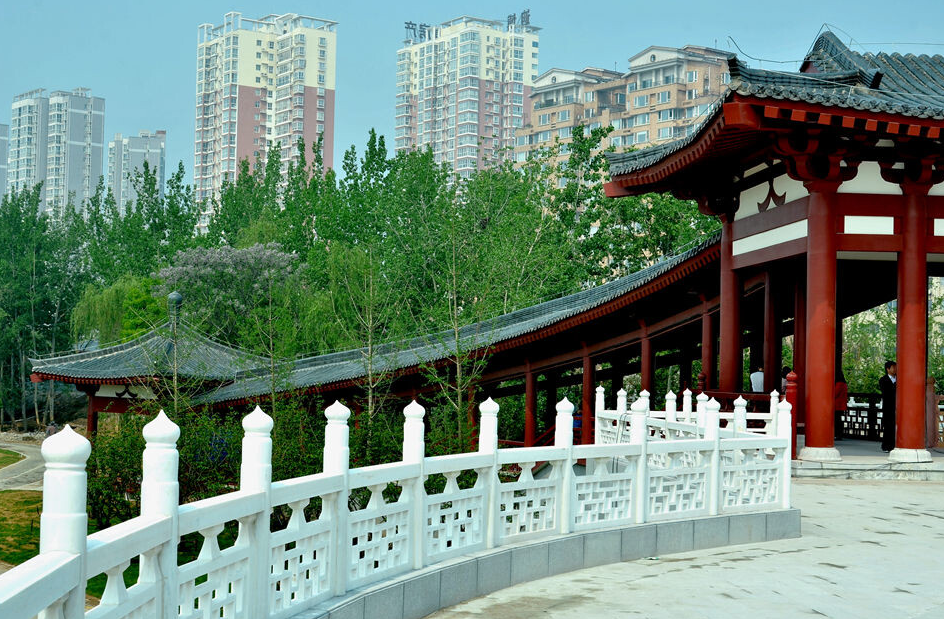
White Horse Temple’s Claim: Founding Date vs. Rebuilding History
The core of the White Horse Temple’s identity rests on its founding in 68 CE. This date is not contested. The complexity arises because the original timber structures from the Han dynasty no longer exist. War, neglect, and natural decay have led to the temple being damaged and rebuilt multiple times, with most of the current architecture dating from the Ming and Qing dynasties (1368–1912). So, why is it still considered the original?
The title of “oldest” refers to the establishment of the institution and the consecration of the grounds. It has operated as a Buddhist temple on this very site, without interruption, since its inception. This makes it the foundational point from which Buddhism spread across the country. The following table breaks down the key events in its history to clarify its claim.
| Historical Event or Period | Traditional Date / Period | Key Developments and Significance |
|---|---|---|
| The Imperial Dream and Mission | Circa 64 CE | Emperor Ming dreams of a golden figure. He dispatches envoys to the West to seek out information on Buddhism. This is the catalyst for the temple’s founding. |
| Founding of the Temple | 68 CE | The envoys return with two Indian monks, Dharmaratna and Kasyapa Matanga, along with Buddhist scriptures and relics carried on white horses. The emperor orders the construction of a monastery to house them, naming it the White Horse Temple. This marks the first state-sponsored Buddhist institution in China. |
| First Translations | Late 1st Century CE | The Indian monks translate the Sutra of Forty-two Chapters into Chinese within the temple. This is considered the first Buddhist scripture translated in China, establishing the temple as a center for scholarship. |
| Periods of Decline and Destruction | 3rd – 13th Centuries | The temple suffers damage during various conflicts, including the An Lushan Rebellion in the Tang dynasty and the Mongol invasions. The original Han-era structures are lost during these tumultuous periods. |
| Major Reconstructions | Ming and Qing Dynasties (1368–1912) | Significant rebuilding and expansion projects restore the temple’s grandeur. The layout and architectural style of the halls seen today (like the Hall of Heavenly Kings and Hall of the Great Buddha) primarily reflect these later periods. |
| Modern International Expansion | Late 20th – 21st Century | To honor the temple’s role as the entry point of Buddhism from India, international partners have built replicas of their own famous temples on the grounds. This includes a Thai temple, an Indian temple, and a Burmese pagoda, creating a unique global Buddhist complex. |
The continuity of purpose and location is what solidifies its status. While the wood and tiles are newer, the “software” of the institution—its lineage, purpose, and historical identity as the oldest temple in China—has been running on the same “hardware” of this specific piece of land since 68 CE.
Key Features to Identify When Visiting the Site
For business travelers or researchers visiting Luoyang, appreciating the White Horse Temple goes beyond acknowledging its age. The complex is a rich tapestry of history, art, and international cultural exchange. Recognizing its key components allows for a deeper understanding of its importance. Here is a checklist of features to look for that tell the story of the temple’s unique legacy.
- The Main Temple Axis: Observe the traditional Chinese temple layout. The main halls are arranged symmetrically along a central north-south axis, starting from the entrance gate and progressing through the Hall of Heavenly Kings, the Hall of the Great Buddha, and other significant structures. This design reflects principles of Chinese cosmology and architectural harmony.
- Tomb of the Indian Monks: Located in the main courtyard, you will find the tombs of the two founding monks, Kasyapa Matanga and Dharmaratna. These simple, rounded mounds are a powerful physical link to the temple’s origin story and the India-China connection.
- The Qiyun Pagoda (Cloud-Reaching Pagoda): Situated to the southeast of the main complex, this 13-story brick pagoda is one of the oldest surviving structures on the grounds, dating back to the Jin dynasty (1115–1234). It is one of the few ancient pagodas of its kind in the region and represents a tangible piece of the temple’s long history.
- The International Zone: Don’t miss the newer section featuring the Indian, Thai, and Burmese-style temples. The Indian temple, in particular, is a direct homage to the Sanchi Stupa, symbolizing the full circle of Buddhism’s journey from India to China and back. This area highlights the temple’s ongoing role in global Buddhist relations.
- The Sutra of Forty-two Chapters: While you won’t see the original manuscript, look for depictions and references to this foundational text. Its translation at this site was the first major step in adapting Buddhist philosophy for a Chinese audience, and its influence is immeasurable.
By focusing on these elements, a visitor can trace the temple’s evolution from a small monastery for two foreign monks into the sprawling, internationally significant complex it is today. It’s a practical way to engage with the site’s history beyond just its founding date.
Distinguishing White Horse Temple from Other Ancient Buddhist Sites
While the White Horse Temple holds the title of the first officially established temple, China is home to other ancient Buddhist sites that are sometimes a source of confusion. Sites like the Mogao Caves or the Longmen Grottoes contain Buddhist art that is centuries old. Why are they not considered contenders for the “oldest temple” title?
The distinction lies in the definition of a “temple” (寺, sì). In this context, a temple refers to a purpose-built monastic complex for housing monks, translating scriptures, and performing rituals under imperial sanction. Grottoes and cave complexes, while profoundly important, served a different primary function.
- Function and Purpose: White Horse Temple was founded specifically as a monastery and translation center. Its core purpose was institutional. In contrast, sites like the Longmen Grottoes (near Luoyang) and Yungang Grottoes are primarily sculptural sites—vast collections of rock-carved Buddhas and bodhisattvas created as acts of devotion over centuries. They were places of pilgrimage and art, not integrated monastic institutions in the same way.
- Architectural Form: The White Horse Temple was a structural complex built from the ground up with halls, living quarters, and courtyards. Cave temples, by their nature, are subterranean or carved into cliffsides. They represent a different tradition of Buddhist worship space, one that is more focused on iconography and less on housing a formal, state-sponsored clergy from day one.
- Official Sanction and Origin: The founding of the White Horse Temple was a singular, documented event initiated by the emperor. It represents a clear moment of official adoption. The creation of the major grottoes was a more gradual process, often patronized by various imperial family members, officials, and commoners over many different dynasties.
Therefore, while the grottoes are invaluable ancient repositories of Buddhist art and faith, the White Horse Temple’s claim as the oldest temple in China is secure because it was the first of its kind—an imperially sponsored, architecturally distinct monastery that served as the official starting point for Chinese Buddhism. Understanding this context provides valuable insight for any business operations in the region and the deep cultural history that informs it.
This historical clarity is essential when evaluating the cultural landscape of central China, a region where our firm provides specialized logistical support for international projects.
For more detailed information or guidance on navigating the cultural and business environment in China, contact our team for a consultation.