
Blog
Understanding the Thousands of Niches at Longmen Caves China

Understanding the Thousands of Niches at Longmen Caves China
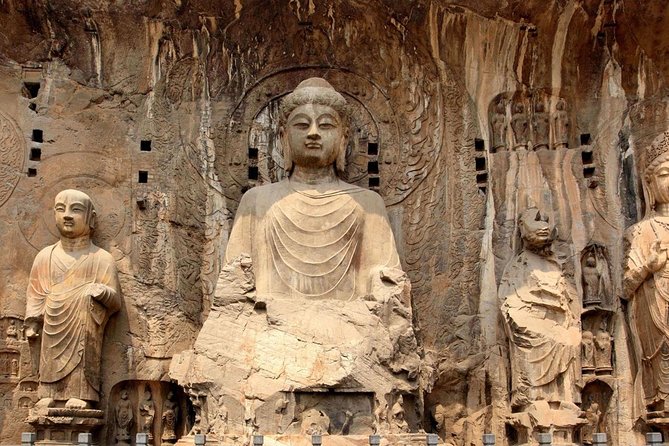
The first impression of the Longmen Caves China is one of overwhelming scale. Thousands of niches, ranging from the size of a thumb to colossal chambers housing monumental figures, honeycomb the limestone cliffs along the Yi River. This vast collection of over 100,000 statues wasn’t the result of a single, centrally planned project. Instead, it is a complex, multi-generational tapestry of faith, power, and social aspiration woven over nearly five centuries.
The sheer number of individual carvings stems directly from its diverse sources of funding and purpose. Each niche, whether large or small, represents a specific act of patronage—a donation made to accumulate spiritual merit. Understanding the different types of patrons is key to deciphering why the site evolved into such a dense and varied gallery of Buddhist art. From emperors solidifying their rule to common families expressing their piety, each contribution added another piece to this remarkable historical document carved in stone.
How Patronage Shaped Niche Size and Sculpture Programs
The variety in scale, artistic quality, and subject matter across the Longmen Grottoes is a direct reflection of who paid for the carving. The site served as a public ledger of devotion and status, with four primary groups of patrons leaving their mark. Each group had different motivations, resources, and access, resulting in distinct types of sculptural programs.
The following table breaks down the characteristics of niches and sculptures based on their source of patronage, explaining the visual differences seen throughout the Longmen Caves China.
| Patron Type | Typical Niche/Cave Size | Sculptural Program & Iconography | Primary Motivation & Location |
|---|---|---|---|
| Imperial (Emperors & Empresses) | Monumental; large, complex cave temples (e.g., Fengxian Temple). | Depicts the cosmic Buddha (Vairocana) with an entourage of bodhisattvas and guardians. Figures often have idealized portraits of the ruling emperor or empress. Iconography reinforces the concept of the ruler as a “cakravartin” (wheel-turning king) and earthly representative of the Buddha. | Political & Spiritual Legitimacy. These state-sponsored projects were acts of immense public piety, designed to secure blessings for the state and solidify the dynasty’s divine right to rule. They occupy the most prominent and stable sections of the cliff face. |
| Aristocratic & High-Ranking Officials | Medium to large; often well-decorated caves located near imperial projects. | Features high-quality, elegant sculptures often depicting specific sutras or paradises. Inscriptions frequently name the donor family and express wishes for the well-being of ancestors and the emperor. Artistry is refined, reflecting the patron’s cultivated taste. | Social Status & Piety. For the elite, patronage was a way to display both their devotion and their social standing. Sponsoring a cave was a significant public act that demonstrated wealth, loyalty to the throne, and commitment to Buddhism. |
| Monastic (Monasteries & Clergy) | Small to medium; functional and often focused on specific Buddhist schools. | Iconography is often didactic, illustrating key doctrinal concepts, famous monks, or lineage charts. The focus is less on grandeur and more on theological precision. Examples include representations of the Pure Land or depictions of historic clerical figures. | Doctrinal & Commemorative. Monastic communities sponsored caves to honor revered teachers, to serve as spaces for meditation and teaching, and to visually represent the tenets of their specific Buddhist traditions. These were tools for religious instruction. |
| Private Donors (Merchants, Soldiers, Commoners) | Small; typically simple, individual votive niches. | Usually contains a single Buddha or Bodhisattva figure, sometimes with two attendants. The carving style can be simple or even crude, reflecting limited resources. Inscriptions are personal, praying for the health of family members, success in business, or a favorable rebirth. | Personal Merit-Making. The vast majority of niches at Longmen were created by common people. For them, commissioning a small carving was a tangible way to accumulate spiritual merit (karma), a core concept in Buddhism. These small niches fill every available space between the larger caves. |
Artistic Evolution: Contrasting Northern Wei and Tang Dynasty Carvings
The nearly 500-year span of carving at the Longmen Caves China covers two of the most important eras in Chinese history: the Northern Wei Dynasty and the Tang Dynasty. The political, social, and aesthetic ideals of these periods were vastly different, and this contrast is vividly expressed in the sculptural styles. An observer can often identify the era of a cave simply by looking at the form and spirit of the figures within it.
Understanding these stylistic shifts provides a deeper appreciation for the grottoes as a dynamic, evolving site rather than a static monument. Here are the key distinctions a buyer or researcher should recognize when evaluating works from these two periods.
Key Distinctions in Longmen Sculptural Styles
- Figure Proportions & Form
- Northern Wei (c. 493-534 AD): Figures are slender, elongated, and ethereal. They feature high-bridged noses, a serene, enigmatic smile (known as the “archaic smile”), and a sense of otherworldly detachment. The physical body is de-emphasized beneath linear, waterfall-like drapery.
- Tang (c. 618-907 AD): Figures are naturalistic, full-bodied, and grounded. Sculptors mastered realistic anatomy, creating powerful guardian figures with bulging muscles and graceful bodhisattvas with soft, fleshy forms. The style reflects the confidence and worldliness of the Tang empire at its peak.
- Clothing & Drapery
- Northern Wei: Robes are schematic and stylized, with sharp, flat folds that fall in parallel lines. This “gash-like” carving technique emphasizes pattern and rhythm over realism.
- Tang: Drapery is rendered with incredible realism. It clings to the body, revealing the form beneath, and falls in soft, believable curves. The clothing often depicts the rich silks and jewelry of the Tang court, blending the divine with the terrestrial.
- Expression & Mood
- Northern Wei: The mood is one of spiritual transcendence and serene contemplation. The figures feel remote and introspective, encouraging the viewer to look inward.
- Tang: The mood is one of worldly grandeur, compassion, and accessibility. The main Buddha of the Fengxian Temple, for example, looks down with a gentle, all-knowing expression that is both majestic and deeply human. The figures engage directly with the viewer.
- Composition of Groups
- Northern Wei: Figure groups are often formal and hierarchical, with a stiff, frontal presentation. There is less interaction between the figures.
- Tang: Compositions are more dynamic and interactive. Figures turn towards each other, creating a sense of living presence and narrative. The main Buddha is clearly the focus, but the attendant figures have distinct personalities and roles.
This stylistic evolution from the spiritual abstraction of the Northern Wei to the confident humanism of the Tang makes the Longmen Caves China an unparalleled textbook of Chinese Buddhist art history.
The Functions of Votive Niches Beyond Art
While we appreciate the niches today as works of art, their original purpose was deeply rooted in religious practice and social reality. For the hundreds of thousands of individuals who commissioned them, these carvings were not merely decorative. They were functional tools for engaging with the spiritual world and navigating the social one.
The primary driver was the doctrine of merit-making. In Buddhism, performing good deeds generates positive karma, which leads to a better life and a more favorable rebirth. Sponsoring the creation of a Buddha image was considered an exceptionally meritorious act. An inscription from a small niche might read, “Disciple [Name] respectfully had this statue of Maitreya carved for the sake of his deceased parents, hoping they may be reborn in the Pure Land.” Each niche was a prayer made permanent.
Beyond personal salvation, these niches also served crucial social functions:
- A Public Record of Piety: Carving a niche was a public declaration of one’s faith and generosity. For aristocratic families, it reinforced their image as virtuous leaders of the community.
- Strengthening Community Bonds: Many niches were sponsored by groups, such as a local religious society (yiyi), a military unit, or a guild of merchants. These collective projects fostered a sense of shared identity and purpose among the members.
- A Form of Perpetual Prayer: Unlike a spoken prayer, a stone image was eternal. It would continue generating merit for the sponsor and their family long after they were gone, as long as it was viewed with reverence by pilgrims.
- Site of Ritual: The caves were not static galleries. They were active sites of worship where people would come to pray, make offerings of incense and flowers, and meditate before the images they or their ancestors had sponsored.
Understanding these functions is essential. It reframes the thousands of smaller, simpler niches not as lesser works of art, but as the sincere, heartfelt contributions of ordinary people, which together create the site’s profound spiritual power.
For expert analysis on the historical and cultural significance of major heritage sites, contact our team to discuss your project needs.
About LyWOW Tours
LyWOW is a locally based travel agency in Luoyang, specializing in private tours for international travelers across Luoyang, Shaolin, Xi’an and Central China. English-speaking guides, flexible itineraries and door-to-door service.
Learn more about us or browse all our tours.