
Blog
Unlocking Donor Stories at Longmen Grottoes

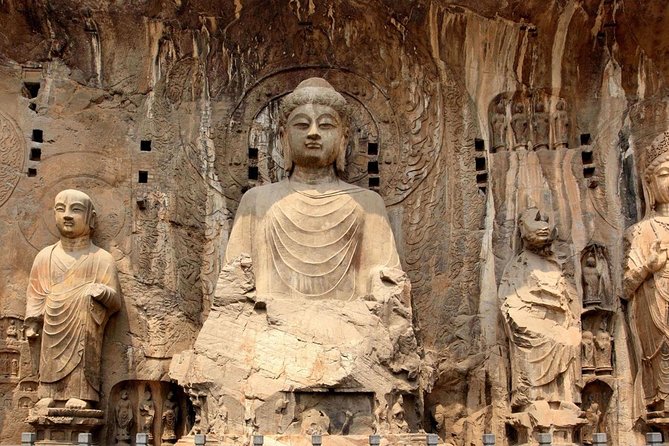
Unlocking the Stories of Donor Inscriptions at Longmen Grottoes
For visitors and researchers alike, the Longmen Grottoes in China offer a profound journey into Buddhist art and history. Beyond the monumental statues and intricate carvings, a deeper layer of historical narrative lies etched into the stone: the donor inscriptions. These often-overlooked texts are vital for understanding the patronage, social dynamics, and religious fervor that shaped this UNESCO World Heritage site. Far from being mere footnotes, these Longmen Grottoes inscriptions provide direct insights into who commissioned the artwork, why, and during which periods. Interpreting these records transforms a visual appreciation into a detailed historical understanding of Luoyang Buddhist art.
Understanding the Context: Why Donor Inscriptions Matter at Longmen Grottoes
The thousands of caves and niches at the Longmen Grottoes represent a monumental undertaking spanning centuries, primarily from the late 5th to the mid-8th century. Such an immense artistic effort required substantial resources, provided by emperors, empresses, officials, monks, nuns, and common citizens. The Longmen donor records are not just names; they are windows into the motivations and societal structures of the Northern Wei and Tang dynasties.
These Buddhist cave inscriptions serve several critical functions:
- Historical Documentation: They often include dates, names, official titles, and places of origin, corroborating historical accounts and providing primary source material for archaeological and art historical studies. Without these, much of the dating and identification of specific patrons would be speculative.
- Socio-Economic Insights: The types of individuals and groups listed as donors reveal the economic capacity and social hierarchy of the time. Imperial patronage often led to grand, central caves, while smaller niches might have been funded by local families or religious guilds.
- Religious Beliefs and Intentions: Many inscriptions articulate the donor’s hopes for spiritual merit, blessings for deceased relatives, good fortune for the emperor, or rebirth in a pure land. This provides direct evidence of popular Buddhist beliefs and practices.
- Art Historical Analysis: Knowing the patron can sometimes inform the interpretation of the iconography, as specific individuals or groups might favor certain deities or artistic styles reflecting their particular beliefs or political affiliations. For instance, imperial commissions often emphasized universal rulership and imperial power through specific Buddha forms.
Ignoring these details means missing a significant portion of the Longmen Grottoes’ story. They transform anonymous masterpieces into works with human connections, political implications, and personal spiritual aspirations.
Deciphering Patronage: How Inscriptions Reveal Who Funded Individual Carvings
Identifying the funders behind the intricate carvings at the Longmen Grottoes requires careful observation and an understanding of common epigraphic conventions. The placement, specific titles, and family names within these Longmen Grottoes inscriptions are key indicators. This approach helps visitors and researchers piece together the complex tapestry of patronage.
Here’s a breakdown of how different elements within the Buddhist cave inscriptions offer clues:
| Inscription Element | What it Reveals (Insight) | Typical Placement & Context | Common Interpretive Pitfalls |
|---|---|---|---|
| Placement on Carving | Indicates primary patron vs. secondary or associated figures. A central inscription often signifies the main funder. |
|
Confusing a dedicatory inscription for a secondary figure with the primary patron of the entire work. Some smaller, later additions might obscure original patronage. |
| Titles and Ranks | Reveals the social status, political influence, or religious role of the donor. Higher titles often correspond to larger, more prominent carvings. |
|
Misinterpreting a ceremonial title for an active political role, or assuming a religious title implies a lack of familial connections to other elite donors. |
| Family Names & Clan Affiliations | Highlights familial networks, group patronage, and the continuity of devotion across generations. |
|
Assuming all listed names are equal donors; sometimes, one individual is the primary patron, with others merely benefiting from the merit. Not all family names are immediately recognizable to non-specialists. |
| Calligraphic Style & Language | Can indicate the period of carving and the level of artistic skill employed in the inscription itself. |
|
Over-reliance on style for precise dating without corroborating textual evidence. Some later repairs or additions might use different styles. |
When examining a carving, first locate the inscription, then identify the most prominent names and associated titles. Note their placement relative to the main figure. For example, a large inscription at the base of a Buddha statue explicitly stating “commissioned by Empress Wu Zetian” leaves little ambiguity. However, a smaller inscription on a nearby wall listing several family names for a smaller niche requires careful consideration of whose name appears first or is given a more prominent title. Understanding these nuances is crucial for accurate interpretation of Longmen donor records.
Practical Steps for Identifying Inscriptions During Your Visit
For those planning a visit to the Longmen Grottoes, actively seeking out and identifying donor inscriptions can significantly enrich the experience. While many inscriptions are well-preserved, others are weathered or located in less accessible areas. Here’s a step-by-step guide on how to identify donors in Longmen caves and what to look for:
- Familiarize Yourself with Key Areas: Donor inscriptions are particularly numerous in the Central Binyang Cave (宾阳中洞), the Lotus Flower Cave (莲花洞), and the caves around the Fengxian Temple (奉先寺). These areas offer prime examples of Longmen Grottoes inscriptions.
- Look for Textual Blocks: Inscriptions typically appear as blocks of carved Chinese characters. They are often arranged vertically, sometimes within a frame or column. They are distinct from decorative patterns or sculptural elements.
- Examine Bases and Side Walls: The most common locations for these texts are at the bases of major statues, along the side walls of niches, or around the entranceways of larger caves. Sometimes, smaller individual figures have inscriptions directly beneath them.
- Utilize Good Lighting: Natural light at different times of day can highlight inscriptions that might be obscure in direct sunlight or shadow. A flashlight (if permitted and used respectfully) can also reveal subtle carvings.
- Focus on Calligraphy and Layout: Notice the style of the characters. Early Northern Wei inscriptions often have a more angular, monumental style, while Tang dynasty texts tend to be more rounded and elegant. The arrangement of names can indicate primary donors versus beneficiaries.
- Seek Out Official Translations (Where Available): Many major sites within the Longmen Grottoes now have interpretive signs that translate key inscriptions. These can be invaluable for confirming your observations and understanding complex references.
- Adopt a Systematic Approach: When examining a cave, work systematically from the entrance inwards, or from the main figure outwards, checking all possible surfaces for carved text. Don’t assume all inscriptions are at eye level.
Common Challenges and What to Avoid:
- Weathering: Centuries of exposure have eroded many inscriptions. Do not assume a lack of inscription means no donor; it might simply be lost.
- Overlooking Small Niches: While imperial caves draw attention, countless smaller, private niches also contain valuable Longmen donor records. These are easily missed.
- Misinterpreting Later Additions: Some caves show evidence of later repairs or additions, sometimes with new inscriptions. Distinguishing original from secondary texts requires careful study.
- Lack of Linguistic Knowledge: Without knowledge of classical Chinese, direct interpretation is challenging. Focus on identifying the presence and general location of inscriptions, then seek translated materials or expert guidance.
By following these steps, you can move beyond simply admiring the artistry and begin to uncover the hidden voices of the past, understanding who commissioned these remarkable works of Luoyang Buddhist art.
What Longmen Grottoes Inscriptions Say: Common Themes and Messages
The content of the Longmen Grottoes inscriptions is as varied as the patrons themselves, yet certain themes and phrases recur, offering a collective voice to the deeply held beliefs of the time. Understanding these common messages helps to answer the question, “what do Longmen Grottoes inscriptions say?”
Typical Inscription Content:
- Dedication of Merit (發願文 – fayuanwen): This is perhaps the most common element. Donors explain that the merit generated by commissioning the statue or cave is dedicated to various beneficiaries. For example, “May the merit of this carving extend to the emperor, my parents, my family, and all sentient beings, allowing them to attain enlightenment.”
- Names and Titles of Donors: As discussed, these are crucial for identifying individuals. They sometimes include official positions, familial relationships, and even places of origin.
- Dates of Commission: Often expressed using reign eras (e.g., “during the [Era Name] reign, [Year]”), these dates are invaluable for chronological sequencing of the carvings and understanding historical periods.
- Prayers for Blessings and Good Fortune: Donors frequently prayed for peace, prosperity, health, and success for themselves and their families in this life.
- Aspirations for the Afterlife: Many inscriptions express hopes for rebirth in a pure land (like Amitabha’s Western Paradise) or for the salvation of deceased relatives from suffering in lower realms. This highlights the strong Mahayana Buddhist influence.
- Filial Piety: Dedications to parents and ancestors are very common, reflecting a deeply ingrained Confucian value integrated into Buddhist practice. Commissioning art for deceased parents was seen as an act of profound respect and merit accumulation.
- Political Loyalty: Particularly during imperial commissions, inscriptions often include prayers for the longevity and prosperity of the emperor and the stability of the state, blending religious devotion with political allegiances.
A specific scenario might involve an inscription by a military general during the Tang dynasty. It would likely include his full name, military rank, the date of dedication, and a prayer for the emperor’s long life, combined with a wish for his own family’s prosperity and perhaps a successful rebirth for his fallen comrades. Such Longmen donor records provide a rich tapestry of personal and collective aspirations, offering unparalleled access to the spiritual and social landscape of ancient China.
The detailed records found in the Longmen Grottoes inscriptions are indispensable for anyone seeking to truly understand this magnificent site. They are not merely historical footnotes but direct insights into the lives, beliefs, and societal structures of those who created this enduring legacy of Luoyang Buddhist art.
For deeper insights into historical sites or specialized research support, our team is available to assist with your inquiries.
About LyWOW Tours
LyWOW is a locally based travel agency in Luoyang, specializing in private tours for international travelers across Luoyang, Shaolin, Xi’an and Central China. English-speaking guides, flexible itineraries and door-to-door service.
Learn more about us or browse all our tours.