Blog
What Makes a Temple China’s Oldest? White Horse Temple Explained

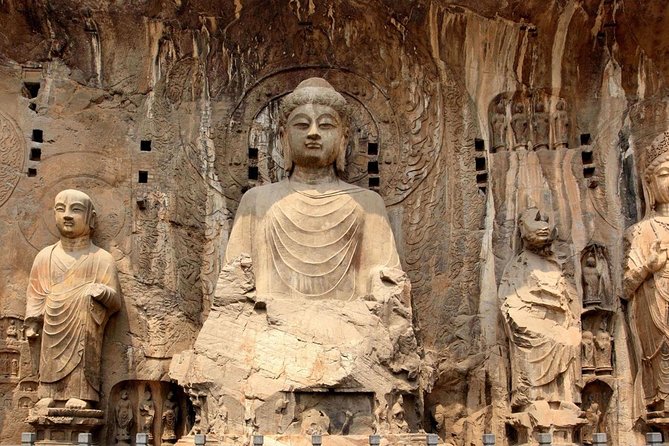
Why White Horse Temple Is Considered the Oldest Temple in China
If you search for the oldest temple in China, you’ll get a confident-sounding answer within seconds: White Horse Temple in Luoyang. But ask a second question — “oldest according to what standard?” — and the answer gets complicated fast. Founding date, surviving structures, and religious category all pull the answer in different directions. This matters if you’re planning a trip to Luoyang and want to know what you’ll actually be looking at when you arrive, not just what the tourism brochure claims.
The short version: White Horse Temple is widely cited as the first Buddhist temple established on Chinese soil, with a founding tradition dating to around 68 CE during the Eastern Han Dynasty, under Emperor Ming. That makes it the oldest temple in China in the sense that matters most to historians of Buddhism — it marks the moment the religion gained an official, government-sanctioned foothold in the country. No serious scholar disputes that White Horse Temple holds this specific title.
The Short Answer: What “Oldest” Actually Refers To
White Horse Temple’s claim rests on three linked facts, and each one is worth separating out before you repeat the claim to someone else:
- Founding tradition: Chinese historical records associate the temple’s establishment with the arrival of Buddhist monks invited by the Han court, placing the event in the late first century CE.
- Institutional significance: it is described in traditional accounts as the first temple built specifically to house and translate Buddhist scripture in China, distinguishing it from earlier informal shrines or imported religious objects.
- Continuous site occupation: the location in Luoyang has been identified with the temple across multiple dynasties, even though the buildings standing today are not the original first-century structures.
That third point is the one most travel content skips, and it’s the one that actually determines what you’ll see on-site.
Boundary: How Founding Dates, Surviving Structures, and Buddhist vs. Non-Buddhist Definitions Change the Answer
“Oldest temple in China” is not one question — it’s at least three, and each produces a different winner. Chinese temple architecture has been rebuilt, burned, and restored across two thousand years of war and dynastic change, so almost no major temple still stands on its original timber frame. The table below separates the three common definitions so you can see where the ambiguity actually lives.
| Definition used | Likely answer | Why the answer shifts |
|---|---|---|
| Oldest by founding date (Buddhist temples only) | White Horse Temple, Luoyang | Traditionally dated to roughly 68 CE, making it the earliest officially sanctioned Buddhist institution in China. |
| Oldest by surviving original timber structure | Nanchan Temple, Mount Wutai (Tang Dynasty hall) | Many temples founded earlier were destroyed or fully rebuilt; a small number of Tang-era halls survive largely intact, which is a different kind of “oldest.” |
| Oldest religious site overall, Buddhist or not | Depends on whether Confucian or Taoist temples count | Confucian temple traditions trace back centuries before Buddhism reached China, so if “temple” is defined broadly, the timeline moves earlier and outside the Buddhist category entirely. |
This is the boundary that most quick-answer articles blur. If a reader’s question is “what’s the oldest Buddhist temple in China,” White Horse Temple is correct and well-supported. If the question is “what’s the oldest surviving temple building,” the honest answer is that almost nothing from the first century still stands — what you visit today is a site with continuous religious identity, not an unbroken physical structure. Both answers are true; they just answer different questions.
Common Mistakes Travelers Make When Verifying “Oldest” Claims
Before booking a Luoyang itinerary around this claim, it helps to know where people typically get it wrong:
- Assuming “founded first” means “oldest building standing.” A temple can hold the founding-date title while its current halls date from a Ming or Qing Dynasty rebuild.
- Treating all Chinese temples as one category. Confucian temples, Taoist temples, and Buddhist temples have separate founding histories; comparing across categories without saying so creates false “oldest” claims.
- Citing a single source without cross-checking. Dynastic-era dates often come from later historical records, not contemporary documentation, so reputable sources usually hedge with “traditionally dated” rather than stating the year as fact.
- Ignoring reconstruction history in travel marketing. Site descriptions aimed at tourists sometimes omit how many times a hall has been rebuilt, which can mislead visitors expecting first-century architecture.
A Step-by-Step Way to Verify a Temple’s Age Before You Travel
If you want to confirm a claim like this yourself rather than taking any single website’s word for it, follow this sequence:
- Identify the category first. Decide whether you’re asking about Buddhist, Taoist, or Confucian temples — the answer changes depending on which one you mean.
- Separate founding date from building date. Search specifically for when the current structure was last rebuilt, not just when the temple was first established.
- Cross-reference at least two independent sources. Academic or encyclopedia sources tend to be more conservative than tourism sites about disputed dates.
- Check for the phrase “traditionally dated” or “according to tradition.” This is a signal the date comes from historical record rather than physical archaeological confirmation.
- Confirm current site status. Some historically significant temples are partially ruined, under restoration, or relocated — worth knowing before you plan a visit around seeing specific halls.
What to Expect When You Actually Visit
White Horse Temple today is a working religious site in Luoyang, with halls, courtyards, and later additions reflecting centuries of continued use rather than a single preserved moment in time. That’s a reasonable expectation to set before arriving: you’re visiting a place with an unbroken claim to historical and religious significance, not a time capsule. For travelers researching Luoyang’s White Horse Temple ahead of a trip, this distinction between founding significance and architectural age is the single most useful thing to understand before you go — it explains both why the site is important and why its buildings don’t look two thousand years old.
Scenario worth noting: a reader planning a one-day Luoyang itinerary around “seeing the oldest temple in China” should budget time for the surrounding grounds and later-period structures, not expect to see first-century timber. The historical weight of the site is real; the physical fabric is largely post-Han.
Buyer’s Checklist for Research-Stage Travelers
If you’re still in early research before committing to a Luoyang itinerary, use this checklist to confirm you’re working from an accurate picture:
- Have you confirmed whether you’re asking about Buddhist, Taoist, or Confucian “oldest” — not all three at once?
- Have you noted that current structures are largely later reconstructions, not original first-century buildings?
- Have you checked at least one academic or encyclopedia-level source alongside tourism content?
- Have you set realistic expectations for what you’ll physically see versus what the site historically represents?
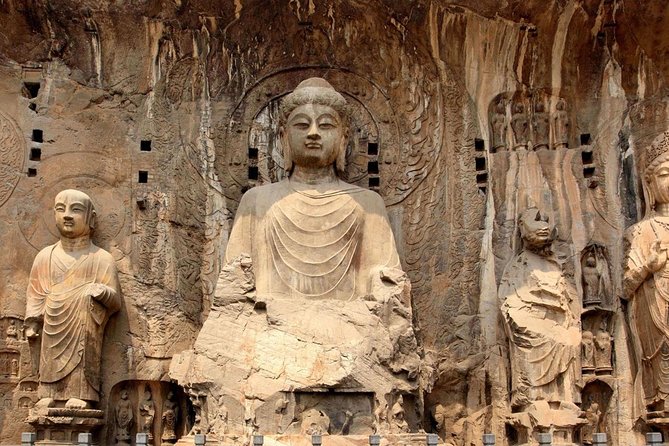
None of this undermines White Horse Temple’s position. It remains the most defensible answer when the question is specifically about the oldest temple in China within the Buddhist tradition, and that’s the context in which the claim is almost always made. The nuance simply protects you from overstating it — useful if you’re writing about the site, teaching it, or just want to describe it accurately to fellow travelers.

If you’re researching Luoyang’s historical sites for an upcoming itinerary, a group tour proposal, or a written travel guide, it’s worth requesting source-checked historical summaries from a local guide or cultural institution before finalizing your content or schedule — it’s a small step that prevents repeating an oversimplified version of the claim.