 By
By What Does the White Horse Temple Name Commemorate?
The white horse temple luoyang name commemorates the white horses that carried the first Buddhist scriptures and statues from the Western Regions to China. That much is consistent across most retellings. But the precise details of that journey, and whether it happened exactly as tradition describes, remain open to historical scrutiny. Visitors planning a trip to Luoyang often encounter the legend first. This guide separates the traditional story from the documentary record, so you can walk through the temple grounds knowing which parts of the narrative are firmly established and which parts are later additions.

The Traditional White Horse Origin Story
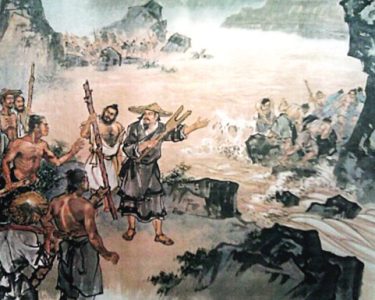
The most widely repeated account of the temple’s founding dates to the Eastern Han dynasty, during the reign of Emperor Ming (58–75 CE). According to this tradition, the emperor dreamed of a golden figure flying through his palace. His advisers interpreted the dream as a vision of the Buddha, a sage from the west. In response, Emperor Ming dispatched envoys to the Western Regions to learn more about this teaching.
The envoys traveled westward and eventually encountered two Buddhist monks, often named as Kasyapa Matanga and Dharmaratna, in the region of present-day Afghanistan or Central Asia. The monks returned with the envoys to Luoyang, bringing with them Buddhist scriptures and images. Those sacred texts and statues were carried on the backs of white horses. To honor the animals that bore this cargo, the emperor ordered the construction of a temple, which he named the White Horse Temple.
The story carries a simple symbolic logic. The white horse serves as a vehicle of transmission, a bridge between the Buddhist world of the west and the Han court in the east. In many retellings, the horse is not merely a pack animal but a sign of the journey’s difficulty and the value of what it carried. The name thus commemorates an act of transport, not a single historical figure or a doctrinal concept.
Variations in the Legend
Different versions of the story emphasize slightly different details. Some say the envoys returned with a single white horse. Others describe a pair of horses, or a small caravan. Some accounts place the monks’ arrival in 67 CE, while others give a slightly later date. A few versions say the temple was originally a guesthouse for foreign monks, later converted into a formal monastery. None of these variations fundamentally change the core claim: the name honors the white horses that brought Buddhist materials to Luoyang.
Boundary: Separating the Traditional Story from Historical Evidence
Here is where the discussion becomes more nuanced. The traditional account is clear and emotionally resonant. The historical record is thinner and less certain. Researchers who study early Chinese Buddhism generally treat the Emperor Ming dream narrative as a later pious legend, not a contemporary historical report. The earliest surviving Chinese Buddhist texts do not mention the dream or the white horse story in detail. Those elements appear in sources written centuries after the alleged events.
What can be said with reasonable confidence is that a Buddhist community existed in the Luoyang area during the Eastern Han period. The city served as the Han capital and was a natural gathering point for foreign merchants, diplomats, and monks traveling along the Silk Road routes. Some form of Buddhist presence, possibly centered around a temple or residence for foreign monks, likely existed in Luoyang by the first or second century CE. Whether that presence traces specifically to an imperial dream and a pair of white horses is impossible to verify from surviving documents.
| Claim | Traditional Account | Historical Assessment |
|---|---|---|
| Emperor Ming’s dream of a golden figure | Directly triggered the mission to the west | Appears in later sources; no contemporary Han record confirms it |
| Envoys sent to the Western Regions | Official delegation dispatched by the emperor | Plausible given Han diplomatic activity, but details are unverified |
| Monks Kasyapa Matanga and Dharmaratna | Historical figures who arrived with scriptures | Names appear in later Buddhist catalogs; contemporaneous evidence is lacking |
| White horses carried the scriptures | Central to the temple’s name | Symbolic element; no archaeological or documentary proof of the specific animals |
| Temple founded in 67–68 CE | First Buddhist temple in China | Widely repeated but not verifiable; the site likely developed over time |
The boundary is therefore this: the white horse story is a tradition of origin, not a verified historical event. It tells us how later generations of Buddhists in China understood their own beginnings. It does not necessarily tell us what happened in Luoyang during the first century CE. Both layers matter. A visitor who knows only the legend misses the uncertainty. A visitor who dismisses the legend entirely misses why the temple has remained important for nearly two millennia.
What the Name Actually Commemorates in Practice
If we set aside the question of whether the white horse story is literally true, the name still performs a clear commemorative function. It marks the moment when Buddhism is said to have entered China as an organized tradition. The white horse is not the object of worship. It is a sign of arrival. The name points to a transition, not to a person or a deity.
In this sense, the white horse temple luoyang name commemorates the idea of transmission. It honors the movement of texts and images across cultural and linguistic boundaries. The horse is a fitting symbol for that movement. It carried weight. It crossed difficult terrain. It delivered something that would transform the religious landscape of East Asia.
Later Chinese Buddhist writers often referred to the temple as the “first Buddhist temple” in China. That claim, repeated in guidebooks and scholarly works alike, reinforces the commemorative function of the name. Whether or not the temple was literally the first, the name encodes a claim of priority. It says: this is where the tradition began.
Historical Evidence for the Temple’s Founding and Reconstruction
The documentary record for the temple’s earliest years is sparse. The first references to a White Horse Temple in Luoyang appear in sources from the third and fourth centuries CE, well after the supposed founding date. The Buddhist catalogs compiled during the Jin and Northern Wei dynasties mention the temple as a site of translation activity. Monks there are said to have worked on early Chinese versions of Buddhist sutras. The most famous of these is the Sutra of Forty-two Sections, traditionally attributed to the two monks from the legend.
Archaeological work at the site has revealed layers of construction from multiple periods. The current temple complex is not a Han dynasty structure. Most of the halls, pagodas, and courtyards visible today date from the Ming and Qing dynasties, with substantial restoration work in the twentieth century. Earlier foundations exist beneath the modern buildings, but they have not yielded inscriptions or artifacts that confirm the white horse story.
What the archaeological record does show is continuous use and rebuilding. The temple was not a static monument. It was repaired, expanded, destroyed, and rebuilt over the centuries. Each reconstruction carried forward the name and the origin story, even as the physical structures changed. The name thus commemorates not only the legendary founding but also the persistence of the community that maintained the site.
A Timeline of Key Periods
- Eastern Han (25–220 CE): Traditional founding period. No contemporary inscriptions or documents survive.
- Three Kingdoms and Jin (220–420 CE): First textual references to the temple appear in Buddhist catalogs.
- Northern Wei (386–534 CE): Luoyang is a major Buddhist center. The temple is described in city records.
- Tang (618–907 CE): The temple is celebrated in poetry and pilgrimage accounts. The white horse legend becomes widely known.
- Ming and Qing (1368–1912 CE): Major rebuilding campaigns produce the layout largely visible today.
- Modern era: Restoration and conservation work continue. The temple functions as an active monastery and a cultural heritage site.
Why the Distinction Matters for Visitors
A visitor who arrives at the white horse temple luoyang expecting a first-century Han building will be disappointed. The architecture is predominantly late imperial. A visitor who arrives expecting only a legend will miss the depth of the site. The temple is best understood as a layered place, where a founding story, a long history of translation and practice, and centuries of architectural change all coexist.
When you stand in the main courtyard, you are not standing in the exact spot where white horses allegedly unloaded their cargo. You are standing in a place that later generations built to remember that story. The distinction is subtle but important. It shapes what you see and how you interpret it.
For researchers of early Chinese Buddhism, the temple raises a different set of questions. How did Buddhist ideas first arrive in the Han capital? What role did foreign merchants and monks play in that process? When did the white horse story become the dominant explanation? These questions do not have simple answers. The temple’s name is a starting point for inquiry, not a conclusion.
Common Misunderstandings About the Name
- Misunderstanding: The temple is named after a specific, historically documented white horse. Reality: The horse is a symbolic element in a later origin story, not an attested individual animal.
- Misunderstanding: The name proves the temple was the first Buddhist temple in China. Reality: The name encodes a claim of priority, but archaeological and textual evidence for “first” status is inconclusive.
- Misunderstanding: The current temple buildings date from the Han dynasty. Reality: The surviving structures are largely Ming and Qing, with modern restoration.
- Misunderstanding: The white horse story is found in contemporary Han records. Reality: The story appears in sources written centuries after the alleged events.
- Misunderstanding: The temple’s significance depends on the literal truth of the legend. Reality: The temple’s historical role as a translation center and pilgrimage site stands independently of the founding story.
A Practical Research Checklist Before Your Visit
If you are planning a visit to the white horse temple luoyang and want to understand the name on more than a surface level, a short research process helps. Use this checklist to prepare.
- Read the traditional account first. Note the key elements: Emperor Ming’s dream, the envoys, the two monks, the white horses.
- Check the dates. Compare the traditional founding date (67–68 CE) with the dates of the earliest textual references (third–fourth century CE).
- Look at the architecture. Identify which halls date from which periods. Most signage at the temple indicates the rebuilding history.
- Find the translation hall. The temple’s role as a translation center is historically better attested than the founding legend.
- Ask about the sutra. The Sutra of Forty-two Sections is traditionally linked to the temple. Note that its attribution is also debated.
- Separate the layers. Distinguish between the founding story, the translation activity, and the architectural history. Each layer has its own evidence base.
What the Name Means for the Temple’s Identity Today
The white horse temple luoyang name continues to do what it has done for centuries: it anchors the temple to a moment of origin. That anchor matters even when the moment is more legend than verifiable history. The name gives the temple a clear place in the story of Chinese Buddhism. It makes the temple legible to visitors who know nothing else about Luoyang or the Han dynasty.
At the same time, the name carries a quiet challenge. It invites the curious visitor to ask what actually happened. That question leads beyond the temple walls to the broader history of the Silk Road, the movement of ideas across Central Asia, and the slow, complex process by which Buddhism became a Chinese religion. The white horse is a symbol of that movement. The temple is its most famous monument.
If you are researching the white horse temple luoyang name for a visit, a paper, or a deeper understanding of early Chinese Buddhism, we can help you locate reliable sources and plan a focused itinerary. Send us your questions or your research focus, and we will point you toward the evidence that matters for your interests.