
Blog
What Truly Remains of the Original Luoyang White Horse Temple

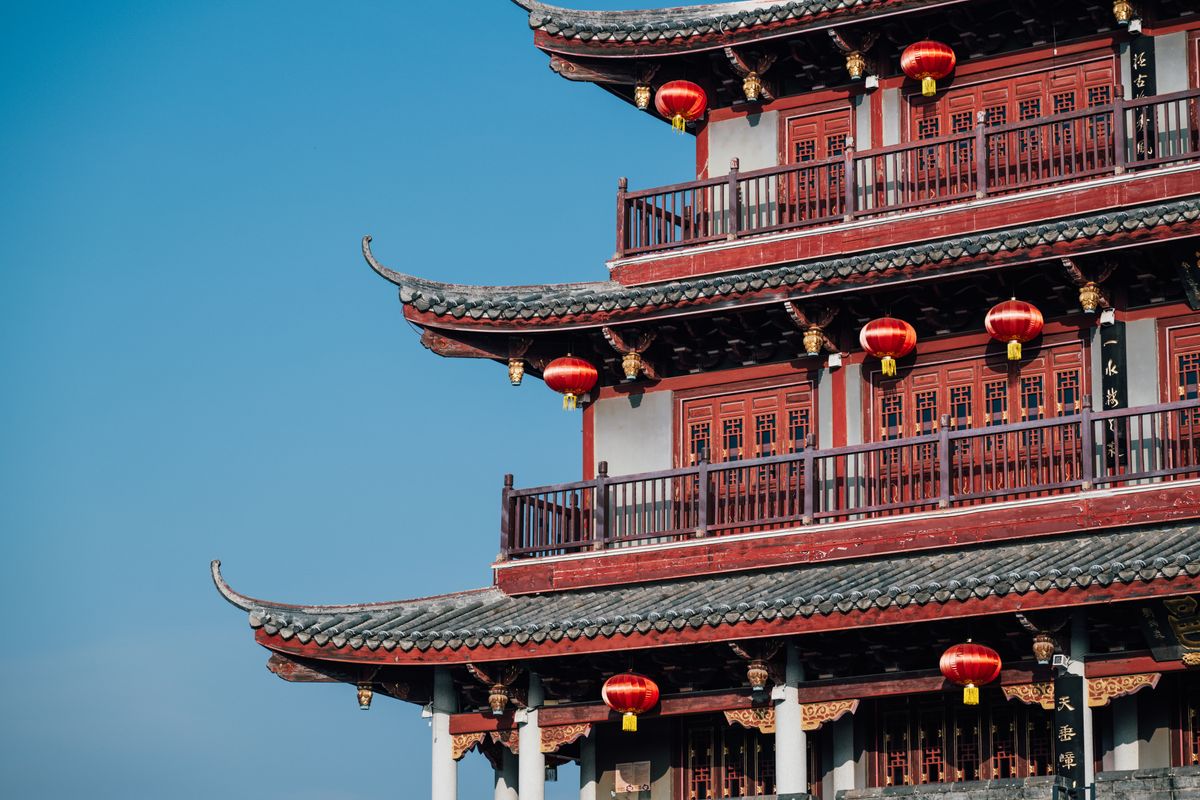
What Truly Remains from the Original Luoyang White Horse Temple
For any researcher or cultural professional visiting China, the Luoyang White Horse Temple is a foundational site. It is widely known as the first Buddhist temple in China, established in 68 CE under Emperor Ming of the Eastern Han Dynasty. However, a common misconception is that the grand halls and towering pagoda visitors see today are the original Han-era structures. They are not. The site’s immense historical value lies not in its surviving architecture, but in its continuous history and foundational legend.
Understanding what is original tradition versus what is a later physical reconstruction is critical for accurate interpretation. The current complex is primarily a product of the Ming (1368-1644) and Qing (1644-1912) dynasties, with significant modern additions. This guide separates the foundational history from the architectural timeline, providing a clear framework for analyzing the site as it stands today. The true significance of the Luoyang White Horse Temple is a story of location and legacy, not of original timber and tiles.
Distinguishing the 68 CE Foundation from Later Structures
The core identity of the temple is tied to its 68 CE origin story, which is a historical and religious fact. The physical manifestation of that temple, however, has changed completely over nearly two millennia of destruction, renovation, and expansion. For anyone assessing the site, it’s crucial to differentiate between the intangible heritage of its founding and the tangible, more recent, architecture. Misinterpreting this can lead to incorrect assumptions about Han dynasty construction, religious practices, and artistic styles.
This table breaks down the key elements of the temple, clarifying their connection to the original founding versus later periods.

| Temple Element | Connection to 68 CE Origin | What This Means for On-Site Analysis |
|---|---|---|
| The Founding Legend | Direct Origin. The story of Emperor Ming’s dream and the arrival of the monks Kasyapa Matanga and Dharmaratna with sutras on a white horse is the foundational event of 68 CE. | This narrative is the temple’s primary claim to being the “cradle of Chinese Buddhism.” It is the intangible heritage that gives the location its profound significance. |
| The Physical Location | Continuous. The temple has occupied this same site, just east of the old Han dynasty capital, since its inception. The ground itself is the most authentic link to the past. | You are standing on archaeologically significant ground. While the buildings are newer, the spatial relationship to the ancient capital is original and strategically important. |
| Main Halls (Hall of Heavenly Kings, Great Buddha Hall, Hall of Mahavira) | Reconstructions. The current main halls were largely rebuilt during the Ming and Qing dynasties. They follow a traditional layout but reflect the architectural style of their time, not the Han. | Analyze the bracket systems (dougong), rooflines, and decorative motifs as examples of Ming/Qing craftsmanship. Do not mistake them for Han-era designs. |
| The Qiyun Pagoda (The “Brick Pagoda”) | Later Addition. The original temple likely had a wooden stupa. The current 13-story brick pagoda was first built much later and was reconstructed in the Jin Dynasty (1115-1234) and repaired in the Ming. | This structure is one of the oldest in the complex but is still over a thousand years younger than the temple’s founding. It represents a later stage in the evolution of Chinese pagoda architecture. |
| Two Stone Horses | Symbolic Replacements. The iconic stone horses at the entrance are not from the Han dynasty. They are from the Song Dynasty (960-1279), placed there to honor the founding legend. | These sculptures are valuable historical artifacts in their own right, but they serve a commemorative purpose. They are symbols of the origin story, not relics from it. |
| International Temple Zone (Indian, Thai, and Burmese Temples) | Modern Additions. This section was developed in the late 20th and early 21st centuries through international cooperation. | This zone showcases modern cultural diplomacy and the temple’s role as a continuing center for international Buddhist exchange. It has no connection to the original 68 CE site. |
A Practical Checklist for Identifying Architectural Periods On-Site
When walking through the Luoyang White Horse Temple, it’s easy to be overwhelmed by the cohesive traditional appearance. However, specific architectural details can help you pinpoint the era of construction. An untrained eye sees a single, ancient complex; a trained eye sees a layered historical document. Use this checklist to spot features that definitively place the structures in the Ming/Qing periods, distinguishing them from their Han dynasty predecessors.
-
Examine the Roof Tiles: Are the tiles brightly colored and glazed, often in imperial yellow or green?
- Conclusion: This is a characteristic of Ming and especially Qing dynasty construction. High-fire glazing techniques were not used in this manner during the Eastern Han. Original Han structures would have featured simpler, unglazed, dark grey earthenware tiles.
-
Look at the Eaves and Brackets (Dougong): Are the interlocking wooden brackets supporting the roof eaves highly complex, ornate, and more decorative than structural?
- Conclusion: This points to a Ming/Qing design philosophy. While dougong existed in the Han dynasty, they were simpler and more functional. The elaborate, almost floral patterns seen today are a hallmark of later imperial architecture.
-
Assess the Building Materials: Are the primary structures made of brick and stone, especially in non-foundational elements like walls and pagodas?
- Conclusion: The extensive use of brick, particularly in the Qiyun Pagoda, is typical of post-Tang construction. Han dynasty temples and palaces were predominantly timber-frame structures, making them highly susceptible to fire and decay, which is why none survive.
-
Observe the Statuary and Iconography: Do the styles of the Buddha statues and Bodhisattvas show mature, standardized forms and artistic conventions?
- Conclusion: The iconography reflects centuries of theological and artistic development. Early Han-era Buddhist art was heavily influenced by Gandharan styles and was stylistically very different. The statues you see today are products of a fully developed Chinese Buddhist artistic tradition, primarily from the Ming and Qing eras.

Common Misinterpretations and Their Strategic Implications
For researchers, tour operators, and cultural delegates, mistaking the temple’s architectural age has real consequences. It can lead to inaccurate reports, flawed historical comparisons, and a misunderstanding of China’s material culture development. Avoiding these common errors is key to a productive analysis of the site.
Mistake 1: Citing the Temple as an Example of Han Dynasty Architecture
The most frequent error is photographing the Great Buddha Hall and labeling it as a definitive example of Han construction.
- The Reality: No above-ground timber buildings from the Eastern Han dynasty survive anywhere in China. The climate, materials, and centuries of conflict ensured their destruction. The White Horse Temple’s halls are valuable examples of Ming/Qing architecture built on a historically significant Han site.
- The Consequence: Using these buildings as a reference for Han architecture will lead to fundamentally incorrect conclusions about the engineering, artistry, and scale of that period.
Mistake 2: Assuming the Layout is Unchanged Since 68 CE
While the central axis layout (south-facing gate, successive halls) is a classic model, it’s a form that was standardized long after the Han dynasty.
- The Reality: Early Buddhist temples in China were often modeled on stupa-centric designs from India or integrated into existing imperial park complexes. The rigid, palace-style courtyard layout seen today was perfected in later dynasties, particularly the Tang and Song.
- The Consequence: Attributing the current layout to the Han period misrepresents the initial phase of Buddhist adaptation in China. The early phase was likely more experimental and less formalized.
Mistake 3: Overlooking the Significance of the Reconstructions
Some visitors feel disappointed upon learning the structures aren’t original. This causes them to dismiss the buildings as “fakes” and miss the real story.
- The Reality: Each reconstruction is a vital historical data point. The Ming-era rebuilding shows the importance the government of that time placed on restoring this foundational site. The modern international temples show its continuing relevance in global diplomacy. The act of rebuilding is, in itself, a testament to the temple’s enduring importance.
- The Consequence: Dismissing later additions means ignoring 1,800 years of the temple’s history and its role under various imperial powers and the modern state. The history of the Luoyang White Horse Temple is one of continuous patronage and rebuilding.
By understanding these layers, a visit moves from a simple tour to a sophisticated reading of a complex historical document written in timber, brick, and stone over centuries.
For deeper analysis of historical sites and their modern context for business or academic delegations, contact our team to discuss your specific project requirements.
About LyWOW Tours
LyWOW is a locally based travel agency in Luoyang, specializing in private tours for international travelers across Luoyang, Shaolin, Xi’an and Central China. English-speaking guides, flexible itineraries and door-to-door service.
Learn more about us or browse all our tours.