
Blog
Why White Horse Temple Is Called China’s First Buddhist Site

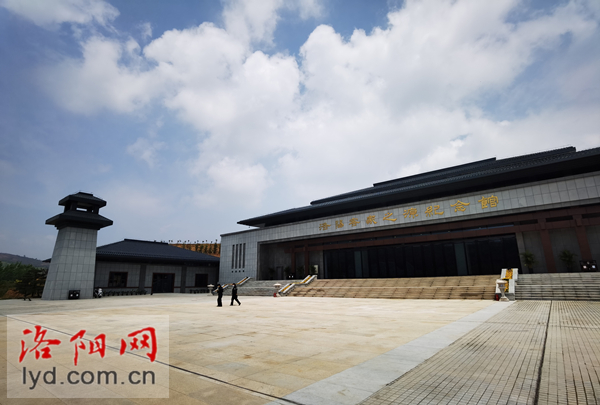
Why White Horse Temple Is Called China’s First Buddhist Site
Why is white horse temple described as China’s first Buddhist site when its present buildings are much later than the Han dynasty? The answer depends on separating a powerful founding tradition from the physical fabric visitors see today. For history-minded travelers, this distinction makes a visit more meaningful: the site is important not because every wall is ancient, but because it represents an early and enduring memory of Buddhism’s arrival in China.
Located near Luoyang, white horse temple is traditionally linked to the introduction of Buddhism under the Eastern Han court. Its reputation rests on a narrative involving imperial interest, foreign monks, translated scriptures, and a white horse said to have carried Buddhist texts into the capital region. That story has been repeated for centuries, yet it should be read carefully. It expresses historical significance and religious memory, not a simple claim that every detail can be verified through surviving architecture.
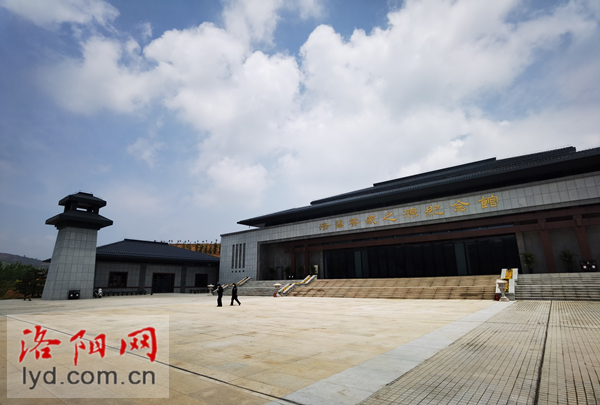
The first-in-China claim refers to a founding tradition, not an untouched ancient building
The central reason white horse temple is called China’s first Buddhist site is its traditional foundation in 68 CE, during the Eastern Han dynasty. Accounts describe Emperor Ming sending envoys westward after a dream associated with a golden figure. The envoys were said to return with Buddhist images and scriptures carried by a white horse, accompanied by foreign monks. A temple was then established and named for the animal.
This is a foundational story in Chinese Buddhist history. It links the temple with translation, teaching, patronage, and the movement of religious ideas along long-distance routes. For visitors, the practical conclusion is clear: treat the site as a landmark in the memory and institutional history of Buddhism in China, rather than as a complete physical time capsule from the Han period.
The claim does not mean Buddhism had never entered Chinese territory before the temple’s traditional founding. Religious contact can precede a formal institution. Travelers, merchants, diplomats, and communities may carry beliefs across borders before a court-supported temple is established. Nor does the claim mean every early Buddhist community outside Luoyang lacked importance. It means white horse temple occupies a special position in the traditional account of Buddhism becoming publicly established within the Chinese imperial sphere.
What the traditional narrative actually supports
- Conclusion: The temple is best understood as an early symbolic institution for Chinese Buddhism. Reason: Its foundation story connects imperial sponsorship, foreign monks, scripture transmission, and translation activity. Best fit: Visitors researching the origin story of Buddhism in China. Limit: It does not prove that the present halls date to the founding period.
- Conclusion: The name matters historically. Reason: The white horse represents the arrival of texts and teachings, rather than merely an animal motif. Best fit: Readers interested in how religious stories shape place names. Limit: The narrative should not be treated as an archaeological record without qualification.
- Conclusion: Luoyang is integral to the claim. Reason: It was an imperial center, so a temple associated with the court carried unusual institutional weight. Best fit: Travelers combining the temple with wider Han and Buddhist heritage sites. Limit: Imperial association alone does not settle every question about early Buddhist chronology.
Boundary analysis separating the 68 CE founding tradition from surviving structures and later reconstructions
Visitors often make one avoidable mistake at white horse temple: they assume that a traditionally ancient foundation means the visible buildings are equally ancient. Temples are living religious places. They can be damaged, repaired, expanded, repurposed, and rebuilt across centuries. A careful reading requires three separate layers.
| Historical layer | What it actually affects | How to interpret it during a visit | What goes wrong if it is confused |
|---|---|---|---|
| 68 CE founding tradition | The site’s religious status, name, and association with early Buddhist transmission | Read plaques, narratives, and commemorative features as evidence of long-term cultural memory | You may wrongly expect Han-period halls or assume every detail is archaeologically confirmed |
| Surviving historical elements | Evidence for later periods of worship, patronage, artistic change, and maintenance | Look for construction styles, inscriptions, layout changes, and objects with their own dates | You may overlook the value of later Chinese Buddhist history by dismissing it as “not original” |
| Later reconstructions and additions | The current visitor experience, circulation route, visual appearance, and continued religious use | Ask when a structure was rebuilt, restored, or newly added before assigning it to the founding era | You may repeat an inaccurate claim that the entire complex has survived unchanged since the Han dynasty |
This boundary analysis is not a downgrade of white horse temple. It is the right way to value the site. A reconstruction can still be culturally significant because it shows that successive communities chose to preserve the temple’s identity. The relevant question is not simply, “Is this building original?” A better question is, “What period does this feature represent, and why was it retained, rebuilt, or added?”
For example, a visitor viewing a formal gate, hall, courtyard, or statue should avoid assigning it automatically to the Han dynasty. Instead, identify whether the feature functions as a devotional space, a commemorative statement, a later architectural expression, or an interpretation of the founding story. This approach is especially useful at white horse temple, where the religious institution has a much longer history than any single surviving structure.
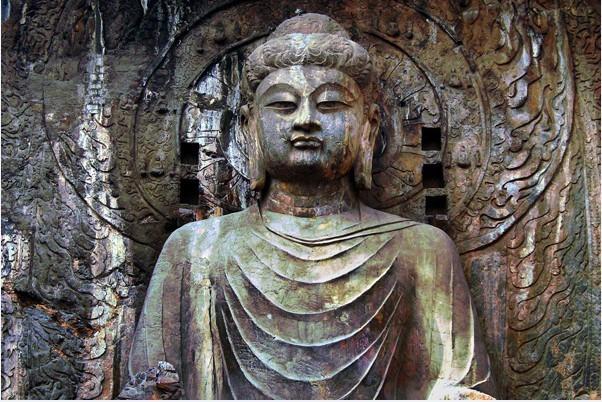
How Buddhism’s arrival story shaped the temple’s lasting importance
The historical importance of white horse temple lies in more than priority. Its tradition presents Buddhism as a religion transmitted through texts, translation, people, and institutions. That framework helps explain why the site is often connected with early scriptural activity and foreign monastic figures in Chinese Buddhist memory.
Translation is particularly important. A religion entering a new linguistic and cultural environment must find ways to explain unfamiliar ideas. Terms, rituals, images, and monastic practices require interpretation. Early Buddhist transmission to China was therefore not a single event but an extended process of adaptation. The temple’s founding narrative compresses that larger process into a memorable story centered on an imperial mission and a white horse.
For travelers, this means the site should be approached as part of a broader network rather than an isolated monument. Luoyang’s political and cultural role, transregional travel, and the circulation of Buddhist teachings all form the background. The temple is a useful starting point for understanding how imported religious traditions became rooted in Chinese society.
A practical reading method for the site
- Start with the founding story. Identify the traditional elements: the imperial connection, the returning envoys, the foreign monks, the scriptures, and the white horse.
- Separate tradition from material evidence. Do not assume that an important story guarantees an equally early structure.
- Read the complex by function. Ask whether each space is used for worship, memorialization, interpretation, procession, or visitor orientation.
- Compare visual styles. Architectural features may reveal later periods of rebuilding or changing devotional preferences.
- Connect the temple to Luoyang. Consider why an imperial region mattered for the public establishment of a new religious institution.
This method suits visitors who want more than photographs. It does not require specialist training, but it does require resisting the temptation to compress nearly two millennia of religious history into one undifferentiated “ancient temple” label.
Common mistakes when researching white horse temple before a visit
A short online description can make white horse temple sound straightforward: founded early, named after a horse, and still standing today. Each part needs context. The following checks will help travelers avoid misleading assumptions.
- Mistake: Calling every visible building Han dynasty architecture. Better approach: Describe the institution as traditionally founded in 68 CE while recognizing that the complex contains later historical layers and reconstructions.
- Mistake: Treating “first Buddhist site” as proof that Buddhism appeared nowhere else beforehand. Better approach: Understand the phrase as a traditional institutional claim tied to the temple’s status in Chinese Buddhist history.
- Mistake: Ignoring later rebuilding because it seems less authentic. Better approach: See rebuilding as evidence of continued religious, cultural, and political importance.
- Mistake: Reading the white horse story only as legend. Better approach: Ask what the story communicates about texts, travel, translation, and cultural exchange, even where individual details remain difficult to verify.
- Mistake: Visiting without a question in mind. Better approach: Choose one theme before arrival, such as early Buddhist translation, temple layout, or the relationship between memory and reconstruction.
What to look for if your visit focuses on historical interpretation
A productive visit to white horse temple should move from broad context to close observation. Begin by locating explanations of the foundation tradition. Then examine how the site presents its relationship to Buddhist transmission. Finally, observe which buildings, monuments, and spaces appear to emphasize continuity with the past.
Use this visitor checklist:
| Question to ask | Why it matters | Useful outcome |
|---|---|---|
| Is this feature presented as ancient, restored, or newly constructed? | It separates institutional age from the age of visible fabric | A more accurate caption for notes or photographs |
| What part of the founding story does this feature represent? | It connects physical spaces with the temple’s cultural memory | A clearer understanding of why the site is revered |
| How does this space support worship or commemoration now? | It shows that the temple is not only a historical attraction | A more respectful and complete visit |
| Does the interpretation distinguish tradition from confirmed material history? | It helps assess the precision of the information provided | Better research notes for later reading |
Ultimately, white horse temple is called China’s first Buddhist site because of the authority of its founding tradition and its enduring place in the story of Buddhism’s establishment in China. Its later structures do not weaken that importance. They reveal how generations continued to preserve, reinterpret, and inhabit a site whose meaning began with an early claim of religious arrival.
For a more informed cultural itinerary, seek local historical interpretation or guided selection advice before planning your visit.
===
