Blog
Verifying the Claim for the Oldest Temple in China


What Is Verifiably the Oldest Temple in China?
When seeking the oldest temple in China, the answer most experts and historical records point to is the White Horse Temple (Baima Si) in Luoyang, Henan province. Established in 68 AD under Emperor Ming of the Han Dynasty, it is widely credited as the first Buddhist temple built on Chinese soil. However, the claim can become complex when other types of ancient religious and ritual sites are considered. Understanding the category of “temple” is crucial to finding the correct answer.
This guide clarifies the distinctions between different ancient sites. We will examine the historical evidence for the White Horse Temple, compare it with other types of religious structures, and provide a framework for evaluating the age claims of historical locations you may encounter. This ensures you can differentiate between the first official Buddhist sanctuary and other significant, yet distinct, ancient sites.
The White Horse Temple: China’s First Buddhist Sanctuary
The establishment of the White Horse Temple marks a pivotal moment: the formal introduction and imperial patronage of Buddhism in China. Its origin story is a cornerstone of Chinese Buddhist history, and its status as the “cradle of Chinese Buddhism” is well-established.
According to historical records like the Book of the Later Han, Emperor Ming had a dream of a golden deity flying in the sky. His advisors interpreted this as a vision of the Buddha from India. The emperor then dispatched a delegation to seek out Buddhist teachings. The envoys returned years later with two eminent Indian monks, Kasyapa Matanga and Dharmaratna, along with Buddhist scriptures and statues carried on a white horse. To honor the horse that carried the sacred texts and to house the monks and artifacts, Emperor Ming ordered the construction of the temple, naming it the White Horse Temple.
While the original structures from the Han Dynasty no longer exist due to centuries of destruction and reconstruction, the temple site itself has been continuously active for nearly two millennia. The current buildings are primarily from the Ming and Qing dynasties, with more recent international additions.
Key Historical Milestones for the White Horse Temple
- 68 AD: Official establishment by order of Emperor Ming of the Eastern Han Dynasty.
- First Translations: The two founding Indian monks translated the Sutra of Forty-two Chapters into Chinese within the temple, one of the first Buddhist scriptures available to the Chinese people.
- Center of Learning: For centuries, the temple was a major center for Buddhist translation and study, attracting monks from across Asia.
- Symbol of Origin: It is often referred to as the “ancestral home” or “source of origin” for Chinese Buddhism, a title that underscores its foundational importance over any other temple.
For travelers and historians, its significance lies not in the age of its current timber and stone, but in the continuous religious and cultural importance of the location itself as the starting point of a major faith in the region.
How to Differentiate China’s Oldest Religious Sites
A common point of confusion arises when comparing the oldest Buddhist temple with older sites from other traditions. China has a rich history of indigenous philosophical and religious systems, including Taoism and ancient folk religions, as well as state-sponsored Confucian temples. These sites often predate the arrival of Buddhism, but they are not “Buddhist temples.” Clarifying these categories is essential for accurate understanding.
The following table breaks down the key differences between these site types to prevent categorical confusion when evaluating age claims.
| Site Category | Prominent Example | Approximate Founding Era | Primary Purpose & Distinction |
|---|---|---|---|
| Buddhist Temple | White Horse Temple (Luoyang) | Eastern Han Dynasty (68 AD) | Dedicated to the worship and study of Buddhism, a religion introduced from India. Its purpose is explicitly for housing monks, scriptures, and Buddhist iconography. |
| Taoist Temple/Palace | Louguantai Temple (Shaanxi) | Claims trace back to the Zhou Dynasty, but more formalized in later periods. | Focused on the principles of Taoism, an indigenous Chinese philosophy and religion. These sites are often associated with Laozi and the pursuit of harmony with the Tao. |
| Confucian Temple | Temple of Confucius (Qufu) | Established post-Confucius’s death (c. 479 BC), expanded over centuries. | Not a religious site in the same vein as Buddhist or Taoist temples. It is a place for venerating Confucius and his philosophy, primarily serving state rites and scholarly purposes. |
| Ancestral Shrine/Altar | Altar of Heaven (Beijing – current form Ming Dynasty) | Ritual sites date back to prehistoric times; state altars from at least the Shang Dynasty. | Used for imperial rituals, ancestor worship, or paying homage to cosmic forces like Heaven and Earth. These are not temples for a specific organized religion but sites for state or clan ceremony. |
This distinction is critical. While a site like the Temple of Confucius in Qufu has ancient origins, its function is fundamentally different from that of the oldest temple in China dedicated to the Buddhist faith. When the question is about the first Buddhist temple, the White Horse Temple is the definitive answer.
Common Mistakes in Identifying Ancient Chinese Structures
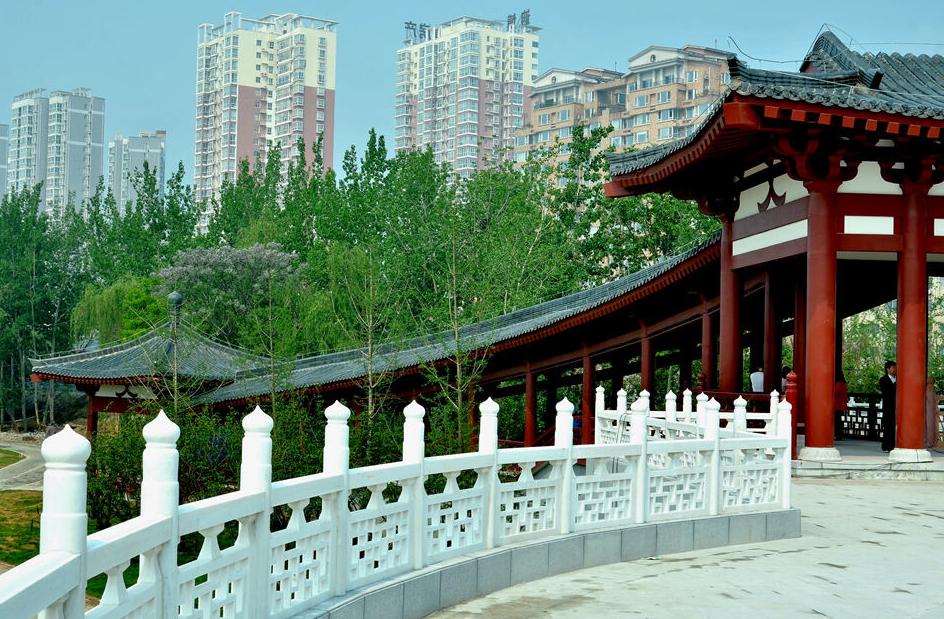
Beyond confusing religious categories, several other errors can lead to incorrect conclusions about China’s oldest structures. It is important to separate the age of a religious *site* from the age of a specific *building* standing on that site.
Here are some common mistakes to avoid when evaluating historical claims:
- Confusing Oldest Site with Oldest Wooden Building: The oldest surviving wooden temple building in China is widely recognized as the main hall of the Nanchan Temple in Shanxi, dated to 782 AD (Tang Dynasty). The site itself is older, but this specific structure is the key artifact. This is a claim about architectural survival, not about the founding of the religion in China.
- Mistaking Tallest Ancient Pagoda for Oldest Temple: The Fogong Temple Pagoda (Yingxian Wooden Pagoda), built in 1056, is the oldest all-wood pagoda in the world. While it is an incredible feat of engineering located at a historic temple, neither the temple nor the pagoda is the oldest in China. Its claim to fame is its unique construction and age as a wooden pagoda.
- Ignoring Reconstruction and Relocation: Many ancient temples have been destroyed by wars, fires, and natural disasters, only to be rebuilt centuries later. Always ask if the current structures are original. Some temples have also been moved from their original locations. The age of the institution is often more important than the age of the physical materials.
- Accepting Local Folklore as Historical Fact: While local legends are culturally rich, they may not align with archaeological or textual evidence. A claim that a local temple was visited by a mythical figure from 3,000 years ago should be treated with skepticism unless backed by scholarly consensus.
By being aware of these potential pitfalls, you can more accurately assess the historical significance of any site and understand why the White Horse Temple’s claim as the oldest temple in China is based on its founding date as an institution, not the survival of its original architecture.
For detailed analysis of historical site claims or help planning a culturally accurate itinerary, contact our technical team for guidance.