 By
By How Artisans Carved the Monumental Longmen Caves China
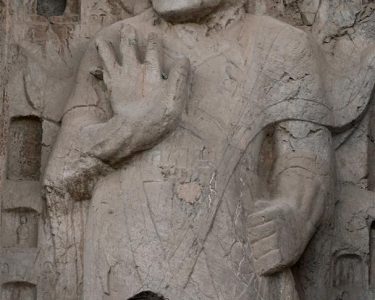
Standing before the Yi River in Henan province, the sheer scale of the Longmen Grottoes is difficult to comprehend. Thousands of Buddhist statues, some just an inch tall and others towering over 17 meters, are carved directly into the grey limestone cliffs. This raises a fundamental technical question: how did artisans, working centuries ago without modern machinery, execute such a monumental and intricate project? The answer lies in a sophisticated understanding of geology, a systematic carving process, and an immense application of skilled labor.
Understanding this process is not merely an academic exercise. It reveals a mastery of material science and project management that remains relevant today. For anyone involved in large-scale fabrication or material shaping, the creation of the longmen caves china offers a profound lesson in planning, execution, and long-term durability. This article breaks down the precise methods used, from selecting the right section of the cliff to the final, delicate tool marks that gave the sculptures life.
The Geological Foundation: Why This Specific Limestone Cliff?
The creation of the Longmen Grottoes was not an arbitrary choice of location. The artisans and their imperial patrons selected this specific site for its unique geological advantages. The cliffs flanking the Yi River are composed of a hard, dense limestone, a critical factor for the project’s success and longevity.
The choice of material directly influenced the entire carving process. A stone that is too soft would have eroded quickly, losing fine details to wind and rain within decades. A stone that is too hard, like granite, would have made the carving process prohibitively slow and labor-intensive with the hand tools available at the time. The limestone at Longmen strikes a crucial balance:
- Workability: It is soft enough to be shaped with iron and steel chisels, allowing for the creation of flowing drapery, subtle facial expressions, and complex patterns.
- Durability: It is hard and dense enough to hold these fine details for centuries, resisting weathering and maintaining structural integrity for even the largest statues.
- Consistency: The rock body is relatively uniform, with fewer major faults or inconsistent layers than other geological formations. This allowed for the planning of large, uninterrupted niches and colossal figures without constant fear of hitting a weak point.
The Yi River itself was a key logistical asset. Not only did it carve out and expose the cliff faces over millennia, but it also provided a natural transportation route for workers, tools, and supplies. The river’s presence created a workable, accessible canvas on a monumental scale for the artisans of the Northern Wei and Tang dynasties.
From Cliff Face to Masterpiece: The Carving Process Explained
The transformation of a raw cliff face into a sacred grotto followed a methodical, multi-stage process. This was not random chipping but a carefully planned sequence, likely managed by master artisans who oversaw teams of sculptors and laborers. Each step built upon the last, moving from massive rock removal to the most delicate surface finishing.
Here is a breakdown of the typical workflow for creating a niche and its sculptures at the Longmen Caves China.
Step-by-Step Carving and Sculpting Procedure
- Cliff Selection and Niche Layout: The first step was geological assessment. Master carvers would “read” the rock face, sounding it with hammers to identify solid, stable sections free from major cracks or fissures. Once a suitable area was chosen, the outline of the main niche or cave was marked directly onto the cliff, establishing the primary dimensions.
- Rough Hewing (Quarrying): This was the most labor-intensive phase. Using heavy mallets and large, pointed chisels, workers removed massive volumes of rock. They would work from the top down, allowing debris to fall away from the work area. This stage created the basic recessed shape of the grotto, establishing the depth and primary interior walls. Scaffolding, likely made of bamboo, was essential for this work.
- Sculptural Blocking: Once the niche was hollowed out, the sculptors began to block in the main figures. They did not carve the statues separately and place them inside; the sculptures are an integral part of the cliff itself. The artisans would leave large masses of stone in the approximate locations and shapes of the Buddha, bodhisattvas, and other figures. This required immense foresight and three-dimensional visualization.
- Detailed Hand-Tooling: With the main forms established, teams of skilled sculptors would descend on the figures. They used a variety of smaller, sharper chisels and mallets to refine the shapes. This is where the artistry truly emerged—defining the roundness of a face, the intricate folds of a robe, and the precise position of hands and feet. The visible, rhythmic marks from these tools can still be seen on many surfaces.
- Surface Finishing and Polishing: After the detailed carving was complete, the surfaces were often smoothed and polished using abrasive materials like sand and water. This created a uniform texture and prepared the statues for painting. Historical records and trace evidence suggest that many of the figures were originally brightly painted with mineral pigments, and some surfaces may have been coated with a layer of gesso or plaster to create an even smoother base for the paint.
- Later Enlargement and Additions: The carving at Longmen spanned several centuries. It was common for later patrons during the Tang dynasty to expand upon or complete caves started during the earlier Northern Wei dynasty. They would sometimes enlarge existing niches or add smaller votive niches around a larger, pre-existing figure, creating the dense, layered appearance we see today.
Common Challenges and How Ancient Engineers Adapted
Executing a project of this magnitude over centuries was fraught with technical and logistical challenges. The artisans’ ability to adapt to unforeseen problems is as impressive as their artistic skill. Any project manager or engineer can recognize the universal nature of these hurdles, from material defects to changing project requirements.
The table below outlines some of the primary challenges faced during the construction of the Longmen Grottoes and the clever solutions that were employed.
| Challenge | Technical Impact | Artisans’ Solution / Adaptation |
|---|---|---|
| Geological Faults & Cracks | A hidden crack could compromise a statue’s structural integrity, causing a limb or head to break off during or after carving. Water seepage along fault lines could accelerate erosion. | Carvers would alter the statue’s pose or the niche’s layout to work around the fault. In some cases, a fissure might be integrated into the design, for example, becoming a line in a garment’s drapery. Unstable sections were simply abandoned. |
| Inconsistent Rock Hardness | Encountering a pocket of harder or softer rock mid-carving would disrupt the workflow, break tools, and make it difficult to achieve uniform detail and texture. | Skilled sculptors would adjust their tool selection and the force of their mallet strikes. Softer areas required more delicate work, while harder nodules had to be carefully chipped away to avoid fracturing the surrounding stone. |
| Shifting Patronage & Funding | A project was dependent on imperial or private funding. If a patron died or a dynasty fell, work would abruptly stop, leaving caves and statues in various states of completion. | This resulted in many unfinished grottoes, which provide invaluable insight into the carving process. Sometimes, a new patron would take over a project decades or centuries later, often imposing a new artistic style on the unfinished work. |
| Lighting in Deep Niches | Working deep inside a cave with only the light from oil lamps made it extremely difficult to judge form, shadow, and fine detail, leading to potential errors in proportion and expression. | Artisans likely used reflective surfaces to bounce daylight deeper into the caves. They also developed a tactile sense of their work, relying on touch as much as sight. The carving style itself was adapted to be bold and clear, ensuring it would be legible in low light. |
The Legacy of Tools and Manpower
No discussion of how the Longmen Caves China were carved is complete without acknowledging the immense human effort involved. The project was a massive state-sponsored and privately funded undertaking that employed thousands of people, from quarrymen and laborers to the master sculptors who directed the artistic vision.
The tools they used were simple but effective:
- Hammers and Mallets: Used to strike chisels, with the weight and size varying depending on the task—from heavy sledges for breaking large rocks to smaller, rounded mallets for delicate sculptural work.
- Pointed and Flat Chisels: The primary tools for shaping stone. Pointed chisels were used for roughing out forms, while flat chisels of various widths were used for planing surfaces and carving sharp lines.
- Toothed or “Claw” Chisels: These tools had multiple small teeth at the end and were used for texturing surfaces and modeling forms before final smoothing.
- Drills: Simple hand-powered bow drills may have been used to create deep, small holes for details like pupils or the insertion points for other decorative elements.
The combination of this straightforward toolkit with a systematic, phased approach and generations of accumulated skill allowed for the creation of one of the world’s most impressive sculptural sites. The process was a testament to long-term planning, material science, and incredible artistic dedication.
To learn more about the technical analysis of large-scale historical engineering and fabrication projects, please contact our team for a consultation.