
 By
By How to Resolve Laoyang to the Right Chinese City
When dealing with international sourcing, logistics, or market research in China, encountering place names can present significant challenges. One particular point of confusion arises with the romanization “laoyang.” For those unfamiliar with the nuances of Chinese Pinyin and character distinctions, this single term can lead to two vastly different geographical locations: 洛阳 (Luoyang) and 辽阳 (Liaoyang). Accurately distinguishing between these two is not merely an academic exercise; it is a critical step for B2B professionals to ensure correct shipping, supplier identification, and project execution.
Understanding the Ambiguity of “Laoyang” in B2B Contexts
The term “laoyang” often appears in various B2B contexts, from initial supplier searches and address entries to shipping manifests and market reports. The core problem lies in the simplification of Pinyin romanization, especially when tone marks are omitted or when the context is insufficient. Without the full Chinese characters or additional geographical details, “laoyang” becomes an ambiguous placeholder, risking costly errors and delays in export operations.
Misidentifying the correct city can have immediate and severe practical implications for your business. Imagine routing a critical shipment to a city thousands of kilometers away from its intended destination, or attempting to establish a supply chain with an industrial cluster that doesn’t align with your product needs. These scenarios underscore why precise location identification is paramount.
Here are some common mistakes we observe when businesses encounter the term “laoyang”:
- Assuming Based on Partial Information: Relying solely on the phonetic similarity without verifying the full Chinese characters or provincial details. Many assume the more historically famous city, which might not be the industrial hub they require.
- Over-Reliance on Basic Pinyin: Not understanding that Pinyin, while helpful, is not always unique at a simplified level, especially for homophones or near-homophones without tone marks.
- Neglecting Contextual Clues: Failing to cross-reference the city name with the industry, product type, or specific company details provided by a potential supplier.
- Typographical Errors: Simple keyboard errors or misspellings that inadvertently lead to a different city name, further complicating verification.
- Inadequate Verification Protocols: Not having a standard procedure to double-check all Chinese place names, particularly those known for phonetic ambiguities, before committing to orders or logistics plans.
Avoiding these pitfalls requires a deliberate approach to verification, starting with a clear understanding of the two principal cities that “laoyang” could represent.
Character-level Disambiguation: 洛阳 (Luoyang) vs. 辽阳 (Liaoyang)
The most effective way to resolve the “laoyang” ambiguity is by examining the Chinese characters themselves. While both cities share the character 阳 (yáng), meaning ‘sun’ or ‘positive’ and often indicating the north side of a river or south side of a mountain, their leading characters are distinct and carry different meanings and historical contexts. This distinction is crucial for B2B professionals.
Let’s break down each city:
洛阳 (Luoyang)
Characters: 洛阳
Pinyin: Luòyáng (with tone marks)
Key Differentiating Character: 洛 (Luò) – This character refers to the Luo River, which runs through the city. Its presence immediately ties the city to this specific geographical feature.
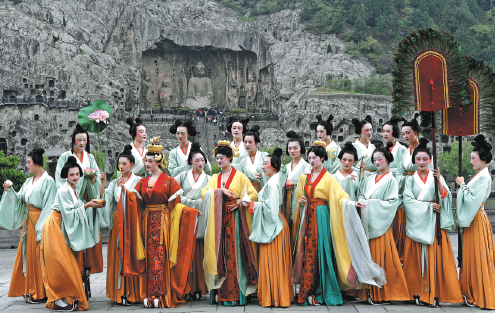
Location and Economic Focus: Located in Henan Province, Central China. Luoyang is one of China’s ancient capitals and a cradle of Chinese civilization. While rich in history and culture, its modern economy includes manufacturing sectors such as machinery, petrochemicals, non-ferrous metals, and building materials. However, its industrial scale and focus differ significantly from Liaoyang. For more historical context, you can consult the Wikipedia page on Luoyang.

辽阳 (Liaoyang)
Characters: 辽阳
Pinyin: Liáoyáng (with tone marks)
Key Differentiating Character: 辽 (Liáo) – This character refers to the Liao River and also the broader Liaoning region (辽宁 Province). Its presence signifies a location in Northeast China.
Location and Economic Focus: Situated in Liaoning Province, Northeast China. Liaoyang is a significant industrial city, particularly known for its heavy industry, petrochemicals, textiles, and metallurgy. It plays a key role in the industrial belt of Northeast China. Its strategic location near major ports and industrial clusters makes it a hub for certain types of manufacturing and export. The Wikipedia page on Liaoyang offers further details on its industrial profile.
Here’s a comparison table summarizing the critical distinctions:
| Feature | 洛阳 (Luoyang) | 辽阳 (Liaoyang) |
|---|---|---|
| Full Pinyin (with tones) | Luòyáng | Liáoyáng |
| Chinese Characters | 洛阳 | 辽阳 |
| Key Differentiating Character | 洛 (Luò – Luo River) | 辽 (Liáo – Liao River/Liaoning) |
| Region/Province | Central China, Henan Province | Northeast China, Liaoning Province |
| Primary Economic Focus | Machinery, petrochemicals, non-ferrous metals, historical tourism | Heavy industry, petrochemicals, textiles, metallurgy, equipment manufacturing |
| Common Typo/Mishearing Patterns | Often mistaken for Liaoyang due to shared ‘yang’ and similar initial sounds without tones. | Often mistaken for Luoyang due to shared ‘yang’ and similar initial sounds without tones. |
Why Romanization and Typo Patterns Create Ambiguity
The primary reason “laoyang” is so ambiguous stems from the nature of Pinyin romanization itself. When tone marks are absent – as they often are in informal communication, search queries, or data entry – both Luòyáng and Liáoyáng simplify to a phonetic representation that can easily be generalized as “laoyang.” The initial ‘l’ sound is common to both, and the ‘aoyang’ ending is identical.
Furthermore, typographical errors can exacerbate this. A slight miskey on a keyboard, a quick mental transcription, or even an auditory misinterpretation by a non-native speaker can easily swap the subtle differences in the initial sounds, leading to confusion. For instance, if someone hears “laoyang” over the phone, without context or confirmation of characters, distinguishing between Luòyáng and Liáoyáng becomes nearly impossible. This ambiguity impacts everything from database searches to official documentation, making character-level verification indispensable for any B2B transaction involving these locations.
A Practical Checklist for Verifying “Laoyang” Locations
Given the critical nature of accurate location identification, especially when “laoyang” appears, we recommend a robust verification process. This checklist provides actionable steps for B2B buyers and researchers to eliminate ambiguity and ensure precision in their operations.
Buyer’s Decision Checklist for “Laoyang” Verification:
-
Always Request Chinese Characters:
- Conclusion: Insist on receiving the official Chinese characters for any city, particularly when dealing with phonetically similar names like “laoyang.”
- Reasoning: Chinese characters are unique and unambiguous, instantly clarifying whether it’s 洛阳 (Luoyang) or 辽阳 (Liaoyang).
- Scenario: When a supplier provides only “laoyang” in an email or on their website, or during an initial phone call.
- Limits: May require basic Chinese character input/display capabilities or a reliable translation tool.
-
Verify Province and Full Address:
- Conclusion: Always cross-reference the city name with the province (Henan for Luoyang, Liaoning for Liaoyang) and the full street address.
- Reasoning: The province provides a higher level of geographic specificity that Pinyin alone cannot. A full address allows for map verification.
- Scenario: During supplier onboarding, contract drafting, or preparing shipping documents.
- Limits: Some smaller companies might provide incomplete addresses initially, requiring follow-up.
-
Cross-Reference Economic Activity and Industry Clusters:
- Conclusion: Compare the supplier’s stated industry or product type with the known economic focus of the identified city.
- Reasoning: Luoyang and Liaoyang have distinct industrial profiles. A heavy machinery manufacturer is more likely in Liaoyang, while a company focused on specific cultural goods might be in Luoyang.
- Scenario: When evaluating potential suppliers, especially during the initial vetting phase.
- Limits: Some industries might have a presence in both cities, requiring further granular verification.
-
Utilize Mapping Tools with Both Pinyin and Characters:
- Conclusion: Use online mapping services (e.g., Baidu Maps, Google Maps) to search for both the Pinyin (Luoyang, Liaoyang) and the Chinese characters (洛阳, 辽阳).
- Reasoning: Visual confirmation on a map provides an undeniable geographical context and helps confirm the correct location.
- Scenario: When planning site visits, confirming delivery routes, or assessing logistical feasibility.
- Limits: Requires internet access and familiarity with mapping interfaces.
-
Confirm with Local Contacts or Third-Party Verification Services:
- Conclusion: If any doubt persists, engage local agents, freight forwarders, or third-party verification services with on-the-ground knowledge.
- Reasoning: Local expertise can quickly resolve complex ambiguities and provide invaluable insights into regional specifics.
- Scenario: For high-value orders, strategic partnerships, or when dealing with entirely new suppliers.
- Limits: Involves additional cost or time for engagement.
Implications for Sourcing and Logistics Decisions
The consequences of misidentifying “laoyang” extend far beyond simple administrative errors. For B2B export operations, getting the city wrong can lead to significant logistical delays, increased costs, and ultimately, damage to your supply chain reliability and reputation.
Logistical Implications
- Shipping Routes and Transit Times: Luoyang (Henan) is inland, relying on rail and road networks to connect to ports like Qingdao or Shanghai. Liaoyang (Liaoning) is in Northeast China, closer to ports like Dalian or Yingkou, which serve distinct shipping lanes. Misrouting can add days or weeks to transit times, incur demurrage charges, and require costly rerouting.
- Port Access and Customs: Different ports have varying capacities, customs procedures, and connections to specific inland regions. Expecting a shipment from “laoyang” to arrive at a port primarily serving Henan when it originates from Liaoning will cause immediate friction at customs and freight forwarding stages. This directly impacts delivery schedules for end customers.
- Transportation Costs: Inland transportation costs within China can vary significantly based on distance and infrastructure. Incorrectly estimating the origin city can lead to inaccurate freight quotes, unexpected surcharges, and budget overruns.
Sourcing Implications
- Industry Clusters and Supplier Expertise: As discussed, Luoyang and Liaoyang specialize in different industries. Attempting to source heavy industrial components from Luoyang, or niche cultural products from Liaoyang, might lead to engaging unsuitable suppliers, compromised product quality, or difficulty in finding specialized expertise.
- Quality Control and On-Site Audits: Planning a quality control audit or factory visit requires precise location. Dispatching a team to the wrong “laoyang” results in wasted travel, lost time, and a failure to perform critical quality assurance.
- Regional Business Environment: Each province and city in China has its unique business environment, local regulations, and government incentives. Understanding the correct city helps in assessing the broader operational landscape, potential risks, and opportunities for your sourcing strategy.
Risk Mitigation Strategies
To mitigate these risks, our technical team consistently emphasizes the importance of a multi-layered verification process. Beyond the checklist, integrate these checks into your standard operating procedures for supplier vetting and logistics planning. Ensure all team members involved in sourcing, procurement, and shipping are aware of the “laoyang” ambiguity and trained on verification protocols. Proactive communication with Chinese partners, always confirming the full Chinese characters and provincial details, will safeguard your B2B export endeavors against costly geographical misinterpretations.
Navigating the complexities of Chinese geography, particularly with terms like “laoyang,” is a foundational aspect of successful B2B export and sourcing. By understanding the character-level distinctions between 洛阳 (Luoyang) and 辽阳 (Liaoyang) and implementing stringent verification processes, your business can avoid common pitfalls and ensure precision in every transaction.
For expert advice on optimizing your B2B export content or to discuss specific technical content needs, please contact our Technical Team.