 By
By Where Is Luoyang in China? A Practical Comparison to Zhengzhou and Xi’an
You are looking at a map of central China, trying to decide whether Luoyang deserves a stop on a route that already includes Zhengzhou and Xi’an. The question is not just where is Luoyang in China, but whether its position makes logistical sense for your itinerary. The short answer: Luoyang sits in western Henan province, roughly 120 kilometers west of Zhengzhou and 370 kilometers east of Xi’an. That puts it directly on the historic corridor linking the North China Plain to the Wei River valley. But the practical value of that position depends on what you want to see and how you plan to move between cities.
Luoyang is not a hidden detour. It is a natural midpoint on one of China’s busiest east-west transport spines. If you are already moving between Zhengzhou and Xi’an, skipping Luoyang often costs you nothing in travel time but costs you a significant historical site cluster. This article breaks down the geography, the rail and road options, and the realistic trade-offs of adding Luoyang to a Zhengzhou–Xi’an route.
Luoyang’s Position on the Central China Map
Luoyang sits at approximately 34.62° N latitude and 112.45° E longitude. It lies on the southern bank of the middle reaches of the Yellow River, where the river exits the mountains and enters the plains. That location gave the city strategic value for millennia: it controlled the eastern approach to the Hangu Pass, the narrow gateway between the Yellow River and the Qinling Mountains that armies and merchants had to cross to move between the Central Plains and the Guanzhong Basin around Xi’an.
For a modern traveler, the same geography translates into a simple fact: Luoyang is on the way. The Longhai Railway, one of China’s oldest east-west trunk lines, runs directly through Luoyang, Zhengzhou, and Xi’an. The high-speed line parallels it. You do not need to backtrack or make a dogleg to include Luoyang. It sits on the same corridor you would use anyway.
Luoyang vs. Zhengzhou vs. Xi’an: Direction, Distance, and Transport Corridors
This section gives you the concrete comparison. The numbers below are approximate center-to-center distances using the primary rail and highway alignments. Actual station-to-station times vary by train type and departure point.
Regional Comparison Table
| Comparison Point | Luoyang | Zhengzhou | Xi’an |
|---|---|---|---|
| Province | Henan (western) | Henan (central) | Shaanxi (central) |
| Direction from Luoyang | — | ~120 km east | ~370 km west |
| Primary rail corridor | Longhai Line, Xulan High-Speed Railway | Longhai Line, Beijing–Guangzhou junction | Longhai Line, Xulan High-Speed Railway terminal |
| High-speed rail to Luoyang | — | 35–45 minutes | 1.5–2 hours |
| Key geographic feature | Yellow River southern bank, Hangu Pass approach | North China Plain, Yellow River crossing | Guanzhong Basin, Wei River valley |
| Role on the corridor | Midpoint, historic secondary capital | Rail hub, provincial capital | Western terminus, former imperial capital |
The directional logic is straightforward. Zhengzhou is east of Luoyang, back toward the coast and the Beijing–Guangzhou north-south axis. Xi’an is west of Luoyang, deeper into the interior, at the entrance to the Silk Road corridors. If your route moves generally east-to-west or west-to-east, Luoyang sits between the two with no meaningful detour.
What This Means for Route Planning
Zhengzhou functions as a transfer hub. It is where the east-west Longhai corridor intersects the north-south Beijing–Guangzhou corridor. If you arrive in Zhengzhou from Beijing, Wuhan, or Guangzhou, you can switch to a westbound high-speed train and be in Luoyang in under an hour. Luoyang itself does not sit on a major north-south trunk line, so reaching it from points directly north or south requires a connection through Zhengzhou or a slower conventional rail option.
Xi’an is the natural western anchor. Many travelers end a central China route there because it offers a dense cluster of sites — the Terracotta Army, the city wall, the Muslim Quarter — plus onward connections to Chengdu, Lanzhou, and the western regions. Luoyang works best as an intermediate stop, not as a base for day trips to either Zhengzhou or Xi’an. The distances are too great for comfortable day trips in both directions.
High-Speed Rail: The Deciding Factor for Most Itineraries
For most independent travelers, the high-speed rail timetable decides the route. The Xulan High-Speed Railway connects Xuzhou in the east to Lanzhou in the west, passing through Zhengzhou, Luoyang, and Xi’an. Train frequency on the Luoyang–Zhengzhou segment is high, with departures throughout the day. The Luoyang–Xi’an segment has slightly fewer departures but still offers regular service from early morning to evening.
Here is the practical breakdown:
- Zhengzhou to Luoyang: 35 to 45 minutes on a G-series train. Second-class fare is typically under 100 RMB. This is the shortest intercity leg of the three-city route.
- Luoyang to Xi’an: 1.5 to 2 hours on a G-series train. Second-class fare is typically 150 to 200 RMB. This is a comfortable morning or afternoon transfer.
- Zhengzhou to Xi’an direct: 2 to 2.5 hours. If you skip Luoyang entirely, you save roughly one stop but lose the Luoyang sites.
The opportunity cost of adding Luoyang is small. A Zhengzhou–Xi’an direct journey takes about two hours. A Zhengzhou–Luoyang–Xi’an journey with a one-night stop in Luoyang adds one hotel night and two short train legs but no significant extra distance. The total time on trains is nearly identical; the added cost is the Luoyang accommodation and local transport.
Common Mistakes When Comparing These Three Cities
Travelers make a few predictable errors when deciding whether to include Luoyang. Avoiding these saves time and prevents a rushed itinerary.
- Treating Luoyang as a day trip from Xi’an. The one-way high-speed journey is about two hours. Add station transfer time on both ends, and you have a four-to-five-hour round trip before seeing anything. The Longmen Grottoes alone deserve three to four hours. A day trip is possible but exhausting and leaves no buffer for delays.
- Assuming Zhengzhou has nothing to offer. Zhengzhou is often treated as a pure transit point. The Henan Museum has one of the strongest provincial collections in China, and the city is a useful rest stop on long north-south journeys. But if your goal is historical sites, Luoyang offers more depth per hour spent.
- Underestimating Xi’an’s time demands. Xi’an is not a one-day city. The Terracotta Army site is 40 kilometers east of the city center and consumes most of a day. The city wall, Shaanxi History Museum, and Muslim Quarter add another full day. If you allocate three days to Xi’an and one to Luoyang, the route works well. If you try to compress both into three days total, you will cut corners.
- Ignoring the Hangu Pass geography. The rail line follows the historic corridor, but the landscape between Luoyang and Xi’an is not flat farmland. The line passes through the Yellow River valley and the eastern Qinling foothills. In winter, occasional fog or snow can delay trains. Build a small buffer into connections, especially if you have a flight out of Xi’an the same day.
A Worked Example: Five-Day Zhengzhou–Luoyang–Xi’an Route
Here is a concrete itinerary that uses Luoyang’s position efficiently. This works for a traveler arriving in Zhengzhou by high-speed rail from Beijing, Shanghai, or Guangzhou.
- Day 1 — Arrive Zhengzhou: Land or arrive by train. Visit the Henan Museum in the afternoon if time allows. Overnight in Zhengzhou near the East Railway Station for an easy morning departure.
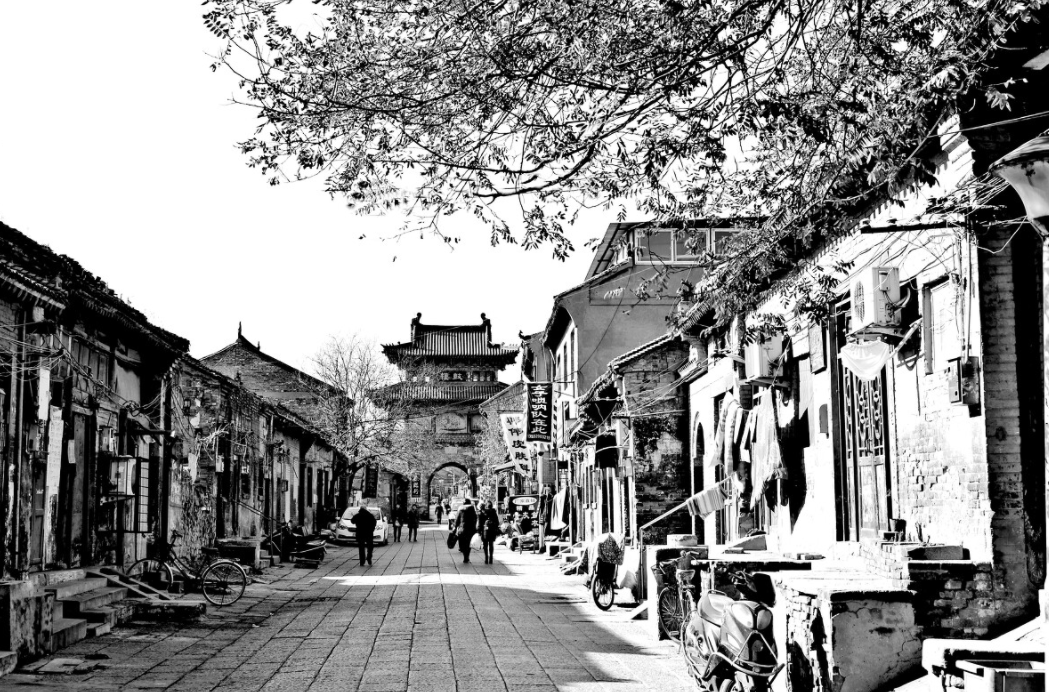
- Day 2 — Morning train to Luoyang: Take a 9:00 a.m. G-train, arrive Luoyang Longmen Station around 9:45. Store luggage at the station or go directly to the Longmen Grottoes, which are 10 minutes from Longmen Station by taxi. Spend three to four hours at the grottoes. In the afternoon, check into a hotel in Luoyang’s old town. Evening: visit the Old Town area and sample Luoyang water banquet dishes.
- Day 3 — Luoyang morning, afternoon train to Xi’an: Visit the White Horse Temple in the morning, about 12 kilometers east of the city center. Take a 2:00 p.m. G-train, arrive Xi’an North Station around 4:00. Check in, evening walk on the city wall or through the Muslim Quarter.
- Day 4 — Xi’an: Full day for the Terracotta Army. Book a driver or join a small group tour. Return to the city in the late afternoon.
- Day 5 — Xi’an departure or onward travel: Morning at the Shaanxi History Museum (book tickets in advance) or the Small Wild Goose Pagoda. Depart Xi’an by afternoon train or flight.
This route works because Luoyang is not a detour. It is a stop on the same rail line you would use to get from Zhengzhou to Xi’an. The only added cost is the Luoyang hotel night and local transport. The alternative — Zhengzhou to Xi’an direct — saves one night but skips the Longmen Grottoes and White Horse Temple, two of the most significant Buddhist sites in central China.
When Luoyang Does Not Fit
Luoyang is not the right stop for every itinerary. Recognize these situations:
- You have only three days for the whole region. If you must choose between Luoyang and Xi’an, choose Xi’an. The Terracotta Army is a singular site, and Xi’an offers more variety in a compact area. Luoyang is excellent but cannot match Xi’an’s density of major attractions.
- You are traveling with young children or limited mobility. The Longmen Grottoes involve significant walking on uneven stone paths and stairs. The White Horse Temple is more accessible but still requires walking. Zhengzhou’s museums and Xi’an’s city wall may be easier to manage.
- Your route is north-south, not east-west. If you are moving from Beijing to Guangzhou or Chengdu to Wuhan, Luoyang is not on your natural line. Reaching it requires a deliberate east-west detour. In that case, the time cost is real, not negligible.
- You are traveling during a major Chinese holiday. Golden Week in early October and the Spring Festival period see heavy domestic tourism. Luoyang’s Longmen Grottoes become extremely crowded, and train tickets sell out quickly. If you cannot book tickets in advance, consider skipping Luoyang or visiting on a weekday outside peak seasons.
Buyer’s Decision Checklist for the Three-City Route
Use this checklist before finalizing your itinerary. Each item is a yes/no question that clarifies whether Luoyang belongs on your route.
- Are you already traveling between Zhengzhou and Xi’an by rail? If yes, Luoyang is a low-cost addition. If no, it may be a detour.
- Do you have at least one full afternoon and one morning for Luoyang? The Longmen Grottoes need three to four hours; the White Horse Temple needs two to three hours including transport.
- Can you tolerate a one-night stop with luggage handling? Luoyang is not a day-trip city from either end. You need one overnight stay.
- Are you traveling outside major Chinese holidays? If yes, crowds and ticket availability are manageable. If no, book all trains and hotels well in advance.
- Does your interest include Buddhist cave art or early Chinese Buddhist history? If yes, Luoyang is arguably more important than Xi’an for this specific niche. The Longmen Grottoes are a UNESCO World Heritage site and represent a high point of Northern Wei and Tang dynasty stone carving. If your interest is broader imperial history, Xi’an remains the stronger draw.
- Is your luggage manageable for two short train legs within 24 hours? The Zhengzhou–Luoyang and Luoyang–Xi’an legs are short, but you still handle bags at three stations. Pack light.
Answering these questions honestly tells you whether Luoyang is a natural stop or a forced addition. The geography is clear: Luoyang sits where it has always sat, on the corridor between the Central Plains and the Guanzhong Basin. The question is only whether your route and interests align with that position.
If you are planning a multi-city route through central China and want a second opinion on whether Luoyang fits your specific dates and interests, send over your draft itinerary. We can review the rail connections, suggest a realistic pacing, and flag any seasonal issues that might affect your trip. No obligation — just a practical look at your route.