 By
By Understanding Why Luoyang in China Is a Cornerstone of Dynastic History
While cities like Beijing and Xi’an (formerly Chang’an) are globally recognized, the historical significance of Luoyang in China is foundational to understanding the nation’s entire imperial timeline. For centuries, this city on the central plains was the political, economic, and cultural heart of successive empires. Its story is not one of a single, continuous reign but of repeated selection as a capital, making it a cradle of Chinese civilization. Understanding why emperors continually returned to Luoyang reveals the core geographical and strategic principles that shaped ancient China.
The city’s location on the fertile North China Plain, at the confluence of the Luo and Yi rivers and south of the formidable Yellow River, made it a strategic prize. It was defensible yet central, a perfect hub for controlling the vast territories of ancient dynasties. This article breaks down its dynastic importance, cultural contributions, and economic power, explaining why Luoyang remains a crucial reference point for Chinese history.
The Dynastic Heartbeat: Luoyang’s Role as a Recurring Capital
Luoyang’s status as a capital city was not a one-time event; it was a recurring theme across more than a millennium. Different dynasties chose it for specific strategic reasons, and its periods of prominence were often followed by decline and subsequent revival. Misunderstanding this cyclical history can lead to a flattened perception of its importance, viewing it as just one of many ancient cities rather than a dynastic center of gravity. The following chronology details how Luoyang’s role as a capital evolved and what each period signifies for students of Chinese history.
| Dynasty / Period | Approximate Timeframe | Capital Status | Practical Significance & What It Means Today |
|---|---|---|---|
| Eastern Zhou | 770–256 BCE | Primary Capital | The Philosophical Cradle: After being forced east, the Zhou court established Luoyang (then Wangcheng). This era saw the flourishing of the “Hundred Schools of Thought,” including Confucianism and Taoism. Ignoring this period means missing Luoyang’s role as the birthplace of foundational Chinese philosophy. |
| Eastern Han | 25–220 CE | Primary Capital | The Silk Road Terminus: As the capital, Luoyang became the eastern terminus of the Silk Road. This cemented its status as an international hub for trade and ideas. It’s also where Buddhism was formally introduced to China with the establishment of the White Horse Temple. |
| Cao Wei & Western Jin | 220–316 CE | Primary Capital | A Center of Post-Han Culture: During the turbulent Three Kingdoms period and the subsequent brief unification under the Western Jin, Luoyang remained the cultural and political center. This period saw advancements in literature and the arts, bridging the Han and the later Southern and Northern Dynasties. |
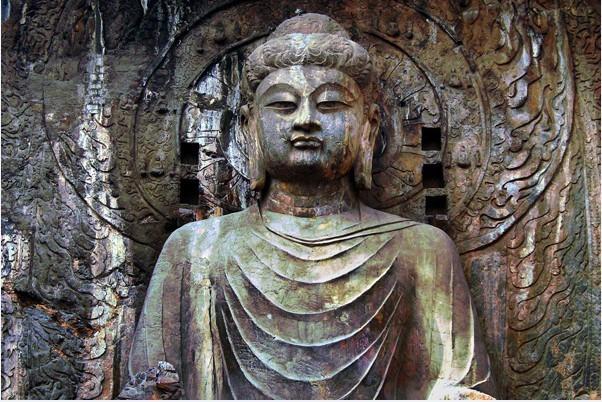
| Northern Wei | 493–534 CE | Primary Capital | Buddhist Patronage: The Xianbei rulers moved their capital to Luoyang and initiated one of the most significant artistic projects in Chinese history: the Longmen Grottoes. Understanding this move is key to appreciating the fusion of foreign nomadic culture with Han traditions and the peak of Buddhist art. |
| Sui & Tang | 581–907 CE | Secondary / Eastern Capital | The Grand Canal Hub: While Chang’an (Xi’an) was the primary Tang capital, Luoyang was the designated “Eastern Capital” and a critical hub on the Grand Canal. It was the empire’s secondary political center and primary economic engine, controlling grain supply and commerce. Viewing it as merely a secondary city misses its vital economic importance. |
| Later Liang & Later Tang | 907–937 CE | Primary Capital | A Fleeting Revival: During the chaotic Five Dynasties and Ten Kingdoms period, Luoyang briefly served as a capital again. This demonstrates its enduring strategic value even during times of national fragmentation. |
A Nexus of Culture, Philosophy, and Religion
Luoyang’s political importance was matched by its cultural and intellectual output. For centuries, it was the place where new ideas arrived, were debated, and became integrated into Chinese civilization. It was not just an administrative center but a crucible for the philosophies and beliefs that would define East Asia.
The city’s legacy is marked by several key cultural milestones that continue to resonate. Its contributions were not isolated events but part of a long-term role as a national incubator for thought and art.
Key Cultural Milestones Originating in Luoyang
- The Birthplace of Taoism: While its origins are complex, the sage Laozi, founder of Taoism, is said to have served as an archivist in the imperial court in Luoyang during the Eastern Zhou dynasty. It was here that he allegedly wrote the foundational text, the Tao Te Ching.
- The Gateway for Buddhism: The White Horse Temple, established in 68 CE during the Eastern Han dynasty, is officially recognized as the first Buddhist temple in China. It was founded to house two Indian monks and the scriptures they brought back on a white horse, marking the formal introduction of Buddhism to the country. All subsequent developments of the religion in China trace their roots back to this event in Luoyang.
- The Pinnacle of Grotto Art: The Longmen Grottoes, a UNESCO World Heritage site, represent the apex of Chinese stone carving. Initiated by the Northern Wei dynasty and continued for over 400 years, the tens of thousands of Buddha statues carved into the limestone cliffs are a testament to the city’s role as a center of Buddhist faith and imperial patronage.
- A Center for Science and Innovation: During the Eastern Han, the court astronomer Zhang Heng worked in Luoyang, where he invented the world’s first seismoscope and a sophisticated armillary sphere to map the stars. This highlights the city’s role as a center not just for the humanities but for scientific inquiry.
Planning a Visit: A Checklist for Prioritizing Historical Sites
For researchers, business travelers, or history enthusiasts planning a trip, the sheer depth of Luoyang’s history can be overwhelming. A common mistake is to visit sites randomly without understanding how they connect to the city’s broader timeline. Using a targeted approach ensures you can focus on the eras that are most relevant to your interests.
This checklist helps you prioritize based on specific historical themes. Before your visit, identify your primary area of interest to create a more meaningful and efficient itinerary.
Visitor’s Historical Interest Checklist
-
If you are interested in the dawn of Chinese philosophy (Zhou Dynasty):
- ☐ Priority: Visit the site of Wangcheng (Royal City) Park. While largely archaeological, it occupies the ground of the ancient Eastern Zhou capital where Confucius and Laozi were active.
- ☐ Context: Focus on understanding the city’s layout and its role as a political center that fostered intellectual debate.
-
If your focus is the introduction of Buddhism and the Silk Road (Han/Wei Dynasties):
- ☐ Top Priority: The White Horse Temple. This is non-negotiable as the starting point of Chinese Buddhism.
- ☐ Second Priority: The Luoyang Museum. It houses incredible artifacts from the Han Dynasty, providing tangible evidence of Silk Road trade and the city’s prosperity.
-
If you are fascinated by Buddhist art and imperial patronage (Northern Wei/Tang Dynasties):
- ☐ Top Priority: The Longmen Grottoes. Allocate at least half a day to explore the scale and detail of the carvings.
- ☐ Context: Note the stylistic changes in the statues between the Northern Wei (slimmer, more abstract) and Tang (fuller, more realistic) periods, reflecting shifts in culture and imperial aesthetics.
-
If you want to understand Luoyang’s broader role in Chinese civilization:
- ☐ Priority: Combine a visit to the Luoyang Museum with the Longmen Grottoes. This pairing provides the best overview of Luoyang’s timeline, from its early dynastic artifacts to its peak artistic achievements.
By defining your focus, you can better appreciate the layers of history that make Luoyang in China such a profoundly important location, connecting the dots between its philosophical origins, its economic power, and its artistic legacy.
For businesses seeking to understand the deep cultural context that shapes modern commercial hubs in China, our team provides insights into the historical foundations of key regions. Contact us to learn more.