 By
By Why Luoyang Grottoes Longmen Is UNESCO Listed
Why does luoyang grottoes longmen hold such a prominent place in Chinese cultural heritage, rather than being regarded simply as a large collection of religious carvings? The answer lies in the site’s artistic development, historical record, religious significance, and exceptional evidence of cultural exchange across several centuries.
The Longmen Grottoes are located near Luoyang in Henan Province, where Buddhist images, inscriptions, temples, and cave sanctuaries were carved into limestone cliffs beside the Yi River. They were added to the UNESCO World Heritage List because the property demonstrates outstanding artistic achievement and preserves major evidence of Chinese Buddhist culture during the Northern Wei and Tang dynasties.
For first-time cultural travelers and heritage researchers, luoyang grottoes longmen is best understood as a historical archive carved into rock. The caves do not represent one artistic moment. Instead, they show changing styles of sculpture, changing patterns of religious patronage, and changing ideas about political authority.
What UNESCO recognition tells visitors and researchers to examine
UNESCO listing is not a general tourism award. It means that a site has been assessed as having Outstanding Universal Value, a term used for cultural or natural heritage considered important beyond one country or region. For luoyang grottoes longmen, the designation directs attention toward the relationship between art, belief, state power, and historical continuity.
A practical conclusion follows: do not approach the grottoes as a single monument. Plan to compare caves from different periods and study their visual differences. This approach suits travelers who want cultural context and researchers who need to identify stylistic change. It is less useful for visitors with very limited time who only want a brief scenic stop.
| What to examine | Why it matters | Best suited to | Limit or caution |
|---|---|---|---|
| Facial expressions and body proportions | They reveal shifts in Buddhist sculptural style between dynasties. | Art history students and detail-oriented visitors. | Individual caves may have weathering or restricted viewing angles. |
| Donor inscriptions | They connect carvings to patrons, religious communities, and political figures. | Heritage researchers and history-focused travelers. | Not every inscription is easy to read or translated on site. |
| Scale and arrangement of images | They show how cave spaces were designed for devotion and public authority. | Visitors comparing major cave complexes. | Large sculpture alone does not explain the full historical context. |
| Differences between cave groups | They show that luoyang grottoes longmen developed over a long period rather than through one building campaign. | Visitors making a focused cultural itinerary. | A short visit may require prioritizing selected caves. |
The major value of luoyang grottoes longmen is therefore cumulative. A single statue may be visually striking, but the wider landscape of caves and inscriptions provides the stronger argument for global heritage importance.
How the artistic record developed across major historical periods
The grottoes gained importance after the Northern Wei court moved its capital to Luoyang. This political shift encouraged major Buddhist construction and gave elite patrons a setting in which religious devotion could also express status and legitimacy. Later Tang-period work expanded the site’s artistic language and produced fuller, more naturalistic sculptural forms.
The key recommendation for a cultural visit is to compare earlier and later carving styles rather than viewing every image as visually identical. This is most useful when planning a half-day or full-day heritage visit. It does not apply if access conditions, crowd levels, or site management arrangements limit time at particular areas.
- Northern Wei period: Look for more linear, restrained figures, elongated proportions, and a formal spiritual expression. These features are often associated with early Chinese Buddhist sculpture shaped by court patronage and imported religious traditions.
- Transitional development: Observe how carving becomes more varied in drapery, posture, and facial treatment. These changes help explain how Buddhist imagery was adapted within Chinese artistic culture.
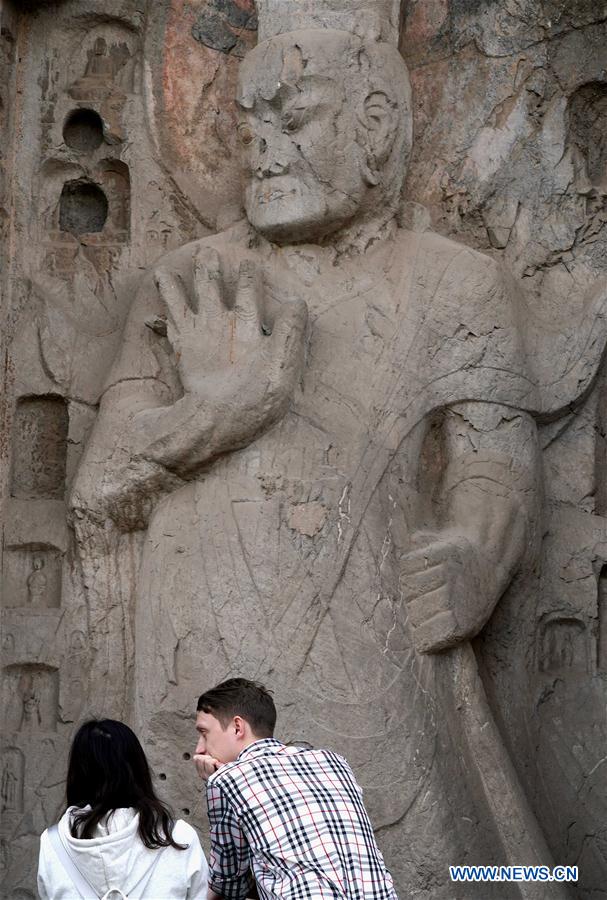
- Tang period: Look for rounded facial features, fuller bodies, and a more monumental visual effect. The style is often understood as reflecting the confidence and cosmopolitan character of Tang artistic culture.
This sequence is one reason luoyang grottoes longmen matters to researchers. The site preserves a long visual record of how Buddhist art was localized, reinterpreted, and supported by political and social institutions in China.
However, visitors should avoid a simplistic assumption that every Northern Wei carving is austere and every Tang carving is naturalistic. Artistic change was gradual, individual workshops differed, and some caves were altered or completed over extended periods. A useful interpretation needs both style and historical context.
Which artistic historical and cultural criteria support the UNESCO designation
This section directly answers the central question: luoyang grottoes longmen was inscribed as a World Heritage property because UNESCO recognizes its exceptional artistic achievement, its influence on East Asian art, and its evidence of the cultural traditions associated with Chinese Buddhism.
| UNESCO criterion | How Longmen meets the criterion | What a visitor can look for | Boundary of the interpretation |
|---|---|---|---|
| Criterion (i) — masterpiece of human creative genius | The grottoes contain outstanding examples of Chinese stone carving and Buddhist monumental art. | Study the composition, carving depth, drapery, faces, and relationship between principal figures and attendants. | This criterion does not mean every carving was made by one artist or in one period. |
| Criterion (ii) — interchange of human values | The site reflects how Buddhist ideas and artistic forms were adapted and developed within Chinese culture, influencing later artistic traditions. | Compare Indian-rooted Buddhist imagery with distinctly Chinese sculptural conventions and courtly styles. | Visitors should not treat cultural exchange as one-way influence; adaptation was complex. |
| Criterion (iii) — exceptional testimony to a cultural tradition | The carvings, inscriptions, and sacred spaces provide exceptional testimony to the religious, social, and political life connected with Chinese Buddhism. | Pay attention to inscriptions, donor figures, devotional arrangements, and the setting of caves within the landscape. | The site cannot represent every form of Buddhism practiced across China. |
The artistic criterion is not based only on visual beauty. At luoyang grottoes longmen, artistic quality is connected to the technical and conceptual achievement of organizing sacred imagery on a monumental cliffside. The historical criterion is not based only on age. It is based on the site’s evidence for dynastic patronage, religious practice, and changing artistic values.
The cultural criterion is equally important. The grottoes show how Buddhist traditions became embedded in Chinese society through court sponsorship, donations, ritual use, and visual storytelling. This is why the site is valuable not only to art historians but also to scholars of religion, architecture, politics, and cultural exchange.
Frequently asked questions about the World Heritage designation
Is luoyang grottoes longmen listed because it is old?
No. Age contributes to historical importance, but age alone does not explain the listing. Luoyang grottoes longmen was recognized for the quality of its sculpture, its role in the evolution of Chinese Buddhist art, and its exceptional testimony to a cultural tradition. A very old monument without these broader values would not necessarily meet World Heritage criteria.
Does the designation focus on religion or art?
It focuses on both. The religious purpose of the caves shaped their imagery and use, while the artistic execution made them an exceptional record of sculpture. At luoyang grottoes longmen, separating religion from art too sharply can lead to weak interpretation because devotional meaning informed the design of the carvings.
Why are inscriptions important at luoyang grottoes longmen?
Inscriptions can identify donors, record religious intentions, and provide evidence about the social setting in which cave projects were created. They help move interpretation beyond visual appreciation. Their limitation is that they may require specialist knowledge, reliable translation, and historical context before they can be used as firm evidence.
Does UNESCO status guarantee that every part of the site is perfectly preserved?
No. World Heritage recognition supports protection and international awareness, but it does not eliminate natural weathering, visitor pressure, past damage, or conservation challenges. Visitors should respect site rules and avoid treating the carvings as untouched objects outside history.
How to plan a more informed first visit
For an awareness-stage traveler, the most effective approach is to prepare a small set of questions before arrival. This makes luoyang grottoes longmen easier to understand and prevents a visit from becoming a rushed sequence of photographs.
- Start with the UNESCO criteria. Identify the artistic, cultural-exchange, and cultural-testimony questions that structure the designation.
- Select a comparison goal. Choose one visual feature, such as facial style, robe treatment, or cave composition, and compare it across different areas.
- Read available interpretive material carefully. Prioritize information that identifies period, patronage, religious function, and conservation context.
- Allow time for the landscape. The relationship between cliffs, river, caves, and pathways is part of how the site was experienced.
- Separate observation from assumption. Record what you can see directly, then distinguish it from conclusions that require historical evidence.
This method fits independent cultural travelers, university groups, and researchers beginning a project on Chinese Buddhist art. It may not fit travelers with mobility constraints, very limited schedules, or a preference for guided interpretation over independent study.
A simple decision checklist can help. Before visiting luoyang grottoes longmen, ask whether your priority is artistic comparison, dynastic history, Buddhist culture, landscape photography, or general sightseeing. Your answer determines how much background reading and on-site time you need.
- If artistic comparison is the priority, focus on stylistic differences between earlier and later caves.
- If historical research is the priority, prepare questions about patronage, inscriptions, and the role of Luoyang as a former capital.
- If religious culture is the priority, examine how sacred figures, donor images, and cave layouts support devotional practice.
- If general sightseeing is the priority, retain one core idea: the value of luoyang grottoes longmen comes from the combined record of art, belief, and history.
For tailored heritage itinerary advice or research-oriented visit planning, contact a qualified cultural travel specialist before finalizing your schedule.