 By
By Lo Yang China Is the Same City Known Today as Luoyang in Henan Province
If you’ve come across “Lo Yang China” in an old shipping manifest, a decades-old atlas, a university transcript, or a trade reference document, you may be wondering whether this is a distinct place, a typo, or something entirely separate from the modern city you’ve seen referenced in supply chain or historical materials. This is a fair question — place names in China have gone through multiple romanization systems over the past century, and the confusion is understandable. The short answer: Lo Yang China and Luoyang, in Henan Province, refer to the exact same city. There is no separate administrative location called “Lo Yang” that exists apart from Luoyang.
What Does “Lo Yang China” Actually Refer To?
Does “Lo Yang” mean a different city than Luoyang? No. “Lo Yang” is an older Western-style transliteration of the Chinese characters 洛阳, which is now standardly romanized as “Luoyang” under the Hanyu Pinyin system adopted by mainland China.
Is this a boundary case or an exception? Not really — it’s one of hundreds of Chinese place names that carry two spellings depending on when the source document was written. Peking/Beijing and Canton/Guangzhou follow the same pattern. Lo Yang China falls into this same category: pre-pinyin sources use the older spelling, post-1979 sources use “Luoyang.”
When does this distinction actually matter? It matters for document verification, address matching on customs paperwork, and academic citation consistency. It does not matter for the underlying geography — the coordinates, provincial affiliation (Henan), and historical identity of the city are unchanged regardless of spelling.
Lo Yang Spelling, Chinese Characters, Pinyin, and City Identity Explained
Because this is the core point of confusion, here is a direct comparison of how the name appears across different systems and time periods.
| Romanization | Chinese Characters | Pinyin (Tone Marks) | Typical Source |
|---|---|---|---|
| Lo Yang | 洛陽 (traditional form) | Luòyáng | Pre-1979 atlases, older academic texts, historical shipping records |
| Loyang | 洛阳 (simplified form) | Luòyáng | Transitional spelling used in some mid-20th-century English texts |
| Luoyang | 洛阳 | Luòyáng | Current standard, used in modern trade documents, addresses, and maps |
All three rows describe the same city in Henan Province, in central China. The characters 洛阳 combine “Luo” (referring to the Luo River) and “yang,” a term traditionally meaning the sunny or northern side of a river or mountain — a naming convention common across many Chinese cities. This is why you’ll also see “yang” in names like Luoyang, Shenyang, and Guiyang; it’s a geographic descriptor, not a coincidence in spelling.
One limitation worth flagging: don’t confuse Lo Yang China with “Loyang” in Singapore, which is an unrelated residential and industrial area with no connection to the Chinese city. If you see “Loyang” in a Southeast Asian shipping or real estate context, that is almost certainly the Singapore location, not Henan’s Luoyang.
Why Do Older Documents Use “Lo Yang” Instead of “Luoyang”?
The answer traces back to competing romanization systems. Before 1979, most English-language references to Chinese places used Wade-Giles romanization or informal transliterations that split syllables with a space or hyphen — hence “Lo Yang” rather than “Luoyang.” When mainland China formally adopted Hanyu Pinyin as its official romanization standard, joined syllables became the norm, and international bodies gradually shifted their maps, postal codes, and customs terminology to match.
This shift wasn’t instant. Some English-language reference works, particularly those published before the 1980s or reprinted without updates, still carry the older spelling. If you’re cross-referencing a document dated before that transition, seeing “Lo Yang China” is expected, not an error.
How to Verify a “Lo Yang China” Reference in a Document
For researchers, procurement teams, or students confirming a source, use this sequence rather than assuming:
- Check the document date. Anything published before the late 1970s is a strong candidate for pre-pinyin spelling conventions.
- Look for the province. If the document pairs “Lo Yang” with “Honan” (also an older spelling, now “Henan”), that’s a strong confirmation you’re looking at the same city under old romanization.
- Cross-check with the Chinese characters if available. 洛阳 appearing anywhere near the reference confirms identity beyond doubt.
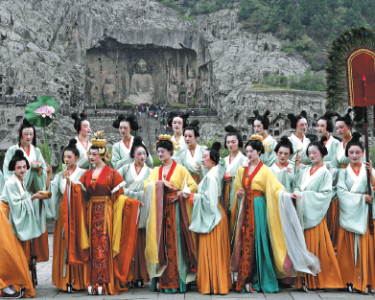
- Search for known historical landmarks tied to the name — the Longmen Grottoes and the Silk Road’s eastern terminus are commonly linked to Luoyang in both old and new texts.
- Avoid assuming based on spelling alone if the surrounding context references a location outside China (e.g., Singapore or a personal name), since “Loyang” also appears as a surname component and place name elsewhere.
Common Mistakes When Cross-Referencing Lo Yang China
- Treating “Lo Yang” and “Luoyang” as different administrative regions. They are not — one is simply an outdated spelling of the other.
- Confusing it with Yangzhou or Nanyang, two other Chinese cities whose names share the “yang” syllable but refer to entirely different locations, in different provinces.
- Assuming the spelling indicates the document’s country of origin. Western sources, Chinese-government translations, and academic texts have all used both spellings at different points.
- Ignoring the province pairing. Always check whether “Honan” or “Henan” appears alongside it — this is the fastest confirmation step.
- Overlooking Singapore’s Loyang area when the context involves logistics, addresses, or industrial parks outside mainland China.
Decision Checklist for Confirming City Identity Before You Cite It
| Check | What to Look For | Confirms Lo Yang China = Luoyang? |
|---|---|---|
| Document date | Published before ~1979 | Likely yes |
| Province name | “Honan” or “Henan” nearby | Strong yes |
| Chinese characters present | 洛阳 or 洛陽 | Confirmed |
| Geographic context | Silk Road, Yellow River basin, ancient capital references | Strong yes |
| Southeast Asia context | Singapore addresses, industrial zones | No — different location |
This kind of naming ambiguity isn’t unique to Luoyang — it applies broadly across Chinese place names referenced in English-language trade, academic, or historical documents. When your work depends on precise place identification, whether for customs paperwork, supplier verification, or academic citation, cross-checking the province name and, where possible, the Chinese characters remains the most reliable method. Spelling alone should never be the final word.
If you’re compiling documentation that references Lo Yang China and need a second opinion on whether your source is consistent with modern Luoyang, Henan records, feel free to send us the reference for a quick verification check.