By
By How to Distinguish Between Louyang the Chinese City and the Ragnarok Online Location
When conducting research, especially in international business or sourcing, encountering the term “louyang” can lead to immediate ambiguity. Is the louyang you’re researching a vibrant, historically rich city in China, a hub for manufacturing and trade, or a fantastical realm within the popular online game Ragnarok Online? This common knowledge gap can derail initial inquiries, misdirect logistics planning, or simply waste valuable time. Understanding this distinction is crucial for accurate geographical identification and effective B2B communication. This article will provide the necessary clarity to resolve such ambiguous searches, ensuring your focus remains on relevant information.
The Historical and Geographical Significance of Luoyang, China
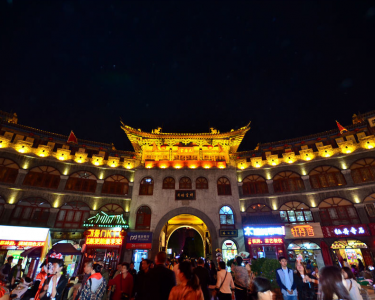
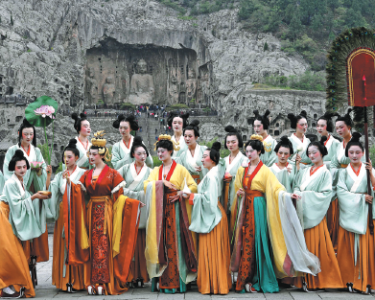
The most prominent real-world entity often transliterated as “louyang” is Luoyang (洛阳), a prefecture-level city situated in the western part of Henan Province, China. This ancient city boasts a history spanning over 4,000 years and has served as the capital for more than thirteen dynasties, making it one of China’s Four Great Ancient Capitals. Its historical depth is matched by its modern-day economic significance, standing as an important industrial and agricultural center in central China.
Luoyang is renowned for its heavy industry, including sectors like machinery manufacturing, petrochemicals, and non-ferrous metals. For businesses engaged in global trade, Luoyang represents a key location for sourcing components, identifying manufacturing partners, or understanding regional market dynamics. The city’s strategic position along major transportation routes further enhances its appeal for logistics and supply chain considerations. When encountering “louyang” in a business context, particularly concerning manufacturing, export, or geographical data, it is highly probable that the reference points to this significant Chinese city. Verifying the context through additional keywords such as “Henan province,” “industrial park,” or specific product types can quickly confirm its real-world identity.
Navigating the Digital Realm: Louyang in Ragnarok Online
In stark contrast to the historical realities of Luoyang, the name “Louyang” also refers to a specific, fictional city within the massively multiplayer online role-playing game (MMORPG) Ragnarok Online. This digital Louyang is part of the game’s expansive world of Midgard, introduced as part of the “Episode 10.3: The Lost Sands of Louyang” update. Within the game, Louyang is depicted as a vibrant, oriental-themed city, rich with unique architecture, characters, and quests that draw heavily from East Asian cultural aesthetics.
Players visit this in-game Louyang to complete specific quests, purchase unique items, or interact with its distinct non-player characters (NPCs). The city is known for its martial arts theme and serves as a significant hub for certain gameplay elements, including specific monsters, crafting materials, and story arcs. When search results or discussions mention “louyang” alongside terms like “MMORPG,” “gaming,” “quests,” “characters,” or “server,” it almost certainly refers to this virtual location. For B2B professionals, it is critical to recognize that this iteration of “louyang” holds no geographical or industrial relevance to real-world commerce or logistics. Its context is purely recreational and digital, serving the global community of Ragnarok Online players.
Comparison of the Chinese City Spelling with the Ragnarok Online Location to Resolve Ambiguous Searches
The differing contexts of “louyang” necessitate a clear understanding to avoid misinterpretation in professional settings. The following table provides a direct comparison to help resolve ambiguous searches quickly and efficiently, ensuring you focus on information pertinent to your business objectives. This distinction is paramount for accurate data collection, market analysis, and effective communication channels.
| Feature | Louyang (Chinese City – Luoyang) | Louyang (Ragnarok Online Location) |
|---|---|---|
| Nature | Real-world city, historical, economic hub | Fictional in-game location, fantasy setting |
| Official Name | Luoyang (洛阳) – often transliterated as Louyang | Louyang (as spelled within the game) |
| Location | Henan Province, China; specific geographical coordinates | Midgard (fictional world); located within the game’s map |
| Primary Context | Business, trade, manufacturing, logistics, travel, history, culture | Gaming, entertainment, virtual economy, community interaction | Associated Keywords | “Henan,” “China,” “industry,” “export,” “factory,” “port,” “supply chain” | “Ragnarok,” “MMORPG,” “quest,” “server,” “guild,” “item,” “skill,” “map” |
| Search Intent | Geographical, industrial, cultural, economic data | Gaming content, fan wikis, player guides, game news |
This comparison highlights that while the spelling “louyang” might be identical in search queries, the underlying intent and contextual keywords will always point to one or the other. For any B2B professional, recognizing these contextual clues is the first step toward accurate information retrieval.

Practical Strategies for Accurate Identification in B2B Contexts
When your business research involves geographical locations, precise identification is non-negotiable. Misidentifying a location can lead to significant logistical errors, misdirected inquiries, and wasted resources. Here are actionable strategies to ensure you correctly identify whether “louyang” refers to the Chinese city or the fictional game setting:
-
Contextual Keyword Analysis: Always examine the surrounding text or search query.
- Scenario: You search for “louyang steel production.”
- Conclusion: This clearly points to the real-world Luoyang, China, known for its heavy industry.
- Limits: If the query is vague, like “louyang exports,” further investigation is needed.
-
Domain Name Verification: Check the website’s domain where the term appears.
- Scenario: Information about “louyang” is found on a `.cn` domain or an official government site.
- Conclusion: Highly indicative of the Chinese city.
- Limits: Generic news sites might cover both, requiring deeper content analysis.
-
Cross-Referencing with Maps and Official Sources: Utilize reliable geographical tools.
- Scenario: You need to confirm a supplier’s address in “louyang.”
- Conclusion: Consult Google Maps or official Chinese provincial websites for “Luoyang, Henan Province” to verify.
- Limits: This step is only useful for real-world locations; it won’t help with game contexts.
-
Clarifying Language in Communication: Be explicit in your inquiries.
- Scenario: When communicating with potential partners or suppliers.
- Conclusion: Always specify “Luoyang, Henan, China” to eliminate any ambiguity.
- Limits: This is a preventative measure, not a diagnostic one for existing ambiguous data.
-
Reviewing Product or Service Descriptions: The nature of the offering can be a strong clue.
- Scenario: A listing for “louyang heavy machinery parts.”
- Conclusion: Points directly to the industrial capabilities of Luoyang, China.
- Limits: If the product is digital (e.g., “louyang game currency”), it suggests the game.
By systematically applying these strategies, businesses can significantly reduce the risk of misinterpreting information related to “louyang,” ensuring that their efforts are consistently directed towards relevant and actionable intelligence.
Implications for International Business and Research
The seemingly minor distinction between a real city and a game location holds substantial implications for international business operations and research. For companies involved in sourcing, logistics, market entry, or competitive analysis, an incorrect identification of “louyang” can lead to a cascade of errors. Imagine shipping goods to a non-existent virtual location, or attempting to establish business contacts in a city that only exists on a server. Such mistakes are not only costly in terms of time and money but can also damage reputation and credibility.
Accurate geographical verification is the bedrock of reliable supply chains and effective global trade. When evaluating potential manufacturing sites, market demographics, or logistical routes, confirming the exact location is paramount. Cultural nuances in naming and transliteration, such as the various ways Chinese city names can be rendered in English, further underscore the need for meticulous attention to detail. Our technical team understands that clarity in communication and precision in data are non-negotiable in the B2B export environment. Therefore, whenever “louyang” appears, a brief moment of contextual verification can save countless hours and resources, ensuring that business decisions are based on factual, real-world information.
Need to verify a specific location for your international business needs? Our team can offer insights into geographical identification and ensure your B2B operations are built on accurate data.