By
By Luoyang White Horse Temple Hall Complex Comparison for Architecture Visitors
How can a visitor distinguish the traditional Chinese precinct from the international temple halls without reducing them to decorative photo stops? At luoyang white horse temple, the key is to compare circulation, roof form, façade treatment, ornament, and the relationship between each building and its courtyard.
The site is widely associated with the early arrival of Buddhism in China, but its visual interest is not limited to one historical period or one architectural language. A visit to luoyang white horse temple can place Chinese Buddhist spatial traditions beside Indian, Thai, and Myanmar-style hall complexes in a single cultural itinerary.
For architecture enthusiasts, this makes the site more useful when approached as a comparison exercise. Do not simply ask which hall looks older, brighter, or more photogenic. Ask how each complex directs movement, frames ritual space, uses vertical emphasis, and signals cultural identity. These are the details that reveal why the halls look different in practice.
Plan the visit around spatial sequence rather than isolated buildings
The strongest way to examine luoyang white horse temple is to begin with the Chinese precinct and then move to the international-style complexes. This order gives visitors a baseline: Chinese temple planning typically uses an axial sequence of gates, courtyards, and major halls, while the later international halls use visibly different approaches to roofs, elevation, ornament, and monumentality.
Recommendation: Examine the Chinese halls first if this is your first visit. The reason is practical: once you understand the repeated courtyard-and-axis pattern, the departures visible in the Indian, Thai, and Myanmar-style areas become much easier to identify. This suits visitors with limited time or those building a one-day Luoyang cultural itinerary. It does not apply if a specific hall area has restricted access, maintenance activity, or local visitor-management instructions; in that case, follow the available route and compare from accessible public paths.
- Start with the approach: identify the main directional axis, entrance threshold, and courtyard sequence before looking up at roofs or sculpture.
- Pause at each courtyard edge: note whether the building is designed to be viewed frontally, from multiple sides, or as part of a surrounding enclosure.
- Compare roof silhouettes: trace the outline from eave to ridge. A broad Chinese tiled roof and a steep tiered Myanmar-style roof create very different visual weight.
- Look at vertical emphasis: ask whether the complex spreads horizontally across a courtyard, rises as a pavilion-like form, or presents a stupa-related mass.
- Record one detail per hall: use a sketch or photo note for brackets, finials, painted surfaces, gold-colored decoration, wall reliefs, or roof-edge ornaments.
This route is especially effective because luoyang white horse temple is best read as a collection of contrasting architectural statements, not as a group of interchangeable religious buildings.
Architecture comparison of the Chinese, Indian, Thai, and Myanmar-style hall complexes and the visual features that distinguish them
The following comparison helps visitors identify what each key parameter actually changes. A roof type affects how heavy or light a building appears. A courtyard arrangement affects where visitors stand and how the hall is approached. Surface decoration affects whether the eye reads the architecture as restrained, ceremonial, monumental, or highly ornamental.
| Hall complex | Primary visual features | What the features affect in practice | What a visitor may misunderstand |
|---|---|---|---|
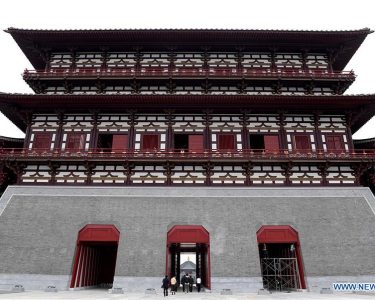
| Chinese-style precinct at luoyang white horse temple | Axial planning, enclosed courtyards, broad tiled roofs, timber-inspired framing, raised platforms, and balanced façades. | The horizontal roof line and repeated courtyard sequence make the complex feel processional and ordered. Visitors are encouraged to read the buildings from the front and move through a hierarchy of thresholds. | Do not judge the halls as simple because they appear symmetrical. Their effect depends on sequence, proportion, roof depth, and the controlled shift from gate to courtyard to main hall. |
| Indian-style hall complex | Forms that reference South Asian Buddhist imagery, more sculptural massing, stupa-related visual language, and carved or relief-oriented surface treatment. | The emphasis shifts from a long Chinese axis toward symbolic form and monument-like presence. Details may be intended to be read around the structure, not only from one frontal approach. | Do not assume every rounded, carved, or monumental element serves the same function as a Chinese hall roof or courtyard gate. The visual vocabulary follows a different Buddhist architectural lineage. |
| Thai-style hall complex | Strongly pitched roofs, layered roof planes, bright decorative surfaces, elongated roof-edge elements, and a more animated skyline. | The steep and layered roof profile creates immediate upward movement. From a distance, the roof often becomes the main identifier before individual walls or doors can be examined. | Do not focus only on gold-colored ornament. The more useful comparison is how the roof layers, gable treatment, and façade decoration create a lighter and more vertical visual rhythm than the Chinese halls. |
| Myanmar-style hall complex | Tiered pavilion-like roof forms, a pronounced vertical silhouette, decorative roof finials, and a combination of light-colored and gilded visual emphasis. | Multiple roof tiers make the structure appear taller and more ceremonial. The building reads from a distance through its stacked profile rather than through a broad horizontal eave line. | Do not treat tiering as decoration alone. It changes scale perception, draws the eye upward, and separates the complex visually from both Chinese roof massing and Thai roof layering. |
For visitors studying luoyang white horse temple, the most reliable distinction is not color. Color can appear different in changing weather, seasonal light, or maintenance conditions. Roof geometry and site planning are more dependable indicators. Chinese halls tend to read through axial order and broad eaves; Indian-inspired forms through sculptural Buddhist references; Thai halls through sharply animated rooflines; and Myanmar-style halls through tiered vertical composition.
Use five field checks to compare each complex on site
A quick visual impression can be misleading. Use the same five checks at every complex within luoyang white horse temple so that your comparison remains consistent. This method is useful for independent travelers, architecture students, photographers, and itinerary planners. It is less suitable for visitors who only want a brief devotional visit, because detailed observation requires time and repeated pauses.
- Check the approach direction. Stand at the entry point and identify whether the building is meant to be approached head-on or viewed as an object from several angles. A front-facing ceremonial approach usually signals a different spatial priority from a monument intended for circumambulatory viewing.
- Trace the roof profile. Look for one dominant roof plane, repeated roof layers, a curved silhouette, or a vertical tiered stack. Getting this wrong leads to superficial comparisons based only on paint and ornament.
- Study the building-to-courtyard relationship. Ask whether the hall encloses a courtyard, anchors one side of it, or stands more independently. This affects where crowds gather and how photographs should be composed.
- Identify the dominant decorative zone. Is the visual focus on roof edges, façade reliefs, wall surfaces, columns, finials, or platform steps? The location of decoration often reveals what the architectural tradition wants the eye to notice first.
- Step back for the skyline. View the complex from a distance before photographing close details. Thai and Myanmar-style structures may communicate most clearly through their upper profiles, while Chinese halls may be better understood through their alignment and courtyard depth.
The practical conclusion is straightforward: use the same viewing criteria rather than trying to memorize every architectural term. At luoyang white horse temple, this turns a mixed-style complex into a clear comparative study.
Common itinerary mistakes and how to avoid them
Visitors often lose the architectural story by moving too quickly between the hall complexes. The following mistakes matter because they can lead to inaccurate notes, weak photographs, and an itinerary that treats distinct traditions as one visual category.
- Mistake: beginning with close-up decoration. Better approach: first photograph or sketch the full building silhouette. This is best when comparing Thai and Myanmar-style roof forms. It does not replace close inspection of reliefs, brackets, or roof ornaments after the overall massing is understood.
- Mistake: assuming all halls use the same spatial logic. Better approach: map the entry, courtyard, and main viewing direction for each area. This is particularly useful when comparing the Chinese precinct with the Indian-style complex. It may be difficult during busy periods, so observe from the side rather than blocking circulation.
- Mistake: treating bright surfaces as the main distinction. Better approach: compare roof pitch, roof tiers, façade depth, and platform height visually. This applies in all weather. It does not mean color is irrelevant; color contributes to identity, but it is not the strongest structural indicator.
- Mistake: planning only one viewpoint. Better approach: inspect each hall from its approach route and from a wider angle where permitted. This is most useful for the international complexes, whose rooflines and outlines may change substantially with viewing distance.
- Mistake: assuming every visible area is available for entry. Better approach: treat public paths, posted rules, and on-site management guidance as the final authority. This applies to all visitors and protects both the site experience and respectful conduct.
Build a focused Luoyang cultural itinerary around comparison goals
If luoyang white horse temple is one stop in a wider Luoyang itinerary, define the purpose of the visit before arrival. A general sightseeing schedule needs a different approach from an architecture-focused schedule.
| Visitor goal | Best focus at luoyang white horse temple | Practical output | Limit |
|---|---|---|---|
| First-time cultural visitor | Chinese axial sequence followed by a broad comparison of the international halls. | A clear understanding of how several Buddhist architectural languages appear within one destination. | This approach gives less time for detailed ornament study. |
| Architecture enthusiast | Roof profiles, courtyard relationships, skyline views, entrances, and decorative zones. | A structured set of comparison notes or photographs organized by architectural feature. | Requires slower movement and may depend on crowd levels and permitted viewpoints. |
| Photographer | Wide views first, then roof details, façade patterns, and transitions between courtyards. | Images that show the difference between horizontal Chinese massing and more vertical international forms. | Lighting, visitor traffic, and site rules can affect available compositions. |
| Itinerary planner | A route that avoids backtracking and groups observations by precinct. | A more coherent cultural stop before continuing to other Luoyang heritage locations. | Opening arrangements and access conditions should be checked locally before travel. |
The best final check is simple: after viewing each complex, state one difference in plan, one difference in roof form, and one difference in decorative emphasis. If you can do that, you have moved beyond surface-level sightseeing at luoyang white horse temple.
For help building a focused architecture itinerary around luoyang white horse temple, seek local selection advice before finalizing your Luoyang route.