By
By Planning a Trip to Luoyang, China Requires Looking Past the Longmen Grottoes
First-time visitors researching Luoyang, China almost always land on one question first: is Longmen Grottoes worth a whole day, or should the rest of the trip be built around something else? The honest answer is that Longmen deserves a focused half-day visit, but Luoyang, China holds roughly 3,000 years of layered capital history spread across at least four other districts. Skipping those areas turns a heritage trip into a single-attraction detour, which wastes the deeper value of the city.
This guide is written for travelers still in the early planning stage — before hotel bookings, before transport tickets — who want a coherent route rather than a checklist of famous names.
Why a Single-Attraction Visit Undersells Luoyang, China
Luoyang served as capital, or secondary capital, for more than a dozen dynasties, from the Eastern Zhou through the Tang. That history did not concentrate in one location. It spread across the old city core, the Han-Wei capital ruins on the eastern outskirts, and the Longmen river valley to the south. Treating the city as “Longmen plus a museum stop” ignores the fact that these sites represent different eras and different urban functions — religious carving, imperial administration, and trade infrastructure along the Silk Road.
The practical consequence: a visitor who books two nights and plans only around Longmen typically finishes by early afternoon on day one, then improvises the rest of the trip with no clear thread connecting the sites they see.
Action-Based Itinerary Design: Group Heritage Sites by Era and District, Not Popularity
Most travel guides rank Luoyang attractions by review score or ticket sales. That approach scatters a traveler across the city in random order, doubling transit time. A better method groups sites by historical period and geographic cluster, then sequences visits so each day has one clear theme.
| Approach | How It Works | Result for a 3-4 Day Trip |
|---|---|---|
| Popularity-ranked list | Visit top-rated sites in review-score order regardless of location | Backtracking across districts, 2-3 extra hours lost daily to transit |
| Era-and-district grouping | Cluster sites by dynasty and neighborhood, then sequence districts logically | Each day covers one historical arc with minimal repeat travel |
Applied to Luoyang, China, this means organizing the trip into three or four blocks:
- Old City District (Sui-Tang era remnants and local life): Wenfeng Pagoda area, the old city wall sections, and nearby tea houses and noodle shops that sit inside the historic street grid.
- Han-Wei Capital Ruins (Eastern Han through Northern Wei): the archaeological park east of the modern city, best visited as a half-day with a guide or audio material, since the site is mostly open ground with marker stones rather than standing structures.
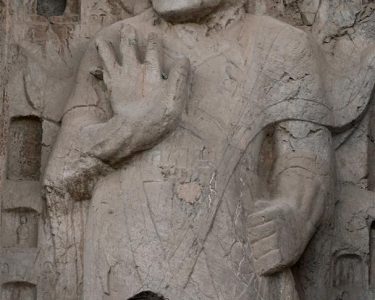
- Longmen River Valley (Northern Wei through Tang Buddhist carving): Longmen Grottoes itself, plus the smaller Xiangshan Temple across the river, which most itineraries skip despite being a five-minute walk from the main gate.
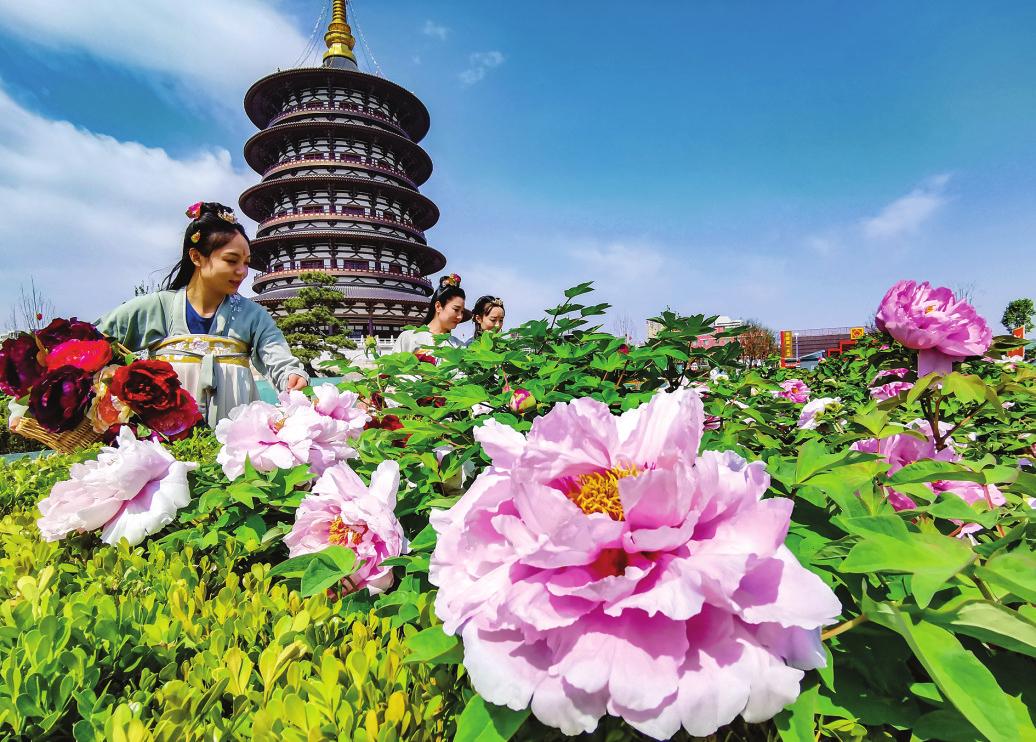
- Luoyang Museum and Peony Garden area (cross-era context): best scheduled either at the start of the trip, to build context before visiting ruins, or on a rain day, since it is fully indoor.
The key checkpoint at each stage: confirm which dynasty a site represents before adding it to a day’s plan. If two sites belong to different eras but sit in the same district, visit them back to back anyway — geography wins over chronology when the distance saved exceeds 30 minutes of transit.
A Four-Day Step-by-Step Route Through Luoyang, China
This sequence assumes arrival by train into Luoyang Longmen or Luoyang station, both common entry points.
- Day 1 — Context first. Visit Luoyang Museum in the morning to understand the city’s dynastic timeline. Spend the afternoon walking the Old City District, focusing on the city wall remnants and Wenfeng Pagoda. Common failure here: arriving without checking museum opening hours, since exhibit halls sometimes rotate collections and close sections without notice.
- Day 2 — Longmen and the river valley. Start early at Longmen Grottoes to avoid midday crowds at the main Buddha niches. Cross the river afterward to Xiangshan Temple, which most tour groups bypass entirely. Common failure: allocating only two hours total, which forces rushing through the western cliff carvings that hold the most detailed Tang-era work.
- Day 3 — Han-Wei capital ruins. This site rewards slower, guided exploration since there are few standing structures — most of what remains is foundation outlines and excavated gate markers. Common failure: visiting without any background reading or guide, which leaves visitors looking at open fields with no context for what stood there.
- Day 4 — Flex day. Use this for the Peony Garden if visiting in spring, or for a return trip to the old city’s night market streets, which operate on a different rhythm than the daytime heritage circuit.
Common Mistakes When Building a Luoyang, China Itinerary
- Booking only one full day in the city. Longmen alone can absorb half a day; pairing it with any other district in the same day usually means rushing one or both.
- Ignoring seasonal factors. The Peony Garden is only relevant for a few weeks each spring; scheduling around it outside that window wastes a slot better used elsewhere.
- Assuming all sites are near each other. The Han-Wei ruins sit well outside the central city; travelers who plan it as a quick add-on to a Longmen day frequently run out of time.
- Skipping the old city walking streets entirely. These areas provide the connective tissue between the archaeological sites and give context on how the historic capital layout still shapes the modern city grid.
Decision Checklist Before Booking Transport and Lodging in Luoyang, China
Use this checklist once the route outline above is set, before finalizing hotel or train bookings:
- Does the hotel sit closer to the old city district or to the Longmen valley? Pick based on which cluster takes priority on arrival day.
- Have you confirmed whether the Han-Wei ruins site requires a guide or pre-booked transport, since public transit coverage there is limited compared to the central districts?
- Is your visit timed for peony season, or any other seasonal event that would reshape day sequencing?
- Have you budgeted at least half a day of buffer time for weather-dependent outdoor sites like the archaeological park?
This checklist matters most for trips of three days or fewer, where a single scheduling error can eliminate an entire district from the plan. For longer stays of five days or more, the sequencing above can simply be doubled with a rest day inserted, since there is no penalty for slowing the pace once transit logistics are already solved.
None of this replaces on-the-ground flexibility — weather, site closures, and seasonal crowding at Longmen can all shift a plan by half a day. But starting from an era-and-district framework, rather than a popularity list, gives a first-time visitor to Luoyang, China a route that actually explains the city instead of just photographing it.
If you are still finalizing dates or need help sequencing a custom route around specific interests — Buddhist art, Silk Road history, or Tang-dynasty urban planning — submit your travel dates and priorities for a tailored itinerary outline.