 By
By How Luoyang City’s Capital Status Shaped its Enduring Buddhist Heritage
Understanding how Luoyang city, with its long and storied history, became a central hub for Buddhist development requires a close examination of its repeated role as an imperial capital. This unique historical position provided an unparalleled foundation for the religion’s establishment, flourishing, and enduring legacy within the region. The sustained presence of imperial power, resources, and influence directly translated into significant support for Buddhist institutions, shaping not only their physical presence but also their intellectual and cultural impact.
The question often arises: what specific mechanisms linked Luoyang’s political prominence to its rich Buddhist heritage? The answer lies in the direct correlation between state patronage and religious growth. When a city served as the heart of an empire, it naturally attracted immense wealth, skilled artisans, and intellectual minds. This concentration of resources and talent became a fertile ground for the propagation of Buddhism, transforming Luoyang into a pivotal center for translation, teaching, and monumental construction.
Causal Analysis: How Luoyang’s Capital Periods Shaped Buddhist Heritage
Luoyang’s repeated designation as an imperial capital was not merely a title; it was a fundamental driver for the funding, concentration, and preservation of its Buddhist institutions and monuments. The cyclical nature of imperial power returning to Luoyang meant sustained, rather than sporadic, investment in religious infrastructure. This continuous patronage had distinct, practical effects that differentiate Luoyang’s Buddhist development from other regions.
Here’s a breakdown of how capital status profoundly influenced Buddhist heritage:
- Funding Mechanisms and Material Support:
- Conclusion: Imperial capitals benefited from direct state endowments, tax revenues, and elite donations, ensuring substantial financial backing for Buddhist projects.
- Reasoning: The emperor and the court, residing in Luoyang, were the primary sources of wealth and power. Their personal piety or political pragmatism often led to massive investments in temples, monasteries, and grottoes. This included land grants, tax exemptions, and direct allocation of state resources.
- Scenario: A new dynasty establishing its capital in Luoyang would often sponsor grand temple constructions as a display of legitimacy and piety, attracting skilled laborers and resources from across the empire.
- Limits: This funding was often tied to the fortunes of the ruling dynasty; periods of political instability or dynastic decline could lead to diminished support or even persecution.
- Concentration of Institutions and Talent:
- Conclusion: Capital cities naturally drew the leading Buddhist monks, scholars, translators, artisans, and patrons, creating unparalleled centers of religious innovation and activity.
- Reasoning: Intellectual and spiritual leaders sought proximity to power, where resources for their work (sutra translation, philosophical debate, artistic commissions) were most abundant. The capital offered libraries, imperial workshops, and access to a diverse populace.
- Scenario: Distinguished foreign monks, bringing new scriptures or artistic styles, would gravitate towards Luoyang, leading to the establishment of major translation bureaus and influential monasteries.
- Limits: Such concentration could also make institutions vulnerable during periods of anti-Buddhist sentiment, as they were easily targeted by imperial decrees.
- Preservation and Longevity of Monuments:
- Conclusion: Imperial backing provided a level of protection, maintenance, and documentation that significantly enhanced the long-term survival and historical record of Buddhist sites.
- Reasoning: Monuments built under imperial sponsorship were often grander, constructed with more durable materials, and benefited from ongoing state-mandated upkeep. Imperial records also documented their construction and purpose.
- Scenario: The Longmen Grottoes, near Luoyang, received extensive imperial patronage over centuries, ensuring their continued carving and periodic restoration, thus preserving them for millennia.
- Limits: Even imperial protection could not always withstand severe natural disasters, widespread warfare, or systematic state-sponsored suppression campaigns, which occasionally targeted religious sites.
This unique combination of sustained funding, intellectual concentration, and imperial protection allowed Luoyang’s Buddhist heritage to develop with a scale and sophistication rarely seen elsewhere.
Key Periods of Imperial Patronage and Buddhist Flourishing in Luoyang
The development of Buddhism in Luoyang was not a continuous, linear process, but rather a series of peaks and troughs, heavily influenced by the ruling dynasties. Each period brought its own character to the Buddhist landscape of the city, leaving distinct marks on its cultural fabric. Understanding these periods offers insight into the evolving relationship between state power and religious expression.
Eastern Han Dynasty (25-220 CE): The Genesis of Chinese Buddhism
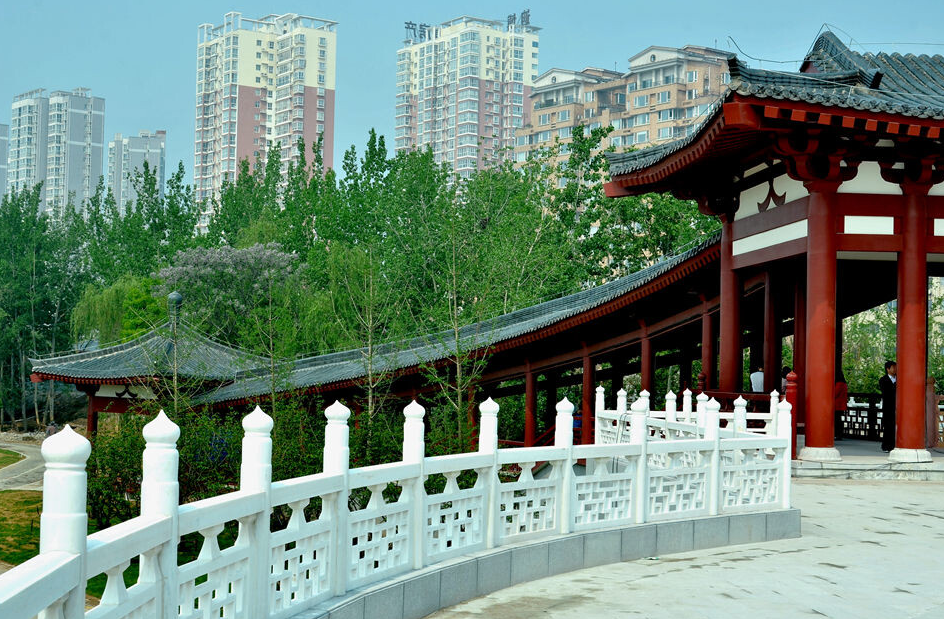
Luoyang’s earliest significant connection with Buddhism dates to the Eastern Han Dynasty, when it served as the capital. Tradition holds that Buddhism officially arrived in China during this era, with the White Horse Temple established in Luoyang as the first Buddhist temple. Imperial endorsement, even if initially cautious, provided a critical foothold for the foreign religion. The initial translations of sutras began here, laying the groundwork for future intellectual growth. While not yet widespread, this period was crucial for setting the precedent of imperial interaction with Buddhism. It demonstrated that a new foreign belief system could find a place within the imperial administration, albeit carefully managed.
Northern Wei Dynasty (386-534 CE): A Golden Age of Buddhist Art and Doctrine
The Northern Wei Dynasty, originating from non-Han nomadic groups, embraced Buddhism with unparalleled fervor, transforming Luoyang into a vibrant Buddhist metropolis. After moving their capital to Luoyang in 493 CE, the Northern Wei emperors poured immense resources into constructing temples, pagodas, and, most famously, the Longmen Grottoes. This period saw the systematic translation of Buddhist scriptures on a grand scale and the development of distinct Chinese Buddhist artistic styles. The imperial family itself became devout patrons, sponsoring colossal statues and elaborate cave temples as acts of merit and displays of power. This era represents perhaps the most direct and extensive imperial influence on the physical and spiritual landscape of Luoyang’s Buddhism, leaving thousands of carved images and numerous temple foundations.
Tang Dynasty (618-907 CE): Imperial Splendor and Doctrinal Maturity
Under the Tang Dynasty, Luoyang served as an auxiliary capital and frequently a secondary political center, especially during the reign of Empress Wu Zetian, a fervent Buddhist patron. The Tang period is often considered the golden age of Chinese Buddhism. While Chang’an (modern Xi’an) was the primary capital, Luoyang retained immense prestige and received significant imperial investment in its Buddhist sites. Empress Wu, for instance, commissioned the grandest statue at Longmen, the Vairocana Buddha, reflecting her personal devotion and imperial authority. This era saw the maturation of various Buddhist schools and the flourishing of monastic life, with Luoyang benefiting from its status as a cultural and economic hub, attracting pilgrims, scholars, and artists. The intertwining of imperial power with Buddhist institutions reached its zenith, creating a rich tapestry of art, philosophy, and religious practice.
Architectural and Scholarly Legacies: Enduring Impact on Luoyang’s Buddhist Sites
The sustained imperial attention on Luoyang’s Buddhist heritage has left behind a tangible legacy that continues to define the city’s cultural identity. This heritage is evident not only in magnificent architectural remnants but also in the profound scholarly traditions that originated and flourished within its walls. These elements offer concrete examples of how capital status translated into lasting cultural impact.
The Longmen Grottoes: A Testament to Imperial Devotion
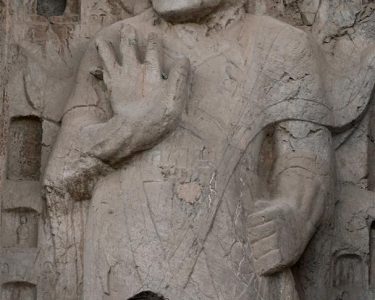
The Longmen Grottoes, a UNESCO World Heritage site, stand as the most spectacular testament to Luoyang’s Buddhist past. Carved into the limestone cliffs along the Yi River, these grottoes contain tens of thousands of Buddhist statues and inscriptions, spanning from the late Northern Wei to the Tang Dynasty. The sheer scale and artistic sophistication of these carvings reflect centuries of imperial sponsorship. The monumental Vairocana Buddha, commissioned by Empress Wu Zetian, is a prime example of how imperial will and resources could manifest in breathtaking religious art. Each grotto and statue tells a story of devotion, artistic innovation, and the massive human and financial capital directed towards these sacred sites.
White Horse Temple: The Cradle of Chinese Buddhism
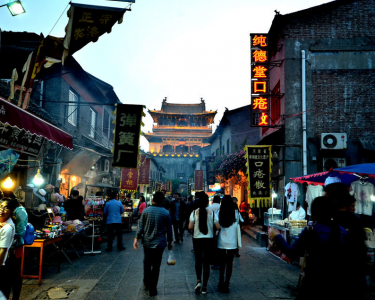
Often referred to as “the first temple in China,” the White Horse Temple holds immense symbolic and historical significance. While its current structures are largely Ming and Qing dynasty reconstructions, its foundation in the Eastern Han Dynasty under imperial decree marks the official beginning of Buddhism’s institutionalization in China. For centuries, it served as a vital center for scripture translation and scholarly exchange, drawing monks from across Asia. Its very existence is a direct consequence of Luoyang’s status as the imperial capital, providing the initial environment for the foreign religion to take root and flourish.
Scholarly Contributions and Translation Bureaus:
Luoyang was not just a center for constructing monuments; it was also a crucible of Buddhist scholarship. Imperial support facilitated the establishment of large-scale translation bureaus, where foreign monks and Chinese scholars collaborated to render Sanskrit scriptures into Chinese. This intellectual endeavor was crucial for the dissemination of Buddhist thought throughout East Asia. The capital provided the necessary resources: funding for scribes, access to rare manuscripts, and a stable environment for prolonged academic work. This concentration of intellectual effort ensured that Luoyang became a key node in the transmission and localization of Buddhist doctrine, profoundly influencing the development of Chinese philosophy and culture.
Buyer’s Decision Checklist for Engaging with Historical Sites:
When planning to engage with historical sites like those in Luoyang, consider the following points to maximize your understanding and appreciation:
- Research Historical Context: Understand the specific dynasty and imperial figures associated with the site. How did their rule impact its construction or use?
- Identify Key Patrons: Who funded or commissioned the site? Was it the emperor, an empress, or influential nobles? This often indicates the scale and artistic ambition.
- Look for Inscriptions: Many sites, especially grottoes, contain inscriptions detailing their creation. These are primary historical documents.
- Consider the Site’s Purpose: Was it a monastery, a grotto complex, a pagoda, or a combination? How did its function evolve over time?
- Note Artistic Styles: Can you discern different stylistic periods? For example, Northern Wei carvings often differ significantly from Tang dynasty ones at Longmen.
- Assess Preservation Challenges: What factors have contributed to the site’s preservation or degradation? (e.g., climate, warfare, restoration efforts).
Luoyang’s unique historical trajectory as a repeated imperial capital created an environment where Buddhism could not only survive but thrive, leaving behind a wealth of artistic, architectural, and intellectual heritage that continues to inspire and inform. The city’s political significance was inextricably linked to its religious flourishing, a dynamic that profoundly shaped the cultural landscape of China.
To further explore the historical and cultural significance of Luoyang’s ancient sites, consider consulting historical archives or specialized research institutions.