 By
By How to Read Longmen China Cave Styles Across the Northern Wei and Tang Dynasties
Anyone standing in front of the cliffs at Longmen for the first time asks the same question: why does one Buddha look thin and stern, while another looks round-faced and relaxed? The answer isn’t random artistic taste—it’s dynasty. Longmen China spans roughly four centuries of carving, and the stylistic shifts between the Northern Wei period and the Tang dynasty are sharp enough that a trained eye can date a niche within seconds. This guide breaks down exactly what changed, why it changed, and how to spot it yourself when you’re standing in front of the rock face rather than reading about it later.
Why Dating a Cave Actually Matters Before You Visit Longmen China
Most visitors treat Longmen China as one continuous gallery. That’s a mistake. The site was carved in two major bursts—one under Northern Wei patronage starting in the late 5th century, and a second, larger wave under Tang imperial sponsorship in the 7th and 8th centuries. If you don’t know which period you’re looking at, you’ll miss the actual story: a political and religious shift that changed how Buddhist figures were imagined, funded, and displayed.
Getting this wrong has a practical cost too. Tour groups often walk past the Guyang Cave—one of the earliest and most historically dense niches—because it lacks the scale of the Tang-era Fengxian Temple. If your interest is early Buddhist iconography, skipping Guyang for a quick photo at the big Buddha means missing the point of your own trip.
Comparison of Northern Wei and Tang Visual Markers: Figures, Drapery, Faces, and Patronage
The clearest way to date a cave at Longmen China is to check four features in sequence: body proportion, drapery treatment, facial modeling, and inscription evidence of who paid for it. Each marker affects a different part of your reading, and getting one wrong can flip your dating by a century or more.
| Marker | Northern Wei (late 5th–early 6th c.) | Tang Dynasty (7th–8th c.) | What happens if you misread it |
|---|---|---|---|
| Figure proportions | Elongated, flat-bodied, narrow shoulders | Fuller, fleshier, more naturalistic anatomy | You’ll assume a slender Tang figure is Northern Wei and miscalculate the cave’s age by 150+ years |
| Drapery style | Sharp, symmetrical, linear folds close to the body | Looser, flowing, layered robes with soft curves | Restoration-era recarving sometimes smooths Wei drapery—mistaking a repaired niche for genuine Tang work |
| Facial modeling | Long, thin faces, faint archaic smile, elongated ears | Round, fuller cheeks, more naturalistic and serene expression | Weathering can flatten Tang faces to look “thin”—cross-check with drapery before concluding it’s Wei |
| Patronage evidence | Aristocratic clans and court officials, smaller votive niches | Imperial sponsorship, large-scale state-funded projects | Assuming every large niche is imperial Tang ignores wealthy Wei-era clan donations recorded in nearby inscriptions |
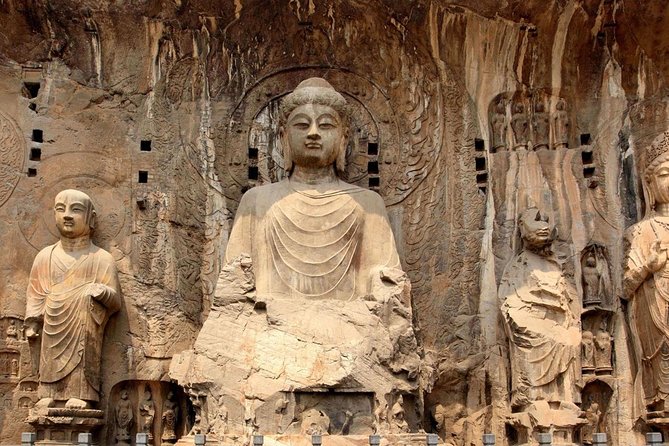
The Northern Wei dynasty favored a more abstract, spiritually distant depiction of the Buddha—thin, upright, almost otherworldly. By the time Tang patronage took over, the aesthetic softened toward something more human and approachable, reflecting broader shifts in court taste and religious practice. This isn’t a minor stylistic footnote; it’s the single fastest way to date a cave without reading a placard.
Step-by-Step: How to Identify a Cave’s Dynasty On-Site
Once you know the markers, apply them in order rather than guessing from a single glance. Skipping steps is the most common way visitors misdate a niche at Longmen China.
- Check the body silhouette first. Flat and narrow points to Northern Wei; fuller and rounded points to Tang.
- Look at the drapery folds. Sharp, symmetrical lines confirm Wei; loose, naturalistic drapery confirms Tang.
- Study the face and ears. Elongated features with a faint smile suggest Wei; a rounder, calmer expression suggests Tang.
- Scan for inscriptions or donor plaques nearby. These often name the sponsoring family or official, giving you a direct historical anchor.
- Cross-reference scale. Wei niches tend to be smaller and more numerous; Tang commissions, like the grand seated Buddha at Fengxian Temple, tend to dominate an entire cliff face.
This sequence works because each marker corrects for the weaknesses of the one before it. Weathering can distort a face, but drapery patterns survive erosion better and back up your read.
Common Mistakes Travelers Make When Reading Longmen China Caves
- Judging purely by size. A large niche isn’t automatically Tang—some Northern Wei clan-sponsored caves are surprisingly expansive.
- Ignoring erosion damage. Centuries of weathering and, in some cases, past looting have altered facial features, making a Tang face look thinner than it originally was.
- Relying only on guidebook photos. Lighting and angle in printed photos flatten drapery detail—the actual rock face shows folds far more clearly.
- Assuming a single dynasty per cave complex. Some grottoes were started under Northern Wei and later modified or expanded under Tang patronage, creating mixed stylistic layers within the same niche.
- Skipping the smaller niches. Visitors fixate on the largest Buddha statues and miss the smaller votive caves where dynasty-specific details are often best preserved.
Which Caves to Prioritize Based on Your Interest
Not every visitor needs the same itinerary. Use this checklist to decide where to spend your limited time at Longmen China.
- Want to see early Buddhist iconography in its purest form? Prioritize Guyang Cave and other early Northern Wei niches—thinner figures, sharper drapery, denser inscriptions.
- Want the scale and grandeur most photographs show? Head to Fengxian Temple, the flagship Tang-era commission with its monumental seated Buddha.
- Interested in the transition itself? Look for caves with layered patronage—sections show Wei-era carving alongside later Tang additions, a rare chance to see the stylistic shift within one physical space.
- Traveling with limited time? Pick one representative cave from each period rather than trying to see everything—comparing just two niches side by side teaches the dynasty markers faster than a dozen quick stops.
This approach doesn’t apply if your visit is purely photographic or leisure-focused—in that case, the largest and best-preserved Tang figures will simply give you the most striking images regardless of dating accuracy.
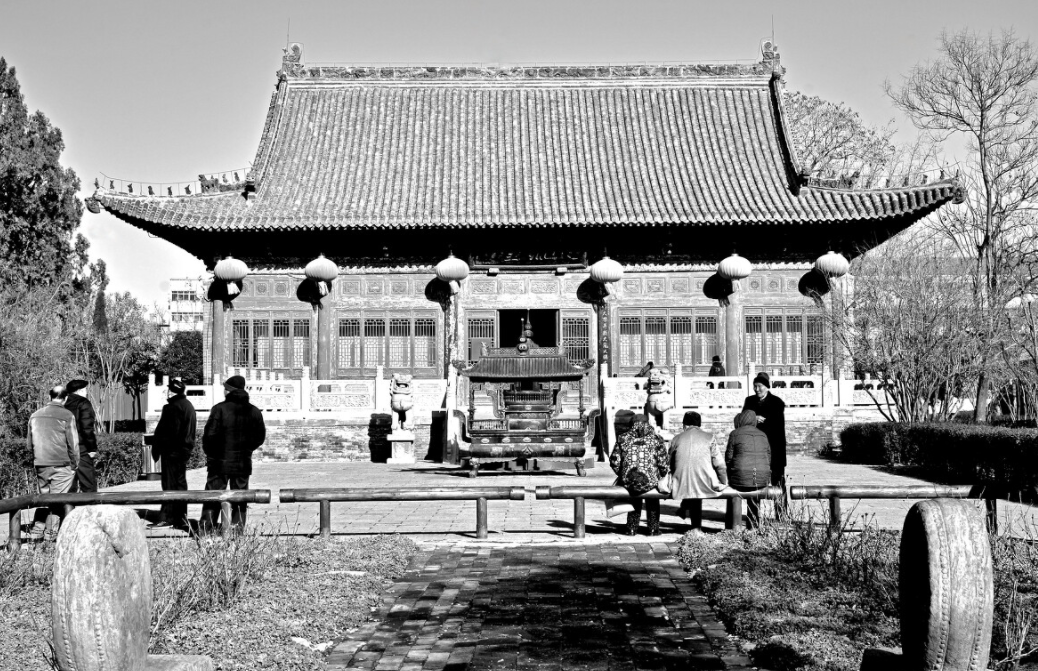
The broader cultural context helps too. Longmen China sits alongside other major Chinese cave temple groups—Yungang and Mogao among them—each shaped by different regional patronage and timelines. Recognizing that Longmen’s Tang-era work reflects the dynasty’s imperial confidence, while its Northern Wei sections reflect an earlier, more austere devotional style, gives you a framework that applies across Chinese Buddhist cave art generally, not just at this one site.
Reading Patronage Records Alongside the Stone
Inscriptions carved near many niches record who commissioned the work—sometimes a court official, sometimes a Buddhist association, sometimes an imperial family member. These records matter because they anchor a style to an actual date rather than a stylistic guess. When an inscription is legible, it overrides visual judgment; when it’s worn away, you fall back on the figure, drapery, and face comparison above. Treat the stone carving as your primary evidence and the inscription as your tiebreaker, not the other way around.
This matters practically: guides and audio tours at Longmen China sometimes simplify dating to “old” versus “new” caves. That shorthand loses the nuance a serious history reader wants. Knowing the four markers means you can verify or challenge what a tour guide tells you, rather than accepting a rounded-off date.
If you’re planning a research trip or need a structured briefing on specific niches before travel, our team can help you put together a cave-by-cave reading plan tailored to your itinerary and areas of interest—just send us the dates you’re considering and what periods you want to focus on.