
Blog
Find Luoyang Han-Wei Ruins and Ancient Tombs

Find Luoyang Han-Wei Ruins and Ancient Tombs Beyond the Famous Temples
How can an independent traveler see luoyang as an ancient capital rather than simply a stop for Buddhist monuments? The answer is to connect the surviving Han-Wei urban landscape with tomb archaeology sites on the surrounding slopes and plains. This approach turns separate attractions into a coherent story about city planning, court life, burial practice, and changing ideas of power.
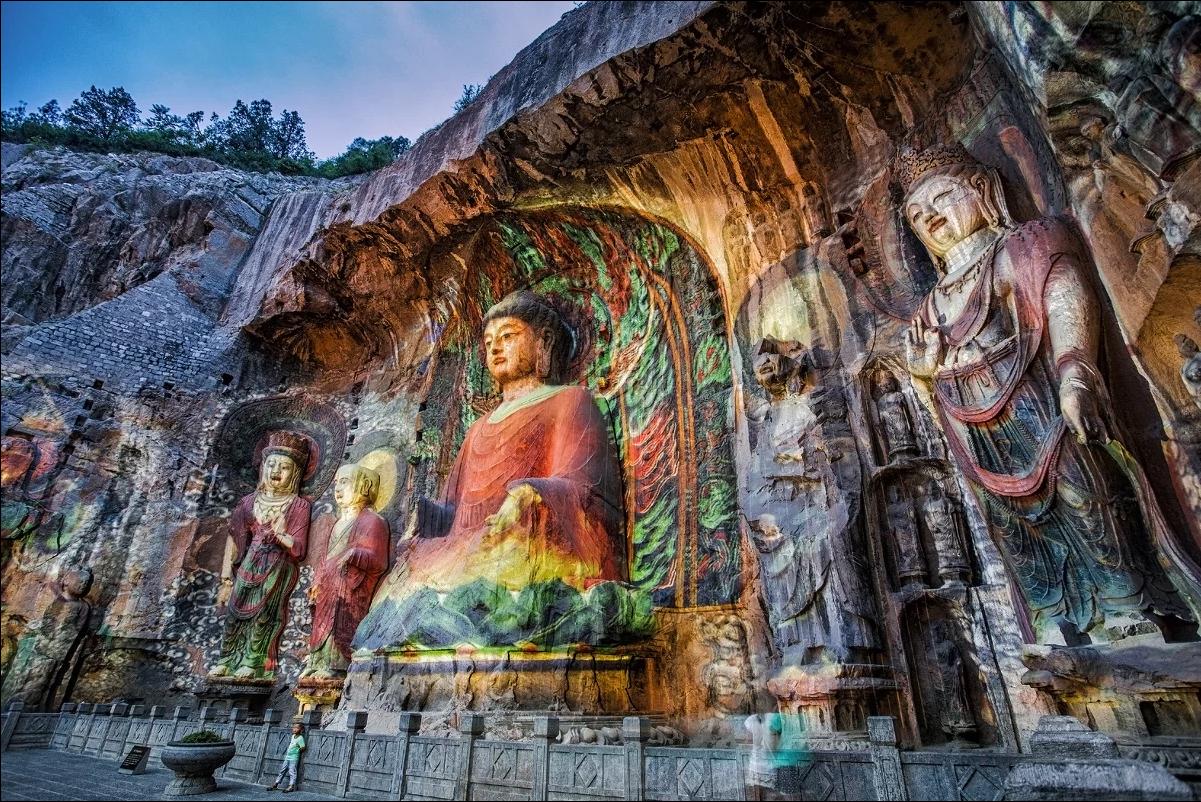
Many first-time visitors begin with the Longmen Grottoes and White Horse Temple, both worthwhile landmarks. A deeper luoyang itinerary should also include the archaeological traces of the Han-Wei city and at least one ancient tomb site or museum collection. These places require more planning because ruins can be visually subtle, access conditions can change, and interpretation is often less immediate than at major scenic attractions.
Build a luoyang itinerary around layers of ancient capital history
The best starting point is to treat the city as a sequence of historical layers, not as a list of unrelated stops. The Han-Wei ruins reveal how an imperial capital was organized above ground. Tomb archaeology shows how status, family identity, and religious ideas were expressed below ground. Together, they explain why this place remained politically and culturally important across changing dynasties.
Use the following comparison before deciding how much time to assign to each type of visit. This is most useful for travelers who have one full day beyond the major Buddhist sites. It does not replace checking current ticketing, site access, transport routes, or museum schedules before departure.
| Site type | What to look for | Best for | Limitation to expect |
|---|---|---|---|
| Han-Wei city ruins | City walls, gates, palace-area archaeology, road alignments, and spatial scale | Understanding how ancient luoyang functioned as a capital | Much of the evidence is low-profile and needs maps or interpretation |
| Dingding Gate area | Gateway structure, ceremonial movement, and the relationship between roads and authority | Travelers interested in urban planning and arrival routes | A single gate cannot explain the whole city without wider context |
| Ancient tomb museum or tomb archaeology site | Burial chambers, murals, objects, tomb layout, and funerary customs | Understanding social hierarchy and everyday material culture | Not every tomb is open, and some displays use reconstructed settings |
| Major Buddhist landmark | Religious art, patronage, devotional practice, and monumental carving | Visitors seeking highly visible architecture and sculpture | It can leave the impression that religious heritage is the entire story |
The practical conclusion is simple: choose one city-ruin location and one tomb-focused location on the same day. This pairing fits travelers who want historical depth without trying to cover every archaeological point. It does not fit a very short visit focused only on landmark photography, because ruin sites reward slow reading rather than quick visual impact.
Pair Han-Wei city ruins with tomb archaeology sites to understand luoyang beyond Buddhist landmarks
The Han-Wei city ruins and tomb archaeology sites answer different questions. A city ruin asks, “How was power arranged in public space?” A tomb asks, “How did people represent status and belief in private commemoration?” Pairing them gives travelers a fuller view of luoyang beyond its better-known Buddhist monuments.
Begin with the idea of archaeology as evidence recovered from place, structure, objects, and context. Do not evaluate a ruin only by how much stone remains visible. A nearly level field can still mark a gate approach, a palace zone, a defensive line, or a carefully planned urban boundary.
| Pairing question | At the Han-Wei ruins | At tomb archaeology sites | What the comparison reveals |
|---|---|---|---|
| How was rank displayed? | Look for scale, access routes, walls, and controlled entrances | Look for chamber size, tomb form, decoration, and grave goods where displayed | Authority appeared in both public movement and burial design |
| How did people move through space? | Trace roads, gates, and the relationship between outer and inner zones | Study passageways, ramps, chambers, and sealed burial spaces | Urban movement was open and regulated; funerary movement was symbolic and enclosed |
| What changed over time? | Compare surviving plans and interpretive panels for changing capital layouts | Compare tomb construction, imagery, and objects from different periods | Political transitions affected both official architecture and personal commemoration |
| Where does religion appear? | Notice institutional spaces and later cultural layers around the city | Look for symbols, protective imagery, and beliefs represented in burial contexts | Buddhist heritage is important, but it is one part of a broader cultural landscape |
A useful route pairs the Han-Wei city landscape with the Luoyang Ancient Tombs Museum or another currently accessible tomb-focused site in the Mangshan area. The conclusion is not that every tomb and ruin belongs to the same period or social group. They do not. The value comes from comparing how different communities and eras used the wider landscape around luoyang.
Follow a practical one-day route with research checkpoints
A successful heritage day depends on preparation more than speed. Ruins may be spread across large areas, while tomb displays may have separate access rules. Plan your luoyang route in a sequence that moves from city-scale evidence to individual burial evidence.
- Choose one historical question before leaving. For example, ask how capital-city gates controlled ceremonial movement, or how tomb construction expressed rank. This focus prevents the day from becoming a collection of disconnected photographs. It works best for independent travelers; it is less necessary on a specialist guided tour with a fixed theme.
- Check current access for the Han-Wei ruins. Confirm the exact area you can enter, whether there is an interpretation center, and whether the site is reachable by public transport or taxi. Do not assume every mapped archaeological feature is open to visitors.
- Visit the urban site first. Start at a gate, wall line, museum display, or marked ruin zone while your attention is fresh. Make notes on orientation, distance, and the relationship between protected areas. This gives context before you enter enclosed tomb spaces.
- Record three observations, not just photographs. Write down one feature of movement, one feature of hierarchy, and one feature of construction. At the Han-Wei landscape, this might mean an approach road, a boundary, and a surviving foundation outline.
- Travel to a tomb-focused museum or archaeological display. Compare the tomb layout with the city layout. Ask whether the burial space imitates domestic, official, or cosmological ideas. This is where the route becomes analytical rather than scenic.
- End with a map review. Place both sites on the same map and identify how tomb areas relate to the old urban center, surrounding hills, and travel corridors. This final step is especially useful when planning a second day in luoyang.
This route suits travelers with a full day and a willingness to read site panels carefully. It is not ideal during severe weather, when broad open ruin landscapes may be uncomfortable, or when young children need a more interactive museum-focused schedule.

Use field-reading techniques when ruins appear difficult to interpret
Ancient capital sites can disappoint visitors expecting intact palaces. That expectation is the main reason travelers overlook the Han-Wei landscape in luoyang. The correct approach is to read scale, alignment, elevation, and separation between spaces rather than searching only for standing buildings.
- Read the horizon line. Look for raised ground, long banks, or consistent edges that may indicate former walls or foundations. This is useful in open archaeological parks. It does not prove the function of a feature without a site label or reliable map.
- Follow the route of entry. Gates and roads matter because they show who could approach important spaces and from where. This is especially effective near preserved or reconstructed gateway areas. It is less useful where modern roads have altered the original landscape.
- Compare scale rather than decoration. Palace and administrative zones may be meaningful because of their position and footprint, even when ornamental material is absent. Use this method at city ruins; use tomb displays to study smaller-scale details such as chamber form and painted imagery.
- Separate original remains from modern interpretation. Read labels closely to distinguish excavated fabric, protective structures, replicas, diagrams, and reconstructed models. Reconstruction can clarify a site, but it should not be mistaken for untouched evidence.
Avoid planning mistakes that weaken a deeper luoyang visit
Independent travelers can build an excellent itinerary, but only if they avoid treating archaeology sites like conventional monument visits. The following mistakes are common because the ancient city and tomb landscape require more advance checking than headline attractions.
- Trying to visit every site in one day. The better choice is one Han-Wei location plus one tomb experience. This gives enough time to observe and compare. Attempting several distant points works only when a private driver, current access information, and a tightly timed route are already arranged.
- Using only a general map listing. Maps may show a ruin area without explaining visitor entrances or whether the feature is visible. Cross-check with current official visitor information, recent transport options, and local accommodation staff.
- Expecting museum objects to represent one unified era. Tomb collections can cover different periods, burial ranks, and archaeological contexts. Read period labels before making comparisons with the Han-Wei city ruins.
- Skipping the historical sequence. A tomb may be visually compelling, but it becomes more meaningful after understanding how the capital was organized. Start with the city framework whenever possible.
- Ignoring weather and walking conditions. Open archaeological areas may offer limited shelter. Wear suitable footwear, carry water, and leave time for transport between locations.
Decide whether to add a second heritage day
Add a second day in luoyang if your first day raises more questions than it answers. This is the right choice for travelers interested in ancient urbanism, burial art, dynastic transition, or landscape archaeology. It is less necessary for visitors whose priority is a concise itinerary centered on the Longmen Grottoes and White Horse Temple.
On the second day, return to the theme that interested you most. If city planning stood out, compare additional gate, wall, or palace-area evidence. If funerary culture was more compelling, spend longer with tomb displays and examine how chamber design, objects, and imagery shape the story of the dead. If religious change is your focus, place Buddhist landmarks beside the wider civic and funerary landscape rather than treating them as separate histories.
The central lesson is that luoyang is best understood through connections: city gates and burial passages, palace areas and tomb chambers, public ceremony and private commemoration. Seeing both Han-Wei ruins and ancient tomb archaeology gives the itinerary a depth that a monument-only visit cannot provide.
For a tailored heritage itinerary, ask a qualified local guide or museum service for current access advice before finalizing your route.
===
