
Blog
How Lo Yang China Became a Modern Industrial Powerhouse

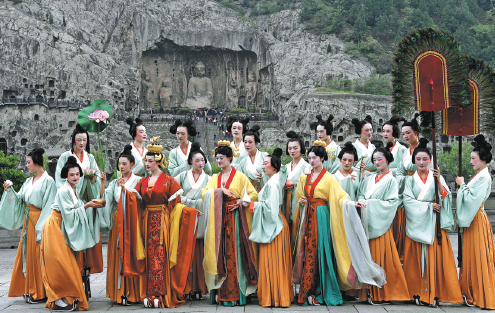
How Lo Yang China Transformed from Dynastic Center to Industrial Powerhouse
When international buyers think of sourcing from China, coastal manufacturing hubs often come to mind first. Yet, deep in the country’s central plains lies a city with a unique dual identity. Many know it for its incredible history, but for sourcing professionals, understanding the industrial evolution of lo yang china is key to unlocking significant opportunities in heavy industry and materials. The city’s journey from the political and cultural heart of ancient dynasties to a critical node in modern supply chains is not just a historical footnote; it is the foundation of its present-day manufacturing capabilities.
This transition provides a blueprint for its core competencies. The same strategic importance that made it a capital for numerous dynasties now manifests as robust logistical infrastructure and a deep-seated culture of engineering and material handling. For businesses looking to procure heavy machinery, specialized materials, or precision components, understanding this context is the first step toward building a resilient and effective sourcing strategy in the region.
A Timeline: From Imperial Capital to Modern Manufacturing Hub
Tracing the city’s economic DNA from its imperial past to its industrial present reveals why certain industries thrive here. This is not just an academic exercise; it’s a practical framework for understanding the city’s inherent strengths. Follow this timeline to connect the dots between history and modern supply chains.
-
Foundation: Dynastic Epicenter (c. 2070 BCE – 937 CE)
For over a millennium, Luoyang served as the capital for numerous Chinese dynasties. This status required more than just palaces; it demanded a concentration of the era’s most advanced resources. It became a center for master artisans, sophisticated metallurgy for weapons and ceremonial vessels, and large-scale logistics to feed and supply the imperial court. This era established a foundational legacy of centralized planning, skilled craftsmanship, and resource management.
- Key Checkpoint: Recognize that the city’s historical role created an early concentration of skilled labor and logistical planning. The ability to manage massive construction and resource allocation projects is a deep-seated part of its identity.
- Common Failure: Viewing this history as purely cultural. Businesses that dismiss this period fail to see the origins of the engineering and organizational mindset that defines the local workforce today.
-
Rebirth: The First Five-Year Plan (1950s)
After centuries as a regional town, the modern industrial story of Lo Yang China began with its designation as a key project site during China’s first Five-Year Plan. Central planners chose the city for its strategic inland location and historical significance. Massive state investment poured in to build cornerstone state-owned enterprises (SOEs) focused on heavy industry. This is when factories producing tractors, mining equipment, bearings, and copper processing were established, forming the bedrock of its modern economy.
- Key Checkpoint: Acknowledge the state-led investment that created the city’s contemporary industrial base. This wasn’t organic growth; it was a deliberate, large-scale industrial build-out. This is a critical step for anyone evaluating sourcing heavy machinery from the region.
- Common Failure: Underestimating the influence of this SOE legacy. These large, foundational companies still shape the local business culture, supply chains, and talent pool, which can differ significantly from the private-enterprise-driven economies of coastal cities.
-
Diversification: Reform and Modernization (1980s – Present)
Beginning with China’s economic reforms, Luoyang’s industrial landscape began to diversify. While the heavy industry SOEs remain pillars, a dynamic ecosystem of private companies emerged, often specializing in components, new materials, and more advanced manufacturing processes. The region leveraged its natural resources to become a national leader in molybdenum and aluminum processing. Today, the city is a blend of legacy industrial giants and agile, specialized manufacturers pushing into higher-tech sectors.
- Key Checkpoint: Identify the specific modern sectors that have grown from the city’s industrial base. This includes not just end-products like construction equipment but also critical upstream materials and components.
- Common Failure: Assuming the city’s industrial output is limited to 1950s-era technology. Many local firms have modernized significantly and compete globally on quality and technology, not just scale.
Evaluating Key Industrial Sectors in Luoyang Today
Luoyang’s historical development has culminated in several world-class industrial clusters. For international buyers, knowing where to focus is crucial. The city’s primary strengths lie in sectors that require significant capital investment, deep engineering expertise, and proximity to raw materials. These are not fast-moving consumer goods; this is the heavy-duty core of the industrial economy.
The primary sectors include:
- Heavy Machinery & Equipment: Home to some of China’s most famous brands in tractors, construction machinery, and mining equipment. The entire supply chain, from casting and forging to final assembly, is well-established here.
- Materials Processing: The city is a vital hub for non-ferrous metals. It is particularly dominant in the production and processing of molybdenum products, as well as having significant aluminum and copper processing facilities. This makes it a strategic location for sourcing industrial materials directly.
- Precision Components: Building on its machinery legacy, Luoyang has become a major center for high-quality industrial bearings, supplying both domestic and international markets.
To effectively source from Lo Yang China, use this checklist to guide your decision-making process.
Buyer’s Decision Checklist for Sourcing from Luoyang
| Decision Point | Key Question | Why It Matters |
|---|---|---|
| Industry Alignment | Does your product requirement match Luoyang’s core strengths (machinery, materials, bearings)? | Sourcing within a strong industrial cluster provides access to a deeper talent pool, a more complete supply chain, and greater technical expertise. |
| Supplier Profile | Are you targeting a large, established SOE or a more flexible private manufacturer? | SOEs may offer immense scale and stability but can have more rigid processes. Private firms might offer more agility and customization. Your choice depends on your volume, complexity, and relationship needs. |
| Logistical Planning | Have you fully costed and timed the inland freight to a major port (e.g., Qingdao, Shanghai)? | As an inland city, domestic transport is a significant factor. Failing to plan for this can lead to unexpected costs and delays. A guide to navigating inland logistics in China is essential reading. |
| Technical Verification | Does the supplier possess the specific engineering and quality control capabilities you require? | Don’t assume capabilities based on industry reputation alone. On-site audits or third-party inspections are critical, especially for high-specification components and machinery. |
| Raw Material Access | For materials processing, how direct is the supplier’s access to the raw resources? | Proximity to mines and primary processing facilities can offer cost and stability advantages, reducing supply chain risk. |
Common Misconceptions When Partnering with Lo Yang China Suppliers
Engaging with any new manufacturing region comes with a learning curve. In Luoyang, a few common misconceptions can hinder effective partnerships. Avoiding these pitfalls can significantly improve your sourcing outcomes.
- Mistake 1: Underestimating Inland Logistics. Many buyers accustomed to coastal FOB terms miscalculate the time and expense of moving heavy goods from Central China to a port. The rail and highway infrastructure is excellent, but it is not instantaneous or free.
Correction: Always request EXW (Ex Works) and FOB (Free On Board) pricing separately to understand the domestic logistics costs. Build in a buffer of several days for inland transit in your project timeline.
- Mistake 2: Ignoring the SOE Business Culture. The legacy of large state-owned enterprises has created a business culture that can be more formal, hierarchical, and relationship-based than in other regions. Decision-making can be slower and require consensus from multiple departments.
Correction: Invest time in building relationships. Be patient and clear in communications, and ensure you are speaking with the right decision-maker. Do not expect the rapid, informal communication style common with smaller coastal exporters.
- Mistake 3: Overlooking Niche Specialists. While the city is famous for giant tractors, it is also home to world-class, smaller companies making highly specialized products like specific types of industrial bearings or advanced molybdenum alloys. Buyers who only look at the biggest names may miss the best partner for their specific needs.
Correction: Look beyond the major trade fair exhibitors. Research specific industrial zones within Lo Yang China and engage with industry associations to find these hidden champions.
- Mistake 4: Focusing Solely on Low Cost. While pricing is competitive, Luoyang’s primary value proposition is not being the cheapest option. Its strength lies in its integrated heavy industrial ecosystem, deep engineering knowledge, and control over key material supply chains.
Correction: Evaluate potential suppliers based on total value—including engineering support, material quality, and production reliability—not just the per-unit price. This is a region for building robust industrial products, not for sourcing low-cost consumer goods.
By understanding its unique path of development, you can better navigate the industrial landscape of Lo Yang China. It is a city where millennia of history and decades of focused industrial policy have created a manufacturing powerhouse with deep, specific capabilities ready for global partners.
For expert guidance on navigating the industrial landscape of Lo Yang and identifying qualified suppliers, contact our team for a consultation.
About LyWOW Tours
LyWOW is a locally based travel agency in Luoyang, specializing in private tours for international travelers across Luoyang, Shaolin, Xi’an and Central China. English-speaking guides, flexible itineraries and door-to-door service.
Learn more about us or browse all our tours.
