By
By How Patronage Shaped the Longmen Caves China Heritage Site
Why does one Buddha niche at Longmen rise thirty feet above the cliff face while another, carved a few meters away, could fit inside a doorway? Visitors ask this constantly, and the answer has nothing to do with artistic randomness. It comes down to who paid for the carving. Across more than four centuries of construction, the Longmen caves China site absorbed commissions from emperors, court aristocrats, and Buddhist monastic communities — and each group left a distinct visual signature in the rock. Understanding that funding hierarchy is the single fastest way to read the site intelligently before you ever set foot near the Yi River cliffs.
Why Carving Scale and Style Depend on Who Paid for It
Patronage at Longmen worked like a construction budget line, not an artistic mood. A sponsor’s rank determined three practical things: how much cliff face they were allotted, how many master carvers were assigned, and how long the project ran before completion. Get this wrong when reading the site, and you’ll misjudge everything — assuming, for instance, that a modest niche reflects a “lesser period” of craftsmanship rather than simply a smaller private budget.
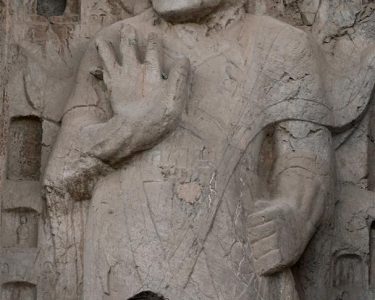
Imperial projects controlled the largest, most visible sections of cliff, usually near the main approach path, because visibility mattered to state messaging. Aristocratic families funded mid-sized niches, often clustered together as family or clan commissions. Monastic sponsors worked with whatever space and funding remained, frequently producing dense, closely packed carvings in less prominent zones. None of this is decorative preference — it is a direct record of resource allocation carved permanently into stone.
Comparison of Imperial, Aristocratic, and Monastic Patronage and the Visual Evidence Each Left in Major Cave Commissions
The table below breaks down what each patronage type actually controlled, and what evidence survives today if you know where to look.
| Patronage Type | Typical Sponsor | Scale & Placement | Visual Evidence Today |
|---|---|---|---|
| Imperial | Emperor or empress, state treasury | Largest niches, central cliff position, long construction timelines | Monumental seated Buddha figures, formal symmetrical layouts, inscriptions naming the ruling house |
| Aristocratic | Court officials, noble clans, military families | Mid-scale niches, often grouped by family, secondary cliff sections | Donor portraits, family dedication texts, more varied figure poses than imperial work |
| Monastic | Buddhist monastic orders, pilgrim associations | Smaller, densely packed niches, frequently in less prominent or higher-elevation sections | Repetitive small Buddha rows, devotional inscriptions, evidence of pooled or incremental funding over years |
If you get the scale-to-sponsor logic backwards, you’ll misread the site’s chronology entirely. A cluster of small monastic niches near a colossal imperial commission is not evidence of decline — it’s evidence of two different funding sources working the same cliff at different times, sometimes decades apart.
A Practical Checklist for Reading Patronage on Site
Before walking the cliff path, it helps to have a short mental checklist rather than trying to memorize dynasty dates on the spot.
- Check the niche’s central position on the cliff — dead-center, ground-level access usually signals imperial sponsorship.
- Look for inscribed dedication text near the base — family names point to aristocratic funding, generic devotional phrases point to monastic funding.
- Compare figure spacing — imperial commissions favor open, formal composition; monastic work tends toward tighter, repeated rows.
- Note elevation — harder-to-reach upper sections were often the only space left for later, smaller-budget sponsors.
- Ask your guide (or the on-site signage) which dynasty phase the section belongs to — this confirms whether you’re looking at an early or later wave of patronage.
Common Mistakes First-Time Visitors Make When Interpreting the Caves
Heritage travelers researching the Northern Wei dynasty and later Tang-era expansion often fall into a few predictable traps:
- Assuming size equals age. Larger niches are not necessarily older — they simply had bigger sponsors, sometimes commissioned centuries after the earliest monastic carvings nearby.
- Treating the site as one continuous project. Longmen was built in waves, separated by gaps of political instability, not as a single unbroken construction campaign.
- Overlooking damaged or missing donor inscriptions. Many identifying texts were worn down or deliberately removed over centuries, so absence of a name doesn’t mean absence of a wealthy patron.
- Ignoring the difference between state and private funding. A niche near a famous imperial commission may still be privately funded — proximity does not equal shared patronage.
What This Means for Planning Your Visit
If your research goal is understanding the site’s structure before arrival, prioritize learning the major cave groupings rather than trying to catalog individual statues. The UNESCO World Heritage designation covers the site as a whole, but within it, the imperial-commissioned zones near the main entrance path are usually the most photographed — and the most crowded. If your interest is genuinely in aristocratic or monastic patronage patterns, plan extra time for the secondary and upper-elevation sections, since those areas move at a slower visitor pace and reward closer inspection.
A practical scenario: a visitor with two hours on site should spend roughly half that time at the largest imperial niches near the river path, then dedicate the remaining time to one adjacent cluster of smaller commissions. Comparing the two directly, in person, teaches the patronage hierarchy far faster than reading about it beforehand.
When the Patronage Framework Does Not Fully Apply
This funding-based reading works well for most major commissions at Longmen, but it has limits. Some niches show evidence of later restoration or re-dedication, meaning the visible inscription may not match the original sponsor. Erosion along the Yi River cliff has also erased identifying text on a number of smaller works, so not every niche can be confidently assigned to a patronage category just by looking. Treat the framework as a strong general guide, not a rule that applies to every single carving on the cliff.
For heritage researchers building a pre-visit itinerary, the patronage lens is the most efficient way to make sense of a site with thousands of carvings spread across a long cliff wall. Once you can identify who paid for a section, the differences in scale, style, and placement stop looking random and start reading as historical evidence.

If you’re preparing a research brief, lecture, or travel itinerary around this site and want a structured reading list or section-by-section breakdown, reach out and we can help point you toward the relevant scholarly summaries and site maps to review before your visit.