
Blog
Longmen Grotto Explained by River Bank and Dynasty

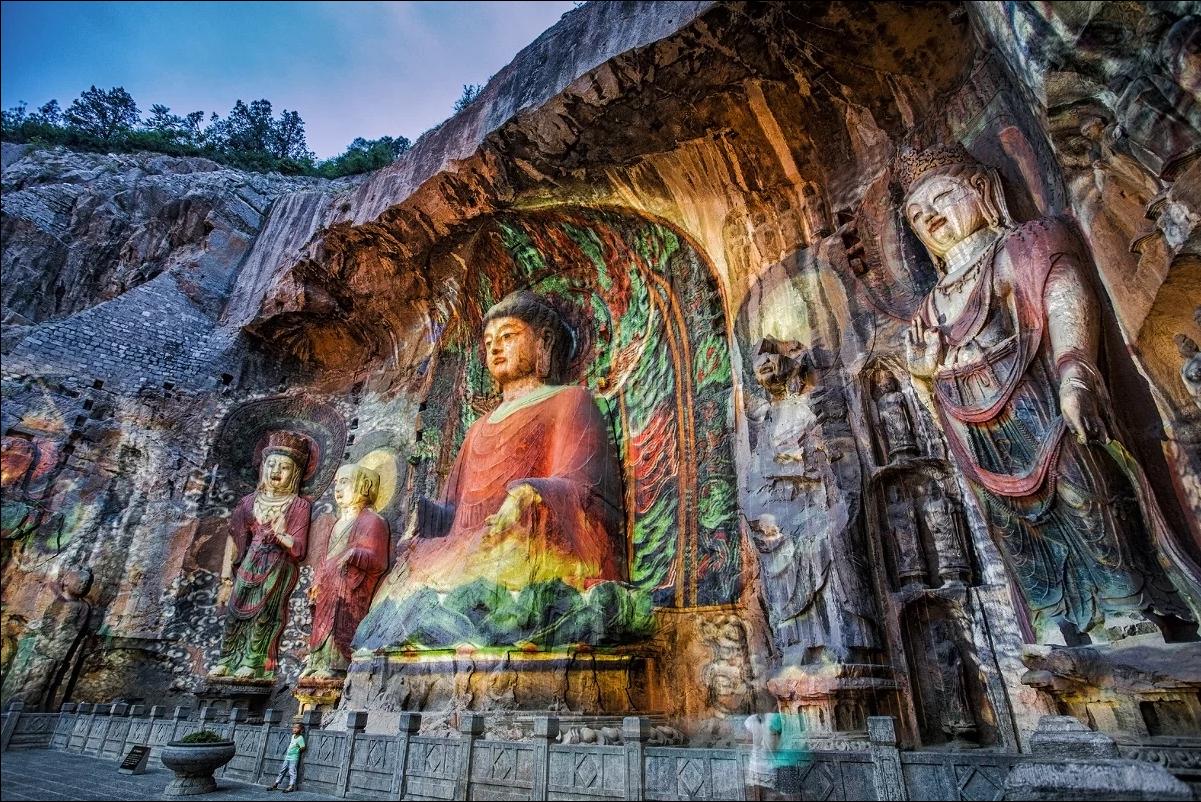
Longmen Grotto Makes More Sense Once You Map It by River Bank and Dynasty
Why does a Buddha carved in one cave at Longmen Grotto look stiff and elongated, while a statue fifty meters away looks fuller, more relaxed, almost lifelike? That’s the question most first-time researchers run into before they ever book a trip to Luoyang. The answer has nothing to do with inconsistent craftsmanship and everything to do with timeline. The Longmen Grottoes were carved over roughly four centuries, across two dynasties with very different religious priorities and sculptural tastes, and the caves are scattered along both banks of the Yi River rather than grouped neatly by period. Understanding that layout before you go — not after — is what separates a confused walk-through from a visit that actually makes sense.
Why Scale and Timeline Matter More Than Any Single Cave
The Longmen Grottoes stretch across roughly a kilometer of limestone cliff on both sides of the Yi River, just south of Luoyang in Henan province. It was inscribed as a UNESCO World Heritage Site partly because its carving spans two major phases: the Northern Wei dynasty, beginning in the late 5th century, and a second, much larger wave of work under the Tang dynasty roughly a century and a half later. Treating the whole cliff face as one uniform cave site is the single biggest planning mistake a first-time visitor makes. Walk through without a bank-and-era frame of reference, and thousands of carved niches start to blur together — even though the stylistic differences between them are sharp and deliberate.
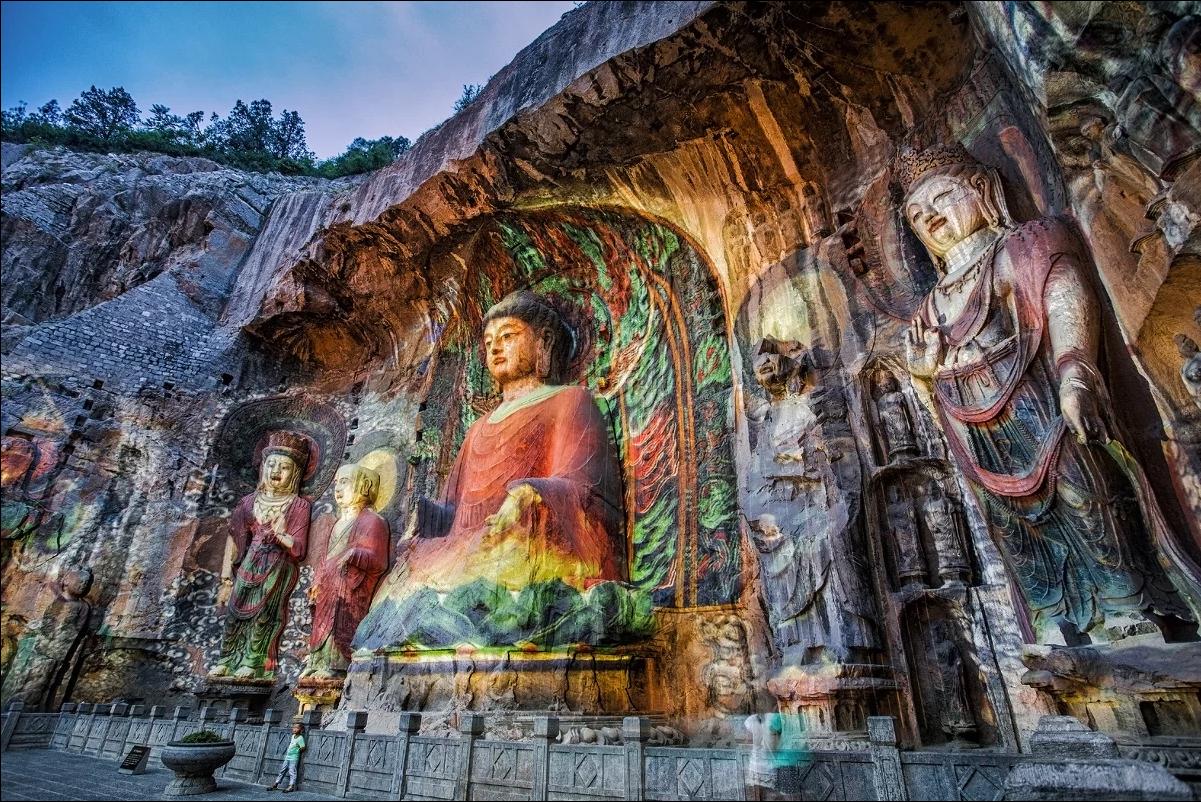
A Bank-by-Bank Breakdown of the Major Cave Groups
This is the part most travel guides skip, and it’s the part that actually matters for research-stage planning. Each bank of the Yi River carries a different weight of history, and within the west bank itself, cave groups were started and finished decades apart.
| Bank | Cave Group | Dominant Phase | What to Look For |
|---|---|---|---|
| West Bank | Guyang Cave | Northern Wei | Earliest dated niches on site, angular drapery, elongated faces |
| West Bank | Binyang Caves (North, Central, South) | Northern Wei into early Tang | Construction started under Northern Wei patronage, finished decades later — a visible mid-group style shift |
| West Bank | Fengxian Temple | High Tang | Largest open-air Buddha group on the cliff, fuller faces, naturalistic drapery |
| West Bank | Wanfo Cave | Tang | Dense grid of thousands of small Buddha images carved into a single chamber |
| East Bank | Kanjing Temple | Tang | Rare carved arhat (disciple) figures rather than the standard Buddha triad |
| East Bank | Xiangshan Temple area | Later addition | Smaller in carving density, better known for its literary association with Tang poet Bai Juyi |
The practical takeaway: almost all of the site’s carving density sits on the west bank. If you only have a couple of hours at Longmen Grotto, that’s where the bulk of the Northern Wei and Tang material actually lives. The east bank rewards a slower, more historically curious visit rather than a dense sculpture tour.
What Each Carving-Phase Detail Actually Tells You
It’s easy to nod along at “Northern Wei” versus “Tang” without understanding what that label changes in practice. Here’s what each phase marker actually affects, and what goes wrong if you misread it.
- Facial proportion — Northern Wei figures tend toward long, narrow faces with a somewhat austere expression, reflecting earlier Buddhist iconographic conventions imported along trade routes. Mistake this for “unfinished” or “lower quality” work and you’ll skip past some of the site’s oldest, most historically significant carving.
- Drapery style — Early Northern Wei drapery is carved in flatter, more linear folds. Tang-era drapery, especially at Fengxian Temple, is carved in deeper relief with naturalistic weight. If your research or photography depends on dating a carving by eye, drapery depth is a faster indicator than inscriptions, which aren’t present at every niche.
- Niche size and grouping — Northern Wei niches are generally smaller and more numerous within a cave, reflecting individual donor commissions. Tang commissions, particularly imperial ones, favor fewer, much larger figures. Confusing a “grid of small niches” (Northern Wei pattern) with a “few monumental figures” (Tang pattern) is a quick way to misattribute a cave’s period in field notes.
- Weathering and erosion — Earlier Northern Wei carving on more exposed sections of the west bank often shows heavier erosion simply due to extra centuries of exposure, not inferior stone or workmanship. Don’t read “more worn” as “older and therefore more important” — some badly weathered sections are actually later work exposed to a harsher microclimate.
West Bank vs East Bank: A Side-by-Side Planning Comparison
| Factor | West Bank | East Bank |
|---|---|---|
| Carving density | High — most major cave groups | Low — fewer, more spread out |
| Dominant era | Northern Wei through High Tang | Mostly Tang, plus later literary additions |
| Crowd levels | Heaviest, especially around Fengxian Temple | Noticeably quieter |
| Best suited for | First-time visitors wanting the signature sculptures | Repeat visitors or researchers interested in site history and literary context |
| Recommended time share | 60–70% of total visit time | 30–40% of total visit time |
Common Mistakes Research-Stage Travelers Make
- Allocating equal time to both banks instead of weighting toward the west bank, where most of the carving actually sits.
- Skipping Guyang Cave in favor of extra time at Fengxian Temple — and missing the site’s earliest dated material in the process.
- Assuming every cave belongs to one dynasty, when groups like the Binyang Caves were started under Northern Wei patronage and completed under Tang rule, decades later.
- Treating the Northern Wei dynasty and Tang dynasty carvings as stylistically interchangeable when photographing or documenting niches for later reference.
- Planning a visit around a single landmark statue without a route plan, which often means backtracking across the same stretch of cliff twice.
A Step-by-Step Approach to Structuring the Visit
- Start on the west bank at the Northern Wei end of the cliff — Guyang Cave and the Binyang group — to establish a baseline for the earlier carving style.
- Move south along the west bank toward Fengxian Temple, noting the shift toward fuller, more naturalistic Tang figures.
- Continue to Wanfo Cave to see the Tang-era grid pattern of small-scale repeated imagery.
- Cross to the east bank for Kanjing Temple’s arhat carvings, a useful contrast point since it departs from the standard Buddha-triad layout.
- Finish at the Xiangshan Temple area if time allows, treating it as a historical and literary stop rather than a sculpture-dense one.
Decision Checklist Before You Finalize Your Visit Plan
- Do you have half a day or a full day? Half a day means west bank only, prioritizing Guyang Cave and Fengxian Temple.
- Is your interest primarily art-historical or sculptural? If sculptural, weight time toward Tang-era groups; if historical, don’t skip the Northern Wei sections even though they’re smaller.
- Are you documenting carvings for research or writing? Bring a way to record niche location and carving style notes on-site — labels and signage don’t cover every cave group in equal depth.
- Do you need a quieter environment for close observation? Shift more time to the east bank, where crowd density drops off noticeably.
Reading Longmen Grotto by bank and by era turns a long cliff of carvings into a legible timeline — one that shows, in stone, how imperial patronage and artistic taste shifted across four centuries. If you’re preparing a research itinerary, a group tour brief, or documentation materials and want help structuring a bank-by-bank route plan, reach out and we can walk through the layout with you.
