
Blog
Longmen Grottoes Buddhist Art and Symbols Explained

Longmen Grottoes Buddhist Art: Symbols Explained
The longmen grottoes preserve one of China’s greatest collections of Buddhist sculpture. Carved into limestone cliffs along the Yi River near Luoyang in Henan Province, the site includes more than 2,000 caves and niches. Visitors find Buddhas, bodhisattvas, guardian figures, flying musicians, lotus motifs, inscriptions, and donor portraits. Taken together, these works show how religion, imperial power, artistic craftsmanship, and private devotion shaped Chinese history.
Longmen is not a single monument from one era. Carving began during the Northern Wei dynasty around 493 CE, after the capital moved to Luoyang, and continued through the Eastern Wei, Western Wei, Northern Qi, Sui, Tang, Song, and later periods. The cliffs therefore offer a visual record spanning centuries. Styles vary from cave to cave, yet the purpose remains consistent: to create sacred images for worship, merit-making, remembrance, and the pursuit of enlightenment.
Why the Longmen Grottoes Matter in Buddhist Art
At Longmen, religious art served far more than a decorative purpose. Buddhist devotees and influential patrons commissioned images as acts of merit. In Buddhist tradition, funding a Buddha or bodhisattva image could bring spiritual benefit to the donor, the donor’s family, deceased relatives, or the wider community. Inscriptions beside many sculptures identify patrons, explain why a work was commissioned, and record prayers for protection, health, peace, or a favorable rebirth.
This close link between image and intention explains the site’s extraordinary variety. Some caves were funded by emperors and court officials, while others came from monks, military leaders, local groups, or individual families. A modest niche could express a personal hope. A monumental temple complex, by contrast, could project imperial authority on a vast scale.
The landscape itself also contributes to the meaning of the site. The cliffs rise beside the Yi River, creating a dramatic setting in which stone images seem to stand between the human world and a sacred realm. Caves transform the natural rock face into a temple. Rather than simply viewing a statue, visitors move through an environment shaped by shadow, light, water, stone, and ritual movement.
Longmen Grottoes Buddhist Sculptures and Their Main Figures
Buddhas: calm, presence, and enlightenment
The Buddha is commonly shown seated or standing with a composed expression and an idealized body. That stillness contrasts with the movement of drapery, attendants, musicians, and celestial beings around the central figure. The contrast is intentional. The Buddha represents awakened understanding, while the surrounding figures convey the activity and abundance of the Buddhist cosmos.
Hand gestures, known as mudras, add another level of meaning. A raised hand may signal reassurance or protection. A hand placed in the lap can relate to meditation. A gesture associated with teaching may refer to the turning of the Dharma wheel and the beginning of Buddhist instruction. Interpretation depends on the figure, posture, attributes, and local artistic conventions, so it is best to consider the full composition rather than the hands alone.
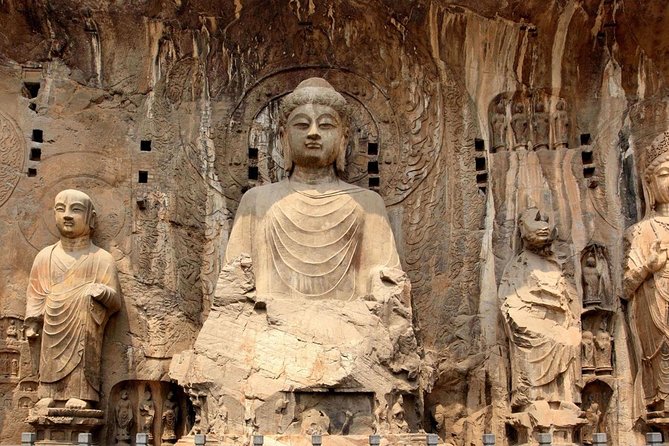
Vairocana at Fengxian Temple
The site’s most celebrated image is the colossal Vairocana Buddha at Fengxian Temple. Completed in 672 CE during the Tang dynasty, the seated figure measures approximately 17 metres in height, including its base. Its broad face, lowered gaze, softly curved mouth, and balanced proportions create an unmistakable sense of authority without aggression.
Vairocana is associated with the cosmic Buddha and the all-encompassing wisdom of the Buddhist universe. Scale is central to the sculpture’s impact. Standing below it, viewers are physically placed beneath the Buddha and encouraged into an attitude of reverence. Yet the face remains human enough to seem approachable. That balance between majesty and calm helps explain why the image remains so influential.
The figures surrounding Vairocana strengthen the message. Bodhisattvas, heavenly kings, warriors, and other beings form a complete sacred assembly. Their differing expressions and poses suggest the wide reach of Buddhist power, from compassionate guidance to forceful protection.
Bodhisattvas: compassion made visible
Bodhisattvas are enlightened beings who postpone final liberation in order to help others. In Longmen sculpture, they often appear with graceful bodies, elaborate crowns, necklaces, scarves, and lotus flowers. Their rich appearance is not merely a display of luxury. It sets them apart from the more restrained image of the Buddha and emphasizes their active connection to the human world.
Avalokitesvara, known in China as Guanyin, is associated with compassion and the ability to respond to suffering. Manjusri represents wisdom, while Samantabhadra is linked with practice and vows. Details such as a lotus, water vessel, jewel, or ritual object can help identify a figure, although weathering and damage sometimes make precise identification uncertain.
Longmen Cave Art: How Design Creates a Sacred Space
Longmen Cave art brings sculpture and architecture together. Cave entrances, ceilings, walls, central pillars, niches, and inscriptions form a unified visual program. Even areas without monumental statues can carry symbolic significance.
Lotus flowers and the idea of purity
The lotus is one of the most recognizable Buddhist motifs at Longmen. It grows from muddy water but opens as a clean flower above the surface. For that reason, it symbolizes purity, spiritual awakening, and the possibility of liberation despite ordinary suffering.
Lotus designs appear on ceilings, pedestals, halos, and decorative borders. A Buddha seated on a lotus suggests that wisdom has risen above worldly attachment. A carved lotus ceiling can turn the upper part of a cave into an imagined celestial realm. Look upward in caves such as the Lotus Cave, where the motif is especially striking.
Halos, aureoles, and sacred radiance
Halos behind the heads or bodies of Buddhist figures represent spiritual radiance. They are not ordinary shadows or simple decorative frames. Visually, a halo announces that the figure possesses an extraordinary degree of wisdom, compassion, or sacred power.
Some halos include flames, lotus petals, floral designs, or small Buddha images. These details add further layers of meaning. A flame-like border may suggest transcendent energy, while repeated miniature Buddhas can express the universal and limitless nature of enlightenment.
Flying apsaras and celestial movement
Apsaras are heavenly beings often shown flying around a central Buddha. Their scarves stream behind them, while their bodies curve across the stone with an impression of weightlessness. Other celestial figures play instruments, scatter flowers, or carry offerings.
Such figures make a cave feel active rather than fixed in time. They suggest a sacred realm filled with music, fragrance, movement, and celebration. The effect is especially powerful when an unmoving seated Buddha is surrounded by energetic attendants. Stillness becomes more compelling when set against motion.
Protective guardians and heavenly kings
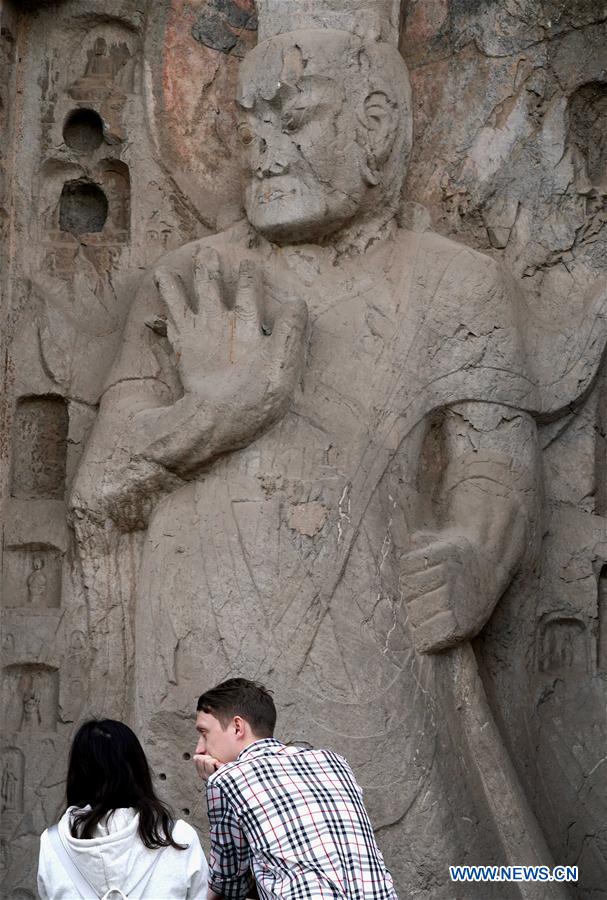
Large guardian figures stand near cave entrances or beside major Buddhist images. They may wear armour, carry weapons, or take forceful poses. Their task is to defend the Dharma and keep harmful forces away from sacred space.
These guardians also reveal how Buddhist art absorbed local Chinese visual traditions. Their armour, facial features, stance, and dramatic gestures draw on the visual language of military power. At Longmen, protection is not an abstract idea. It is embodied by imposing figures that confront disorder at the cave’s threshold.
Longmen Grottoes Symbolism in Historical Context
The Longmen Grottoes symbolism cannot be separated from the politics of imperial China. During the Northern Wei period, Buddhist images helped express the authority of rulers who presented themselves as protectors of the faith. Later, Tang patrons used monumental sculpture to demonstrate wealth, legitimacy, and religious devotion.
Fengxian Temple offers a clear example. The immense Vairocana image was commissioned during the reign of Empress Wu Zetian. Its scale and ceremonial setting communicate more than a theological concept. The monument belongs to a period when imperial patronage shaped religious institutions and public visual culture. The statue’s calm authority could be understood as spiritual, political, or both.
Other caves offer a more intimate view of religious life. Guyang Cave, one of the earliest major caves, contains numerous inscriptions alongside smaller images. These records show that Buddhist devotion involved people from many social backgrounds and served many purposes. The carved texts are valuable not only for religious history, but also for understanding calligraphy, language, social status, and changing artistic styles.
Some inscriptions record wishes for parents, children, rulers, or ancestors. This reflects the central place of family relationships in Chinese society. Buddhist merit was often understood as something that could extend beyond an individual donor. A carved image could therefore act as a prayer in stone, connecting the living with the dead and the present with the future.
Buddhist Statues in Luoyang and the Development of Style
The Buddhist statues in Luoyang reveal a gradual transformation in Chinese sculpture. Northern Wei figures often have slender bodies, elongated faces, narrow eyes, and stylized robes. They can appear restrained and otherworldly. By the Tang dynasty, sculptors increasingly emphasized fuller bodies, naturalistic volume, flowing garments, and expressive faces.
These changes should not be viewed as a simple move from “primitive” to “advanced.” Each style served particular religious and artistic aims. Earlier figures can create a sense of transcendence through abstraction. Tang works often make sacred figures feel physically present and emotionally accessible.
Material conditions also shaped the art’s appearance. Limestone is workable, but it is not endlessly durable. Water, wind, temperature changes, pollution, and human damage have altered many surfaces. Traces of pigment survive in some places, reminding modern visitors that the sculptures were originally painted. The grey stone seen today represents only part of their historical appearance.
Even damaged works can reveal aspects of their original design. Broken hands may once have held lotus stems or ritual objects. Faded areas can preserve hints of colour. Worn inscriptions may still be legible enough to show that a niche was created for a particular prayer or commemorative purpose.
How to Read the Symbolism During a Visit
Begin with the central figure. Is it a Buddha, a bodhisattva, a guardian, or an attendant? Then look closely at the hands, clothing, objects, halo, pedestal, and surrounding companions. Even without a narrative scene, the arrangement often communicates a clear religious message.
Next, consider the cave as a complete space. Is the ceiling decorated with a lotus? Are guardians placed near the entrance? Do flying figures direct attention toward the central image? Is an inscription carved beside the niche? These details help explain how the cave was intended to be experienced.
It is also worth comparing works from different periods. A Northern Wei Buddha and a Tang Buddha may express similar religious ideas, yet their proportions, faces, and robes can look markedly different. Such comparisons show how Buddhist imagery adapted to changing Chinese tastes and political circumstances.
Photography can flatten the experience. When possible, pause at a cave entrance and allow your eyes to adjust to the shadows. The relationship between natural light and carved relief is part of the design. A statue that looks quiet in a photograph may feel commanding when viewed from below, with the cliff and river stretching behind it.
FAQ: Understanding the Religious Symbols at Longmen
What do the symbols at Longmen Grottoes mean?
The symbols express Buddhist teachings and devotional hopes. Lotus flowers commonly suggest purity and spiritual awakening. Halos indicate sacred radiance. Mudras communicate ideas such as meditation, protection, or teaching. Bodhisattvas represent compassion and guidance, while guardian figures protect the Dharma. Inscriptions often reveal the personal prayers and social purposes behind a commission.
How does Buddhist art appear at Longmen Grottoes?
Buddhist art appears through monumental statues, small votive niches, relief carvings, cave ceilings, lotus pedestals, halos, celestial musicians, guardian figures, and dedicatory inscriptions. The art is integrated into the architecture of the cliffs. Rather than presenting isolated museum objects, the site creates complete sacred environments where sculpture, landscape, and ritual use are connected.
Which sculptures are most significant at Longmen Grottoes?
The Vairocana Buddha at Fengxian Temple is the best-known sculpture because of its scale, Tang-dynasty style, and imperial context. The surrounding attendants and guardians are equally important to the composition. Guyang Cave is notable for its early Northern Wei carvings and inscriptions, while the Binyang Caves and Lotus Cave offer important examples of changing styles, iconography, and cave design.
Why are lotus flowers used so often in the grottoes?
The lotus grows in muddy water but opens as a clean flower, making it a powerful Buddhist symbol of purity and awakening. In the grottoes, lotus motifs appear beneath figures as pedestals, above visitors on ceilings, and around halos or decorative borders. Their repeated use turns the entire cave into a visual reminder of spiritual transformation.
Conclusion: Reading Longmen Through Its Symbols
The art of the Longmen Grottoes brings theology, history, architecture, and human emotion into one remarkable landscape. A Buddha’s calm face, a bodhisattva’s flowing scarf, a guardian’s raised weapon, and a donor’s inscription all contribute to the site’s meaning. Together, they show how Buddhist traditions were interpreted through Chinese materials, landscapes, political institutions, and family devotion.
For businesses and cultural organizations seeking products connected with Chinese heritage, religious art, or traditional design, explore our product range and contact our team to discuss suitable options for your market. Thoughtful presentation can help preserve the meaning behind this remarkable visual tradition.
About LyWOW Tours
LyWOW is a locally based travel agency in Luoyang, specializing in private tours for international travelers across Luoyang, Shaolin, Xi’an and Central China. English-speaking guides, flexible itineraries and door-to-door service.
Learn more about us or browse all our tours.
