
Blog
luoyang longmen grottoes UNESCO Status Explained

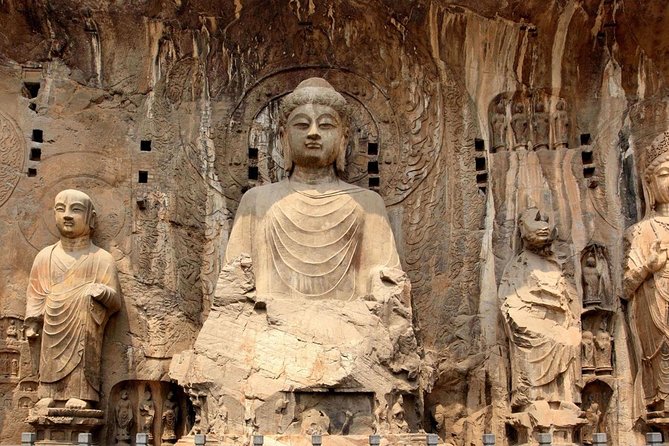
luoyang longmen grottoes: UNESCO Status Explained
The luoyang longmen grottoes rank among China’s most important surviving monuments of Buddhist art, religious history, and cultural exchange. Carved into limestone cliffs along the Yi River near Luoyang in Henan Province, the site reflects more than 1,400 years of artistic activity. Its UNESCO World Heritage designation recognizes far more than the beauty of individual statues. It acknowledges a vast cultural landscape where sculpture, inscriptions, architecture, religion, politics, and technical skill developed side by side.
That distinction is important. Longmen is not listed simply because it is ancient or visually striking. UNESCO assesses whether a place has “outstanding universal value,” meaning its significance reaches beyond national borders and preserves evidence of human history that deserves global protection. Longmen meets that standard through the quality of its artworks, its role in cultural exchange, and the historical record contained in thousands of carvings and inscriptions.
What is the Longmen Grottoes UNESCO site?
The Longmen Grottoes UNESCO site is a major archaeological and cultural landscape south of Luoyang’s historic urban center. The grottoes extend across the cliffs of Longmenshan and Xiangshan, divided by the Yi River. Artisans began carving religious images during the late Northern Wei period, around the end of the fifth century, and work continued through the Tang dynasty and later eras.
The site contains thousands of caves, niches, statues, reliefs, stelae, and inscriptions. Official inventories commonly list approximately 2,345 niches and caves, more than 100,000 Buddhist statues, and around 2,800 inscriptions. Totals can vary depending on survey methods and whether fragments or individual inscriptions are counted separately. Whatever the method, the scale is extraordinary.
Several areas reveal the monument’s range. Guyang Cave preserves early Northern Wei sculpture and inscriptions. The Binyang Caves trace the growth of imperial Buddhist art. Fengxian Temple is celebrated for its monumental Vairocana Buddha, completed during the Tang dynasty in the seventh century. Xiangshan, meanwhile, reflects the site’s continuing religious and cultural role beyond the principal periods of excavation.
When did Longmen Grottoes become a World Heritage Site?
When did Longmen Grottoes become a World Heritage Site? UNESCO inscribed the site in 2000. Its official World Heritage name is “Longmen Grottoes,” though many visitors and publications use Luoyang Longmen Grottoes to reflect its location.
The 2000 inscription placed Longmen within the international system for identifying, conserving, and monitoring places of exceptional cultural importance. This does not mean every carving is perfectly preserved, nor does it freeze the site in time. Rather, it confirms that the cultural landscape as a whole has recognized universal value and that China has an ongoing duty to safeguard its defining attributes for future generations.
World Heritage status also provides an international benchmark. Conservation decisions can be measured against established principles, including authenticity, integrity, documentation, risk management, and respect for historic material. In practice, the designation encourages long-term stewardship rather than a short-lived restoration campaign.
Which UNESCO criteria apply to the Longmen site?
The grottoes were inscribed under three cultural criteria: (i), (ii), and (iii). Together, these criteria explain why the site matters far beyond local or regional history.
Criterion (i): a masterpiece of human creative genius
Longmen’s sculptures represent an exceptional artistic achievement. They display remarkable control of proportion, facial expression, posture, drapery, jewelry, and symbolic detail. The monumental Vairocana Buddha at Fengxian Temple is especially notable: its scale and composition convey religious authority while maintaining a distinctive artistic character.
The site’s artistic value is not confined to its largest statues. Small niches, donor portraits, reliefs, and carved figures show how artists adapted Buddhist imagery for different spaces and patrons. Some works were intended for intimate devotional settings, while others formed part of sweeping cliffside compositions. Together, they demonstrate sophisticated planning and technical command in carving directly into limestone.
Criterion (ii): cultural exchange and artistic development
The Longmen carvings offer clear evidence of interaction among cultural traditions. Buddhism arrived in China from abroad, then evolved through dialogue with established Chinese philosophies, artistic conventions, political institutions, and burial practices. At Longmen, that process can be read in stone.
Styles changed across the Northern Wei, Sui, Tang, and later periods. In some phases, figures became more naturalistic, while clothing, hairstyles, halos, and compositional arrangements also evolved. These shifts did not occur in isolation. They reflect the movement of religious ideas, artists, patrons, techniques, and visual models across Asia.
For heritage specialists, the site is valuable because it makes cultural transmission visible. A single sculpture may reveal foreign influence, local adaptation, court patronage, and changing devotional practice at once. This is one reason the Longmen Caves heritage value remains relevant to the study of Asian art far beyond Henan.
Criterion (iii): an exceptional testimony to a cultural tradition
The grottoes provide an unusually rich record of Buddhist sculpture in China over several centuries. Surviving images and inscriptions document the evolution of religious practice, imperial sponsorship, local devotion, and artistic production.
The inscriptions are particularly significant. They identify patrons, record dedications, mention officials, describe religious intentions, and sometimes provide dates or historical context. A statue viewed on its own may convey spiritual meaning, but a nearby inscription can reveal who commissioned it, why it was made, and how people understood it at the time. That combination gives the site exceptional documentary depth.
What makes Longmen Grottoes culturally significant?
What makes Longmen Grottoes culturally significant? Their importance lies in the relationship between the cliffs and the historical evidence carved into them. This is not a museum collection assembled from separate objects. It is an in-situ cultural landscape. The setting, rock surfaces, caves, statues, inscriptions, river corridor, and historic routes all shape its meaning.
The site also shows how religion and government intersected in premodern China. Imperial patrons and officials supported major commissions, while individuals and families funded smaller images. That broad range of donors helps researchers understand how Buddhist belief functioned at different levels of society.
Longmen is equally important to the history of writing. Thousands of inscriptions preserve calligraphic styles, personal names, religious formulas, administrative references, and chronological details. Some are important sources for studying the development of Chinese characters and calligraphy. In this sense, the cliffs serve as both a religious archive and a historical document.
This layered evidence gives Luoyang cultural heritage a particularly strong international dimension. Luoyang served as a capital during several pivotal periods, and the grottoes reflect the city’s role within political, commercial, and religious networks. They link local history to wider changes across China and East Asia.

Longmen Grottoes significance in international heritage policy
The Longmen Grottoes significance also extends to modern conservation practice. Stone monuments face threats from water infiltration, temperature fluctuations, air pollution, biological growth, rock fractures, and visitor pressure. Earlier repairs can also influence how scholars interpret original surfaces. Protecting the grottoes therefore demands monitoring, research, careful documentation, and restrained intervention.
World Heritage principles generally favor preserving original material and avoiding unnecessary reconstruction. A conservation team might stabilize a crack, improve drainage, monitor humidity, or reduce vibration without trying to make a weathered statue appear new. That restraint matters. Weathering can be part of a monument’s history, while aggressive restoration may erase evidence of age, workmanship, and technique.
Digital recording has become an important tool. High-resolution photography, three-dimensional scanning, mapping, and condition surveys can capture details that are difficult to observe from ground level. These records support research and provide a reference point if deterioration occurs. They also allow specialists to compare surfaces over time rather than relying only on visual impressions.
Visitor management is another essential part of conservation. Paths, barriers, drainage systems, viewing distances, and group movement can help reduce accidental contact and environmental stress. The aim is not to separate people from heritage entirely. It is to support public understanding while protecting fragile carvings that cannot be replaced.
Why are the Luoyang Longmen Grottoes a UNESCO site?
Why are the Luoyang Longmen Grottoes a UNESCO site? They are listed because they represent outstanding artistic achievement, document long-term cultural and religious development, and show how Buddhist art engaged with Chinese traditions. Their value is cumulative. A single statue may be extraordinary, but the full sequence of caves, niches, inscriptions, and changing styles forms a historical record of unusual breadth.
The site also fulfills the idea of universal value. Researchers from many countries can study Longmen through the lenses of sculpture, religion, architecture, calligraphy, state formation, patronage, technology, and cultural exchange. Its significance is not limited to one city or one faith tradition.
UNESCO status did not create the grottoes’ importance; their history and artistic evidence did that. The designation identifies and formalizes that importance. It also supports sustained stewardship, professional conservation, public education, and cooperation among local, national, and international heritage communities.
How to understand the site beyond its famous statues
Visitors often remember the monumental figures first, particularly the serene face of the Vairocana Buddha. A heritage-focused visit, however, should also take in smaller details: tool marks, traces of weathered pigment, donor inscriptions, repeated iconographic patterns, changes in robe design, and the placement of niches along the cliff.
Consider the site as a chronological landscape. Early works may appear more linear and stylized, while later Tang sculptures often have fuller bodies and greater naturalism. Notice how the contours of the rock shape each composition. Then consider why an imperial project occupies one location while a private devotional niche appears in another.
This approach makes clear why the grottoes cannot be reduced to a collection of scenic photographs. Their significance rests on relationships: image and inscription, cliff and river, patron and artisan, local tradition and international religious movement. Those relationships are exactly what conservation efforts seek to keep visible and understandable.
Frequently asked questions
Why are the Luoyang Longmen Grottoes a UNESCO site?
The site was inscribed because it represents outstanding Buddhist sculpture and carving, records the development of Chinese art and religious culture across many centuries, and demonstrates cultural exchange between China and wider Asian traditions. UNESCO recognized the grottoes under cultural criteria (i), (ii), and (iii).
What makes Longmen Grottoes culturally significant?
The grottoes bring together statues, caves, inscriptions, architectural features, and a historic riverside setting in one connected cultural landscape. They preserve evidence of imperial patronage, personal devotion, artistic change, calligraphy, Buddhist practice, and the adaptation of an international religion within Chinese society.
When did Longmen Grottoes become a World Heritage Site?
UNESCO inscribed the Longmen Grottoes as a World Heritage Site in 2000. The designation recognizes the site’s outstanding universal value and supports the long-term conservation of its sculptures, inscriptions, caves, and surrounding cultural landscape.
Does UNESCO status mean the grottoes are fully preserved?
No. World Heritage status does not eliminate natural or human threats. Stone erosion, moisture, pollution, structural movement, and visitor pressure can still affect the site. UNESCO listing supports systematic monitoring and conservation, but protection remains an ongoing responsibility.
Conclusion: preserving a record of human creativity
The Luoyang Longmen Grottoes UNESCO designation reflects a powerful combination of art, history, belief, and place. From Northern Wei carvings to Tang masterpieces and thousands of inscriptions, the site records how communities created, adapted, and preserved meaning in stone. Its international value rests on both its visual achievements and the historical evidence embedded throughout the cliffs.
For organizations serving cultural tourism, heritage interpretation, and international visitor markets, clear educational content helps audiences understand why preservation matters. Explore our products to support professional presentations, visitor materials, and heritage-focused communication related to China’s remarkable cultural sites.
About LyWOW Tours
LyWOW is a locally based travel agency in Luoyang, specializing in private tours for international travelers across Luoyang, Shaolin, Xi’an and Central China. English-speaking guides, flexible itineraries and door-to-door service.
Learn more about us or browse all our tours.
