By
By luo yang Archaeology: Capitals Beneath the Modern City
luo yang archaeology reveals a striking reality: the modern city sits atop one of China’s richest historical landscapes. Streets, apartment blocks, factories, and museums now occupy ground once shaped by royal courts, walled capitals, religious centers, workshops, and vast burial grounds.
For more than 3,000 years, the Luoyang area has been a political and cultural center. Successive dynasties chose this part of the Central Plains for its position beside the Luo River, its access to major transport routes, and its fertile agricultural surroundings. Each era left traces behind: foundations, roads, drainage systems, pottery, bronze objects, tombs, inscriptions, and evidence of everyday labor.
Archaeologists do far more than recover old objects. They reconstruct how cities grew, how rulers organized power, how craftspeople made goods, and how ordinary households lived near imperial compounds. Their findings shape historical research, museum planning, heritage tourism, and the development of cultural products for visitors and collectors.
Why the Luoyang Area Became a Capital Region
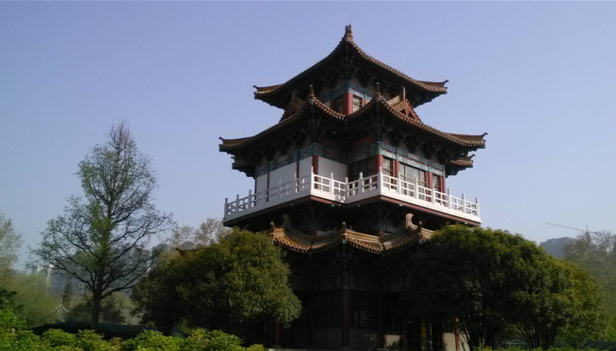
Luoyang’s geography helps explain its enduring political importance. The Luo River runs through the region, while the Yellow River lies to the north. Mountain passes to the west linked the area with the Guanzhong plain, and eastern routes opened onto the wider Central Plains. A capital established here could communicate with several of early China’s major regions.
Water was equally important. Rivers supported farming, transport, and the growth of settlements. A large court needed grain, timber, metal, ceramics, livestock, and labor. The surrounding landscape could provide many of these resources, while river routes moved materials across long distances.
Political symbolism mattered as well. In early Chinese thought, the Central Plains held strong associations with legitimacy and civilized rule. Building a capital near the center of the known political world gave rulers both a strategic advantage and a powerful ritual position.
Luoyang Ancient Capitals and Their Archaeological Layers
The phrase Luoyang ancient capitals describes a sequence of capital cities built in and around the modern urban area. They did not all occupy exactly the same footprint. Some expanded over earlier settlements, while others shifted across the river plain in response to political change, military pressure, and new urban demands.
Erlitou and the Formation of Early State Society
The Erlitou site, near the Luoyang region, is central to debates about the rise of early state power. Dating broadly to the second millennium BCE, Erlitou contains evidence of planned construction, elite residences, bronze production, craft activity, road systems, and social hierarchy.
Its importance lies in this combination of features. A bronze workshop alone does not prove the presence of a capital, and a large settlement may simply have been a prosperous town. At Erlitou, however, archaeologists have identified coordinated urban planning and specialized production on a scale that points to an early political center.
Bronze vessels from this cultural horizon are especially important. They were not everyday kitchenware. Their forms, manufacturing methods, and ritual functions help researchers investigate authority, ceremony, and technological control. Small fragments matter, too. Clay molds, slag, ash, and unfinished pieces show how production was organized behind the finished bronze objects displayed in museums.
Eastern Zhou Luoyi
The Zhou-period capital of Luoyi created a lasting link between the city and the idea of central political rule. Historical records describe the area as a major royal center, while archaeological investigations have uncovered city walls, roads, palatial zones, workshops, and cemeteries associated with Eastern Zhou activity.
Not every discovery can be tied to a single ruler or year. Archaeologists compare soil layers, pottery styles, construction methods, inscriptions, and the relationships between buildings. A wall repaired several times, for example, may reveal how a city responded to flooding, warfare, administrative growth, or changing settlement patterns.
Han, Wei, Jin, and Northern Dynasties Capitals
Luoyang remained influential after the Zhou period. During the Han dynasty, it became a major imperial center. Later, the Northern Wei dynasty made Luoyang its capital in the fifth and sixth centuries CE. The Northern Wei capital was a large, multicultural city with palaces, markets, temples, residences, and official institutions.
The Northern Wei period is particularly valuable for understanding cultural exchange. Political power came from the north, while Luoyang connected diverse ethnic, religious, and economic communities. Buddhism flourished, and the city became known for its temples, translation activity, sculpture, and pilgrimage networks.
Archaeological remains from this era often survive as foundations, broken roof tiles, column bases, bricks, drainage channels, and scattered architectural decoration. These fragments may seem modest to a casual visitor, yet their distribution can reveal the outline of a palace compound or the scale of a religious complex.
Key Luoyang Archaeological Sites
The city and its surrounding districts contain a wide range of Luoyang archaeological sites. Some welcome visitors, while others remain protected research areas. Taken together, they show that the ancient city was not one monument but a network of political, residential, industrial, and funerary spaces.
City Walls, Roads, and Palace Zones
Ancient city walls defined political space. Archaeologists study their orientation, thickness, gates, repairs, and relationship to roads. A straight avenue leading toward a palace zone suggests planned movement, while irregular lanes near workshops may point to later expansion or practical adaptation.
Palace foundations are often difficult to interpret because their timber structures disappeared centuries ago. Roof tiles, rammed-earth platforms, drainage systems, and postholes become crucial evidence. Even the size of a platform can indicate the labor force and administrative capacity needed to construct it.
Tombs and Burial Landscapes
Luoyang’s tombs extend far beyond royal burials. Archaeologists have uncovered large elite tombs, brick-chamber graves, family cemeteries, and simpler burials. Grave goods may include pottery figurines, bronze fittings, coins, lamps, weapons, seals, and models of buildings or animals.
These objects offer a more personal view of the city. A tomb containing a miniature well, pigsty, and courtyard may reflect ideas about the afterlife and domestic prosperity. A military burial may contain weapons or horse equipment. Inscriptions can identify an individual, official title, family relationship, or date.
Tomb archaeology also calls for caution. Grave goods do not represent every part of the population equally. Wealthy families left behind more durable objects, while the lives of laborers and migrants are often reconstructed from settlement remains, animal bones, seeds, tools, and discarded ceramics.
Royal Workshops and Everyday Production
Urban power depended on production. Kilns, bronze foundries, pottery workshops, bone-working areas, and ironworking sites show how the city supplied official institutions as well as private households.
A concentration of wasters—damaged or discarded ceramic pieces—can identify a kiln area. Metallurgical debris may point to smelting, casting, or tool repair. Clay spindle whorls suggest textile work. Such details bring the economic life of the city into view beneath the grand narrative of emperors and capitals.
Luoyang Historical Ruins Beneath a Living City
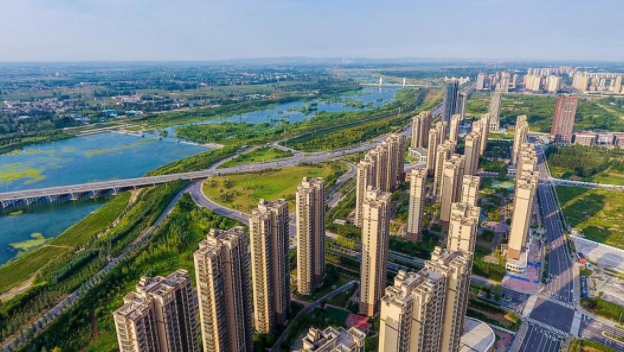
The greatest challenge surrounding Luoyang historical ruins is their relationship with modern development. Archaeological remains do not always lie in remote fields. They may sit beside roads, beneath construction sites, near villages, or within rapidly expanding urban districts.
This creates an ongoing need for salvage archaeology. Before a major building project begins, teams may carry out surveys and test excavations. When important remains appear, plans may be revised, construction delayed, or selected structures preserved in place.
Urban archaeology also changes the way heritage is presented. Visitors may see an exposed foundation, a preserved section of wall, or a museum display containing objects from a site that cannot remain fully open. Digital maps, stratigraphic drawings, replicas, and architectural models help explain what is no longer visible above ground.
Preservation does not always mean displaying every layer. Soil, water, roots, pollution, and weather can damage exposed materials. In some cases, covering a site again after documentation offers better long-term protection than leaving it open to the elements.
How Excavation Shapes Museums and Cultural Tourism
Archaeological work reaches the public through museums, heritage parks, site exhibitions, publications, educational programs, and thoughtfully designed visitor routes. A museum collection can connect a tiny bronze tool to a larger historical question: who made it, who used it, and how did it move through the city?
For tourists, the experience becomes more meaningful when individual sites are placed within a wider map. Visitors can compare the locations of ancient capitals with modern districts, trace river routes, and see how burial grounds stood beyond city walls. A museum visit in the morning followed by a capital-site park in the afternoon can turn separate objects into a coherent historical story.
Cultural commerce benefits from this connection when it respects archaeological evidence. Reproductions of bronze forms, architectural motifs, pottery shapes, and historical maps can support education and souvenir markets without being presented as authentic excavated objects. Clear labeling is essential. Customers should know whether an item is an archaeological artifact, a museum-approved reproduction, or a contemporary design inspired by history.
In our experience, the strongest heritage products carry a specific story. A ceramic cup inspired by a documented vessel type, a wall-art print showing an excavated city plan, or a model based on a published architectural reconstruction gives buyers far more than generic ancient-style decoration.
Why Is Luoyang Important in Chinese Archaeology?
The answer to why is Luoyang important in Chinese archaeology begins with continuity. Few places preserve such a dense sequence of political centers across several major periods. Researchers can examine changes in urban planning, ritual practice, metallurgy, religion, writing, trade, and burial customs over a remarkably long span.
The region also helps test historical records. Written sources describe capitals, rulers, ceremonies, and political events, but archaeology can confirm, revise, or complicate those accounts. A text may focus on a palace, while excavation reveals the workshops and residential neighborhoods that sustained palace life.
Luoyang matters because it links local history to broader questions. How did early states form? How did capitals manage food and labor? How did Buddhism travel through urban networks? How did cities respond to war, migration, and environmental change? Excavated evidence from the Luoyang area contributes to every one of these discussions.
FAQ: Exploring Luo Yang Archaeology
What ancient capitals were located in Luo Yang?
Several important capitals were established in or around the Luoyang region, including the Zhou capital of Luoyi, Eastern Han Luoyang, the Northern Wei capital, and capitals associated with later dynasties. The Erlitou site also provides evidence of an early urban and political center in the surrounding area. Exact boundaries changed over time, so “Luoyang” can refer to a wider archaeological landscape rather than one fixed city footprint.
How can visitors explore Luoyang archaeological sites?
Visitors can begin with local museums before traveling to preserved capital remains, tomb museums, archaeological parks, and nearby heritage areas. Check opening hours and access rules before traveling, as active excavation zones may be closed. A guide, historical map, or museum reconstruction can make low foundations and earthen walls much easier to understand.
Why is Luoyang important in Chinese archaeology?
It is important because the area preserves evidence from multiple capital periods and offers a long record of urban development. Archaeologists can study royal institutions, religious sites, workshops, tombs, and ordinary settlements within the same broad region. These discoveries also allow researchers to compare written histories with physical evidence.
Are all ancient remains visible above ground?
No. Many remains survive beneath modern soil or appear only as low foundations. Timber buildings have usually vanished, and walls may have been damaged by farming, construction, flooding, or later settlement. Museums, excavation reports, maps, and digital reconstructions are therefore essential to the visitor experience.
Conclusion: Connecting Archaeology with Modern Cultural Commerce
luo yang archaeology shows how a modern city can hold thousands of years of political memory beneath its streets and surrounding fields. Ancient capitals, workshops, tombs, temples, and city walls create a layered record of technology, belief, trade, and everyday life.
For museums, retailers, educators, and cultural businesses, this history provides a responsible foundation for new products and experiences. Choose designs tied to documented discoveries, communicate their historical sources clearly, and help customers understand the difference between heritage and imitation. Explore our products to develop cultural merchandise and educational solutions inspired by China’s ancient capital landscapes.