
Blog
Luoyang City Henan Beyond Ancient Capital History

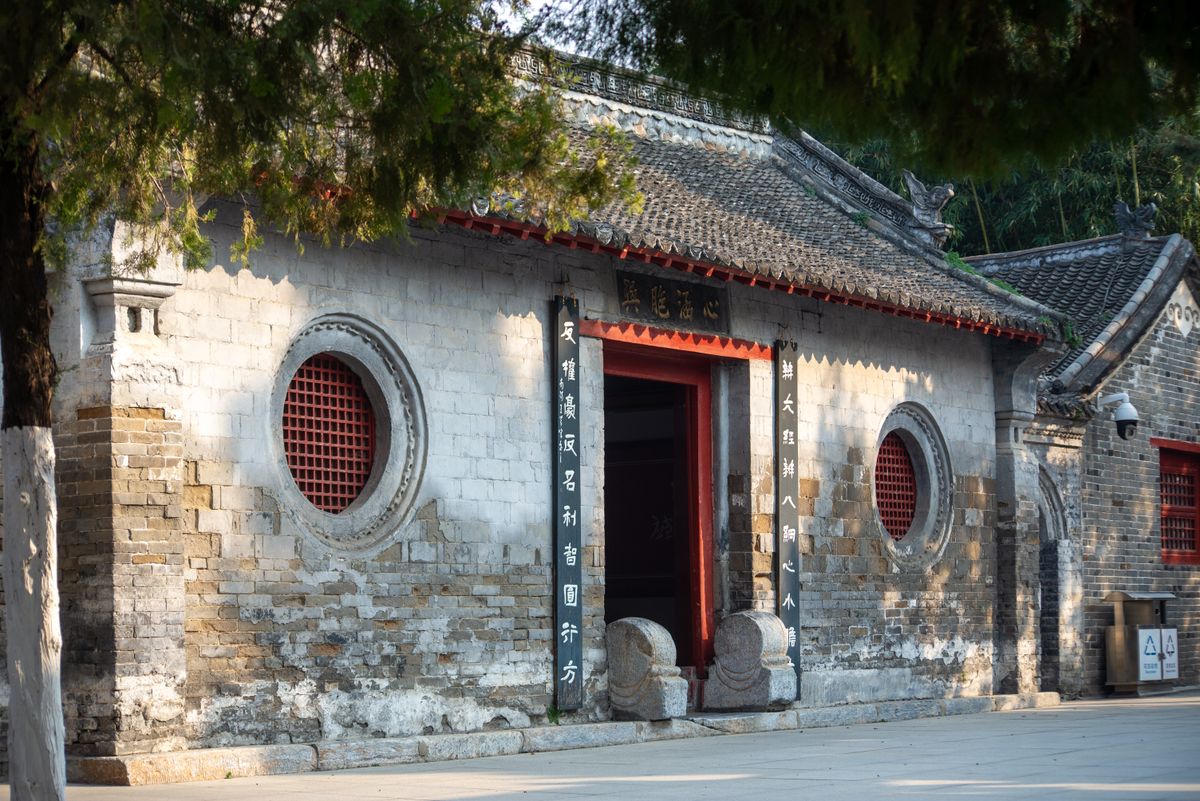
Luoyang City Henan Connects Ancient Capital Heritage With a Modern Regional Economy
What should a traveler, investor, supplier, or business visitor understand before treating Luoyang only as an ancient-capital destination? The useful answer is that luoyang city henan combines major historical assets with an active urban economy, industrial base, regional transport role, and expanding modern services.
Many people first associate the city with the Longmen Grottoes, Buddhist heritage, imperial history, and peony culture. Those associations are valid, but they are incomplete. Luoyang city facts relevant to current planning also include its position in western Henan, its relationship with the Luo River basin, its role as an industrial city, and its connections to wider transport corridors across central China.
For early travel or business research, the practical question is not whether the city is historic. It clearly is. The better question is how its historic identity affects access, urban services, supplier selection, site visits, and the experience of moving through a present-day Henan city.

How imperial Luoyang differs from the city that businesses and visitors encounter now
The clearest way to understand luoyang city henan is to separate its historical role from its current operating environment. Imperial Luoyang was valued for political authority, river-basin access, and its place within historic Chinese routes. Modern Luoyang remains shaped by geography and heritage, but it functions primarily as a prefecture-level urban center in Henan with manufacturing, services, logistics, education, tourism, and government functions.
| Decision area | Imperial-era identity | Present-day condition | What this means for planning |
|---|---|---|---|
| Primary role | A former capital associated with dynastic administration and culture | A regional city serving residents, enterprises, visitors, and surrounding counties | Do not plan an itinerary or commercial visit around heritage sites alone. |
| Geographic setting | A strategic location within historic river and overland networks | A city in western Henan linked to the Luo River area and wider central-China routes | Check the exact district, industrial park, hotel, or attraction rather than using the city name as a location estimate. |
| Economic activity | Administration, trade, craft production, religion, and court culture | Equipment manufacturing, materials-related activity, petrochemicals, services, tourism, and supporting supply chains | Business visitors should identify the relevant sector and district before arranging meetings. |
| Transport links | Historic routes shaped by political and commercial movement | Rail, highway, and air connections supporting regional travel and freight movement | Choose transport based on the final destination, not simply the fastest arrival point. |
| Urban role in Henan | A symbolic and political center during selected historical periods | An important western-Henan urban node alongside the province’s larger regional network | Use Luoyang as a base for western Henan activities, while confirming onward travel requirements. |
Practical conclusion: treat luoyang city henan as both a cultural destination and a working city. This approach fits travelers combining heritage visits with city exploration and companies conducting preliminary supplier or market research. It does not apply if the visit is limited to a single historic attraction, where a narrower location-based plan may be enough.
Use Luoyang Henan geography to plan realistic travel and site visits
Luoyang Henan geography matters because the municipality covers urban districts as well as outlying counties and rural areas. A meeting described as “in Luoyang” may be in a central urban district, near a development area, or much farther from the historic core. That difference can materially affect ground transport, hotel choice, and the amount of time needed between appointments.
The city lies in western Henan and forms part of a broader central-China travel and production landscape. Its position supports connections toward Zhengzhou and other provincial centers, while east-west rail and road corridors also make it relevant to movements across China. The Luoyang entry is a useful starting point for basic historical and geographic orientation, but it should not replace current route, station, or district verification.
Planning procedure for a first visit
- Define the visit purpose. Separate heritage tourism, university visits, factory meetings, trade discussions, and government appointments. Each purpose may point to a different part of the city.
- Request the exact destination. Ask for a full street address, district name, contact person, and map pin. “Luoyang” alone is not sufficient for a reliable schedule.
- Match transport to the final stop. Compare rail arrival, airport arrival, and highway transfer options based on the destination district and the next day’s itinerary.
- Build a buffer around cross-city travel. Urban traffic, station transfers, and distance between industrial and heritage zones can disrupt tightly packed schedules.
- Confirm current access conditions. Verify opening arrangements, visitor policies, and meeting requirements directly with the venue or host before departure.
Recommendation: select accommodation near the location that drives the visit, not automatically near the most famous attraction. This is especially suitable for factory audits, supplier interviews, or multi-meeting schedules. It may not be the right choice for leisure travelers whose priority is repeated access to the Longmen area or historic sites.

What the modern Luoyang economy means for business research
The Luoyang economy is not defined by tourism alone. The city has a recognized industrial character, with activity associated with equipment manufacturing, materials, petrochemicals, and related supply chains, alongside culture, tourism, retail, education, and local services. This mix gives luoyang city henan a different business profile from a destination focused only on heritage tourism.
For sourcing or market research, the key conclusion is straightforward: identify the specific industrial segment before assuming that a city-level reputation translates into a suitable supplier base. A machinery-related inquiry, for example, requires different screening questions from a tourism-services inquiry or a materials-processing inquiry.
| Research objective | Useful first screening question | Best-fit situation | Limit or caution |
|---|---|---|---|
| Equipment sourcing | Does the company manufacture, assemble, distribute, or service the required equipment? | Buyers seeking industrial suppliers or maintenance support | A city’s manufacturing reputation does not confirm a supplier’s capability or export readiness. |
| Materials-related research | What material category and processing stage does the business actually handle? | Teams mapping potential upstream or downstream partners | Do not infer grades, testing ability, or compliance status without supplier documentation. |
| Tourism investment research | Is the project tied to heritage access, accommodation, visitor services, or local retail? | Operators studying visitor-facing opportunities | Demand patterns can vary by season, event calendar, and site policy. |
| Regional distribution | Which transport mode best serves the actual origin and destination points? | Businesses assessing central-China coverage | City-level transport links do not eliminate last-mile costs or delivery constraints. |
Modern Luoyang should therefore be assessed as a location with multiple economic layers. Heritage creates visibility and visitor demand. Industry supports a separate commercial ecosystem. Transport links connect both. For a business decision, these layers need to be evaluated separately rather than treated as one broad advantage.
Common mistakes when researching Luoyang for travel or business
- Mistake: assuming every important destination is near the historic core. The correction is to map each appointment and attraction separately. This matters for business visitors and multi-day travelers; it matters less for a short, single-site visit.
- Mistake: treating “industrial city” as proof of supplier suitability. The correction is to request product scope, production role, export experience where relevant, and current documentation. This is necessary for procurement; it is not needed for general sightseeing research.
- Mistake: planning transport only to the city. The correction is to plan the full journey from arrival point to final destination. This is especially useful when a meeting is outside the central urban area.
- Mistake: viewing heritage and modern development as competing identities. The correction is to recognize that both influence the city’s economy and urban experience. This is useful for broad market research, though individual districts may emphasize one role more strongly than the other.
- Mistake: relying on generic city descriptions for live decisions. The correction is to confirm schedules, addresses, access rules, and business contacts directly. This applies to every time-sensitive trip.
FAQ about luoyang city henan for current planning
What is Luoyang known for today?
Luoyang city henan is known today for its major historical and cultural resources, including the Longmen Grottoes and peony-related tourism, as well as its role in western Henan’s industrial and service economy. It is also relevant for manufacturing-related activity, regional transport, education, and urban services. The exact answer depends on the visitor’s purpose: cultural travelers may focus on historic sites, while business researchers may focus on industrial districts and supply-chain connections.
Is Luoyang a modern city?
Yes. Modern Luoyang has contemporary urban districts, transport infrastructure, commercial services, industrial activity, universities, and residential development. However, “modern” should not be interpreted as meaning every district has the same density, convenience, or business environment. Travelers and companies should assess the specific area they intend to visit rather than making a citywide assumption.
What industries are important in Luoyang Henan?
Important industries in Luoyang Henan include equipment manufacturing, materials-related activity, petrochemicals, tourism, and supporting service sectors. These categories are useful for initial research, but they do not identify a particular company’s products, capacity, quality systems, or market focus. Buyers should validate those details directly before placing orders or arranging audits.
Is Luoyang suitable for a combined business and cultural itinerary?
Yes, provided the schedule is built around location. A combined itinerary works well when meetings are concentrated in accessible districts and heritage visits are planned as separate blocks. It is less suitable when supplier sites are far apart, meeting times are uncertain, or travel windows are short.
For location-specific sourcing or visit planning, submit your destination details and request selection advice.
About LyWOW Tours
LyWOW is a locally based travel agency in Luoyang, specializing in private tours for international travelers across Luoyang, Shaolin, Xi’an and Central China. English-speaking guides, flexible itineraries and door-to-door service.
Learn more about us or browse all our tours.