By
By Unlocking the Visual Language of Luoyang Grottoes Longmen: Distinguishing Northern Wei from Tang Dynasty Statues
Understanding the rich tapestry of art at the Luoyang Grottoes Longmen often begins with a fundamental question: how do we visually differentiate the distinct sculptural styles of the Northern Wei and Tang dynasties? For many visitors, the sheer volume and intricate detail of the cave temples can be overwhelming. Yet, by focusing on key artistic elements, a clear narrative of China’s sculptural evolution emerges, allowing for a deeper appreciation of this world heritage site. This guide provides a systematic approach to identifying the characteristic features that define each dynastic period, transforming a passive viewing into an informed exploration.
The Foundations of Dynastic Art at Luoyang Grottoes Longmen
The Luoyang Grottoes Longmen stand as a monumental testament to Chinese Buddhist art, spanning several centuries and reflecting profound shifts in religious thought, imperial patronage, and artistic expression. Carved into the limestone cliffs along the Yi River, these cave temples trace a visual history from the late 5th century through the 10th century. The two most prominent periods of creation, the Northern Wei (386–534 CE) and the Tang Dynasty (618–907 CE), represent a dramatic evolution in sculptural aesthetics and spiritual interpretation.
For anyone seeking to truly engage with the art, recognizing these dynastic styles is not merely an academic exercise. It is crucial for understanding the chronological progression of the site, appreciating the cultural values each period embodied, and discerning the specific messages intended by the artisans and patrons. Without this understanding, the nuances of stylistic change can merge into a single, undifferentiated experience. Understanding the stylistic markers helps to contextualize individual works within their historical moment, revealing the artistic journey of the Luoyang Grottoes Longmen complex.
A Visual Guide: Comparing Northern Wei and Tang Statues at Luoyang Grottoes Longmen
To accurately date major works visually at the Luoyang Grottoes Longmen, a systematic comparison of specific artistic parameters is essential. The differences between Northern Wei and Tang dynasty statues are profound, reflecting contrasting cultural ideals and artistic movements. Here, we break down these visual cues into actionable points.
| Feature | Northern Wei Dynasty (c. late 5th – early 6th century) | Tang Dynasty (c. 7th – early 8th century) | Impact on Interpretation / Risk of Misidentification |
|---|---|---|---|
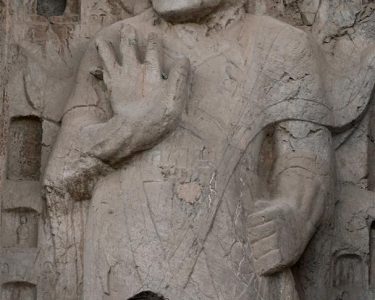
| Proportions | Elongated, slender, almost ethereal figures. Heads are often disproportionately large relative to the body. Necks are long. | Fuller, more robust, and naturalistic proportions. Figures appear well-grounded, emphasizing a worldly, powerful presence. | Misinterpreting Wei figures as merely “primitive” overlooks their spiritual elongation. Confusing Tang robustness for earlier styles misses the mature, confident aesthetic, which can lead to a misunderstanding of the dynastic shift towards humanism. |
| Robes / Drapery | Thin, cascading “waterfall” folds creating a sense of movement and lightness. Often features the “fish-tail” or “wing-like” drapery at the shoulders or hem. | Heavy, voluminous drapery that clings to the body, revealing its form beneath. Folds are deep, realistic, and fewer, emphasizing solidity and a sense of gravity. | Ignoring the robe style means missing a primary indicator of the period’s spiritual focus. Wei drapery signifies spiritual transcendence and dematerialization; Tang drapery, human grandeur and material presence. |
| Faces | Elongated, thin faces with a characteristic “archaic smile” – serene, mysterious, and somewhat abstract. Almond-shaped eyes. | Rounder, plump, and more naturalistic faces. Expressions are varied, ranging from serene to stern, often conveying a sense of majesty or benevolence. | The “archaic smile” is a definitive Wei marker. Mistaking a Tang figure’s naturalistic serenity for Wei’s abstract smile blurs distinct emotional and spiritual portrayals, reducing the nuanced expressions of each era. |
| Carving Style | Linear, flattened, and relief-like, even in high relief. Focus on outlines and surface patterns. Less emphasis on volumetric depth. | Three-dimensional, volumetric, and deeply carved, creating a strong sense of realism and presence. Figures project significantly from the background, sometimes nearly free-standing. | A failure to perceive the depth and three-dimensionality means overlooking the Tang master sculptors’ skill in rendering human form, contrasting sharply with the flatter, linear forms of earlier periods. This affects understanding of artistic innovation. |
| Hair & Headwear | Often stylized, tightly coiled hair, sometimes with a prominent ushnisha (cranial bump). Simpler crowns for Bodhisattvas. | More naturalistic hair, often with elaborate, highly detailed ushnisha. Bodhisattvas wear ornate, complex crowns with jewels and floral motifs, reflecting imperial splendor. | Details in hair and headwear are secondary but consistent identifiers. Overlooking these fine points can lead to uncertainty in borderline cases or in distinguishing between primary and secondary figures. |
Each of these parameters offers a critical lens through which to view the sculptural evolution at the Luoyang Grottoes Longmen. If a viewer misidentifies a statue’s dynastic origin, they risk misinterpreting its intended spiritual or political message. For instance, a Northern Wei Buddha, with its elongated form and ethereal smile, conveys a sense of withdrawal from the earthly realm, a focus on spiritual purity. In contrast, a Tang Buddha, with its robust body and majestic presence, often represents a more immanent deity, one that actively engages with and blesses the human world. Getting this wrong means missing the core philosophical underpinnings of the art and the cultural shifts they represent.
Practical Approaches to Dating Sculptural Works at Luoyang Grottoes Longmen
Beyond the direct visual comparison, several practical approaches can aid in more precise dating and understanding of sculptural works within the Luoyang Grottoes Longmen complex. These methods involve observing contextual clues and applying a systematic analytical framework.
A common mistake is assuming that all statues within a single cave or niche belong to the same period. While a primary phase of carving usually exists, later additions, repairs, or reinterpretations often occur. Therefore, each individual statue or relief demands its own careful examination. Another pitfall is overgeneralizing, applying broad dynastic labels without acknowledging transitional styles or regional variations. Early Tang works, for example, might retain some Wei influences, illustrating a gradual shift rather than an abrupt change. Finally, focusing solely on one feature, such as facial expression, while ignoring the complete stylistic package of proportions, robes, and carving technique, can lead to inaccurate conclusions. A holistic assessment is always more reliable.
To systematically observe and deduce the origin of a piece at the Luoyang Grottoes Longmen, consider the following steps:
- Initial Scan for Dominant Style: Quickly assess the overall impression. Is it slender and linear (pointing to Wei) or robust and volumetric (pointing to Tang)? This provides a preliminary hypothesis.
- Examine Robe Drapery: Look closely at how the fabric falls. Are there many thin, flowing folds that create a sense of movement (Wei), or fewer, heavier folds that define the body’s contours (Tang)? This is often a definitive marker.
- Analyze Facial Features: Observe the face shape, eye style, and mouth. Does it have an “archaic smile” and elongated features (Wei), or a rounder, more naturalistic and varied expression (Tang)? Pay attention to the subtle nuances.
- Assess Carving Depth: How much does the figure project from the rock face? Is it relatively flat (Wei) or deeply carved and almost fully in the round (Tang)? This reveals the sculptor’s approach to three-dimensionality.
- Consider Associated Inscriptions: If present and legible, inscriptions can provide precise dating information or donor details, offering invaluable direct evidence. While rare for casual visitors, it’s the most accurate method.
- Note Cave Location and Primary Patronage: Certain caves are historically associated with specific dynasties (e.g., Guyang Cave for Northern Wei, Fengxian Temple for Tang). While not definitive for every single piece within, it offers a strong starting point for further investigation.
By combining these observational techniques, visitors can move beyond simply admiring the beauty to actively deciphering the historical and artistic dialogue embedded within the stone of the Luoyang Grottoes Longmen.
The Lasting Impact of Luoyang Grottoes Longmen on Buddhist Art
The stylistic evolution witnessed at the Luoyang Grottoes Longmen is not merely a chronicle of artistic tastes; it reflects profound shifts in Chinese society, religious practice, and imperial power. The Northern Wei period saw Buddhism adopted and promoted by non-Han rulers, leading to an art form that emphasized spiritual transcendence and an almost austere detachment. The slender, elongated figures with their enigmatic smiles embodied a quest for enlightenment that often transcended worldly concerns.
With the advent of the Tang Dynasty, China experienced a period of unprecedented cosmopolitanism, wealth, and cultural exchange. Buddhism flourished, integrating more deeply into Chinese culture. Tang Buddhist sculpture at the Luoyang Grottoes Longmen reflects this new confidence and worldliness. Figures became more human, more approachable, and imbued with a sense of regal authority and compassionate grandeur. The robust forms and realistic drapery spoke to a belief system that was strong, established, and intimately connected to the prosperity of the empire. This shift from an ethereal, symbolic representation to a more naturalistic, powerful depiction profoundly influenced subsequent Buddhist art not only across China but also in Korea and Japan. The innovations in volumetric carving and expressive facial features established new benchmarks for religious iconography.
As you explore the Luoyang Grottoes Longmen, look for the echoes of these dynastic shifts. Notice how later works, even those from post-Tang periods, often integrate elements from both traditions, sometimes subtly, sometimes overtly. The site therefore serves as a living museum, demonstrating how artistic conventions are established, evolve, and ultimately leave an indelible mark on cultural identity and religious expression.
For further insights into the rich history and artistic significance of the Luoyang Grottoes Longmen, consider consulting academic resources or specialized guides.