
Blog
Oldest Temple in China: White Horse Temple’s Founding Story

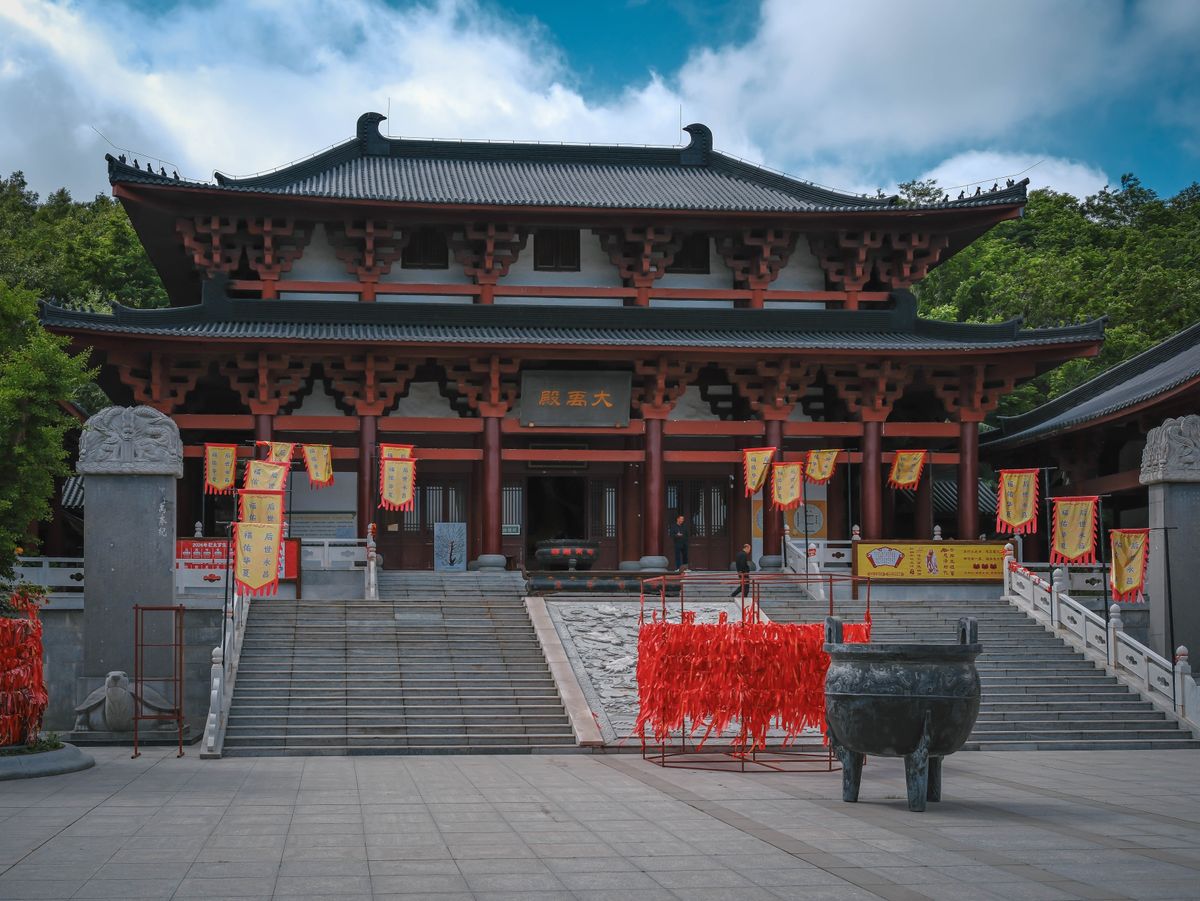
How White Horse Temple Became the Oldest Temple in China and Anchored Buddhism’s Arrival
Anyone researching Chinese Buddhist history eventually runs into the same question: where did it actually start? Not in a philosophical sense, but literally — which building, which year, which people. The answer most historians and monastic records point to is a temple complex outside Luoyang, traditionally dated to 68 CE. Known today as White Horse Temple, or Baima Si, it is widely regarded as the oldest temple in China and the formal starting point for institutional Buddhism on Chinese soil. This matters to travelers and students alike because it gives the abstract idea of “Buddhism entering China” an actual address, a founding date, and a cast of named individuals rather than a vague cultural drift.
Understanding this site requires separating three things that often get blurred together: the historical record, the temple legend, and the site’s later role as a translation center. Each piece answers a different question, and mixing them up is the most common mistake in casual accounts of early Chinese Buddhism.
The 68 CE Founding Tradition, the Monk-and-Script Narrative, and Early Translation Work
The traditional account holds that Emperor Ming of the Eastern Han dynasty dreamed of a golden figure flying over his palace. Court advisors interpreted this as a vision of the Buddha, prompting the emperor to send envoys west in search of Buddhist teachings. Those envoys reportedly encountered two Indian monks, commonly named in tradition as Kasyapa Matanga and Dharmaratna, traveling with Buddhist scriptures loaded on a white horse. The monks returned with the envoys to Luoyang, and the emperor had a temple built to house them and their texts — hence the name White Horse Temple.
Why this narrative matters practically:
- It establishes a founding date. The 68 CE figure gives researchers and travel planners a fixed reference point, even though modern scholars treat the exact year as tradition rather than verified fact.
- It names the first translation act. The monks are credited with translating the Sutra in Forty-two Chapters at the temple, which tradition holds as the first Buddhist text rendered into Chinese on Chinese soil.
- It sets the template for state-sponsored Buddhism. An emperor commissioning a temple for foreign monks established a pattern of court patronage that shaped Buddhism’s growth throughout the following centuries.
If you get this narrative wrong — for instance, by treating the white horse detail as merely decorative rather than as a naming device tied to the scripture transport story — you lose the connective thread between the legend and the temple’s actual name. The story is not incidental folklore; it is the reason the site is called what it is, and it directly ties into the temple’s function as an early home for Buddhism in a Chinese context.
How Buddhism First Entered China: Separating Legend from Trade-Route Reality
The emperor’s-dream story is compelling, but it is not the whole picture of how Buddhism first entered China. Most historians agree that Buddhist ideas and practitioners were already moving along Central Asian trade routes well before any single imperial mission. Merchants, travelers, and small communities of foreign monks had likely introduced Buddhist concepts into border regions and trading cities decades earlier.
What the White Horse Temple founding represents, then, is not the very first contact but the first official, court-recognized institutional foothold. This distinction matters for anyone doing serious heritage research:
| Claim | What it actually means | What it does NOT mean |
|---|---|---|
| Buddhism arrived in China via trade routes earlier than 68 CE | Informal transmission through merchants and travelers pre-dated state involvement | It does not mean there was an organized temple or clergy before Baima Si |
| White Horse Temple is the oldest temple in China | It is the earliest state-sanctioned Buddhist temple with a continuous institutional identity | It does not mean it is the oldest religious structure of any kind in China |
| Two Indian monks founded the temple | Tradition credits Kasyapa Matanga and Dharmaratna as the resident founding monks | It does not mean they were the only Buddhist teachers active in China at the time |
For students preparing academic papers, this table-level distinction is often the difference between a well-sourced argument and one that gets challenged in peer review or classroom discussion. Cite the temple as the institutional starting point, not as the absolute first contact between Buddhism and Chinese soil.
Who Founded White Horse Temple and Why Indian Monks in Luoyang Mattered
The founding credit goes to Emperor Ming’s court, acting on the dream narrative, but the practical work fell to the two Indian monks who settled in Luoyang. Their presence mattered for reasons that go beyond ceremony:
- Language bridge. Having monks fluent in the source texts on-site meant translation could begin immediately rather than waiting for scriptures to be copied and sent elsewhere for interpretation.
- Doctrinal authority. Monks trained in Indian Buddhist tradition gave the new Chinese Buddhist community a direct line to source teachings, rather than second-hand or fragmented accounts.
- Precedent for future exchange. Their residence at the temple normalized the idea of foreign monks living and working within Chinese religious institutions, a pattern that continued for centuries as more translators arrived from Central Asia and India.
If a researcher skips this detail and assumes the temple was founded and staffed entirely by Chinese clergy from the start, they misrepresent the actual transmission mechanism. The presence of foreign monks in Luoyang is not a footnote — it is the mechanism by which Eastern Han Buddhism gained its textual foundation.
Why White Horse Temple Is Important to Buddhism in Han Dynasty China
The temple’s importance rests on three practical functions it served during the Eastern Han period, each of which shaped how Buddhism developed in China afterward.
1. It Was the First Translation Workshop
Before Baima Si, there was no established Chinese vocabulary for Buddhist concepts. Terms had to be invented, borrowed, or adapted from existing Daoist and Confucian language. This translation work, beginning with the Sutra in Forty-two Chapters, set patterns that later translators — working over the following several centuries — would refine and expand.
2. It Modeled State-Temple Relations
Because the temple was commissioned by the emperor, it established a precedent for imperial patronage of Buddhist institutions. This relationship between state authority and monastic life became a recurring feature of Chinese Buddhist history, for better or worse, influencing how later dynasties regulated or supported temples.
3. It Anchored Buddhism Geographically in the Han Capital
Luoyang was a political and cultural center of the Eastern Han dynasty. Placing the first officially sanctioned temple there, rather than in a border region, meant Buddhism entered Chinese religious life close to the center of power rather than remaining a peripheral foreign practice.
A Practical Checklist for Travelers and Students Researching the Site
If you’re planning a heritage trip or drafting an academic overview, use this checklist to keep the founding narrative accurate and useful:
- Confirm you’re distinguishing between “earliest informal Buddhist contact” and “earliest state-sanctioned temple” — they are not the same claim.
- Reference the 68 CE date as traditional, not as an uncontested historical fact.
- Name both founding monks if writing an academic piece; naming only one weakens the transmission narrative.
- Note the temple’s continuous role as a religious site across many centuries, rather than treating it as a static historical relic.
- Cross-check any numeric claims (dates, monk counts, text titles) against primary translations or established sinology sources before publishing.
Common mistakes to avoid when writing or presenting on this topic:
- Treating the emperor’s dream as literal historical documentation rather than a legendary framing device.
- Confusing White Horse Temple’s founding with the absolute first appearance of Buddhist ideas in China.
- Omitting the temple’s translation function, which is arguably its most consequential historical role.
- Assuming the temple has remained architecturally unchanged since the Han dynasty — it has been rebuilt and expanded repeatedly across history.
For those preparing detailed itinerary notes or historical write-ups, it also helps to review broader materials on temple heritage research, alongside academic overviews of Han dynasty history and Buddhist translation history to place the founding story in fuller context.

What This Means for Early-Stage Trip and Research Planning
For cultural travelers, the practical takeaway is straightforward: visiting or researching this site connects you to a documented starting point for Buddhism’s institutional life in China, not a vague cultural myth. For students, the founding narrative gives a citable anchor — the 68 CE tradition, the Indian monks, and the translation work — that supports a clear thesis about how Eastern Han Buddhism took root. Both audiences benefit from treating the legend and the historical record as complementary rather than interchangeable, since conflating them weakens both the story and the scholarship.

If you’re preparing a research brief, itinerary, or academic paper on this topic and want the founding narrative verified against available historical summaries, reach out for guidance on sourcing and structuring your material before you finalize it.
About LyWOW Tours
LyWOW is a locally based travel agency in Luoyang, specializing in private tours for international travelers across Luoyang, Shaolin, Xi’an and Central China. English-speaking guides, flexible itineraries and door-to-door service.
Learn more about us or browse all our tours.