Blog
Time Your China Longmen Grottoes Visit for Cave Lighting

Time Your China Longmen Grottoes Visit for Cave Lighting
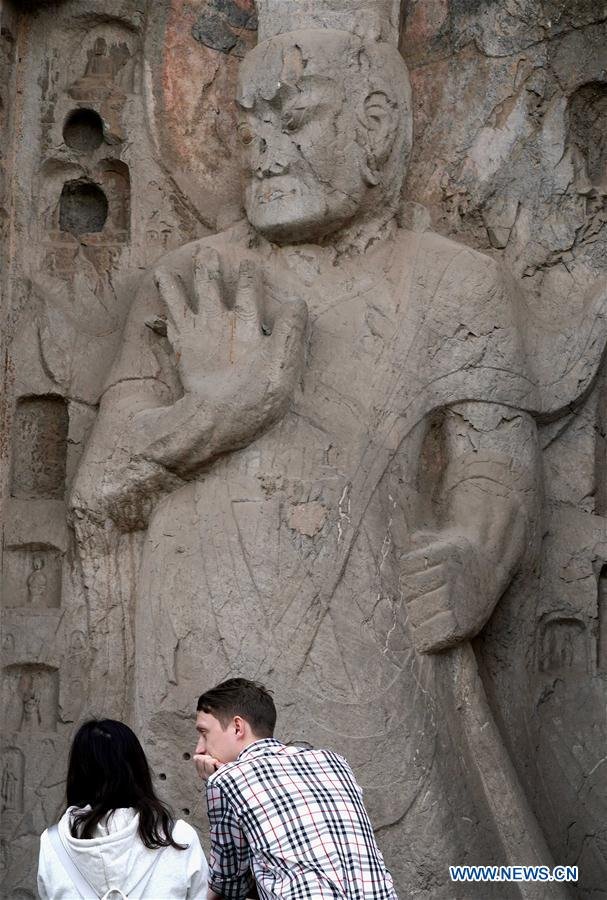
What time of day gives the clearest view of carved faces, robe folds, inscriptions, and recessed niches at the china longmen grottoes? The best answer is not simply “morning” or “afternoon.” It depends on which riverbank you are standing on, which cliff face you want to study, whether direct sun is flattening the carvings, and how seasonal haze or low-angle light changes contrast.
For independent visitors, timing a china longmen grottoes visit around lighting can improve both close viewing and photography. Crowds still matter, but light is often the deciding factor when your priority is reading shallow relief details rather than collecting wide scenic shots.
The site is recognized as a World Heritage site, and its cave groups are distributed along the Yi River valley rather than arranged as a single indoor exhibition. That setting creates changing illumination throughout the day. A statue that looks flat at one hour may show stronger facial modeling, garment folds, or niche depth later when sunlight arrives at an oblique angle.
Use sunlight direction, riverbank orientation, and season to read reliefs better
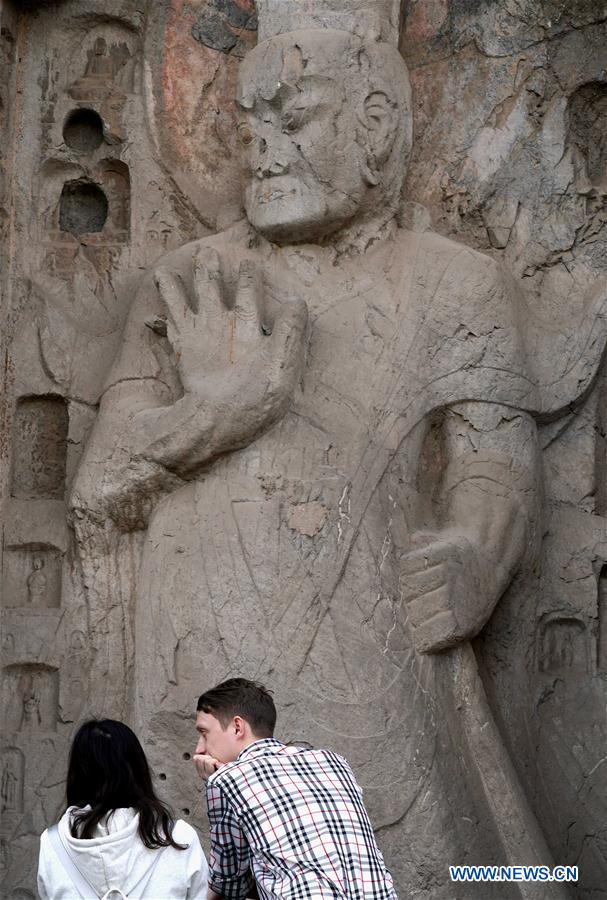
The key differentiator at the china longmen grottoes is that relief visibility is governed by natural side-lighting. Direct frontal light can make a carved surface look bright but visually flat. Light arriving from one side produces small shadows in recesses, which helps the eye distinguish depth.
Conclusion: choose your walking direction after checking the sun’s position relative to the cliff face, not only the time printed on your ticket. This approach fits visitors who want to inspect carvings or make detail-focused photographs. It does not apply in the same way on overcast days, when diffuse light reduces harsh shadows but also reduces depth cues.
| Condition to assess | What it changes | Best practical response | Limit or caution |
|---|---|---|---|
| Sun striking a façade directly | Broad surfaces become bright; shallow carving may appear flatter | Photograph wide views, then return later for close relief detail | Direct light can still work well for large statues with deep-cut features |
| Sun arriving from the side | Recesses and raised edges cast small shadows | Use this period for robe folds, inscriptions, and shallow reliefs | Very strong side-light can hide one half of a face in shadow |
| Cliff face in open shade | Contrast becomes softer and more even | Use for balanced documentary photographs and careful visual comparison | Fine relief may lose separation in flat, hazy conditions |
| River-facing viewpoint | Camera angle changes relative to the sun and carved wall | Walk several viewing positions before taking final images | Do not assume the opposite bank always gives better light |
| Low seasonal sun | Shadows become longer and more directional | Prioritize relief reading during low-angle daylight | Deep shadows can obscure entire niches if light is too low |
At the china longmen grottoes, use the river as a visual reference, but do not treat “east bank” or “west bank” as a complete lighting forecast. The river curves through the valley, paths change elevation, and individual cave entrances face slightly differently. A cliff group may receive useful side-light while a nearby niche remains dark because of overhangs or surrounding rock.
For major groups such as Fengxian Temple, Wanfo Cave, Binyang Caves, and Guyang Cave, inspect the main viewing surface before committing to a long photography stop. Large open façades react differently from narrow cave interiors. Open statues often benefit from angled exterior light, while recessed interiors may depend more on reflected daylight and the permitted lighting conditions on site.
Follow a field procedure instead of choosing a fixed “best hour”
A fixed arrival time is less reliable than a repeatable observation process. The following method helps visitors plan a china longmen grottoes route even when weather, haze, or itinerary changes affect the day.
- Check the day’s sky before leaving. Clear conditions create stronger highlights and shadows; overcast conditions create softer, more even rendering. Choose clear or partly clear conditions if carved depth is your main goal. Choose overcast conditions if you need fewer extreme highlights in photographs.
- Identify your priority cave group. Select no more than three groups you most want to study. For example, choose one monumental façade, one cave with dense smaller figures, and one cave where inscriptions or shallower relief matter to you.
- Arrive with enough daylight flexibility. Do not plan every minute around the entrance gate. Your useful viewing window depends on actual shadows at the cliff, not a generic itinerary template.
- Make a first pass without photographing heavily. At each selected group, observe the light across the central figure, side walls, upper niches, and lower carved details. Note which areas are bright, shaded, or partly lit.
- Take six test images from different positions. Make two wide frames, two medium frames, and two close details. Compare whether shadows reveal or conceal the relief edges before spending more time.
- Return when the light changes. If a façade is washed out by direct sun, continue your route and revisit it after the sun has shifted. If a cave is already in deep shade, study it now rather than waiting for an uncertain improvement.
Why this works: the china longmen grottoes are best treated as a sequence of changing outdoor viewing conditions, not as a museum gallery with stable lighting. This procedure suits visitors who can adjust their route on site. It is less useful for a tightly scheduled group tour that allows only one short stop.
Match your itinerary to seasonal lighting conditions
Season affects more than temperature. The sun’s height, daylight length, atmospheric haze, leaf cover, and rain all influence how the china longmen grottoes appear. The goal is not to declare one season universally best; it is to match your visual objective to the conditions you are likely to encounter.
| Seasonal condition | Likely visual effect | Best use case | When it may not suit you |
|---|---|---|---|
| Lower-angle seasonal sunlight | More pronounced directional shadows across carved surfaces | Visitors studying depth, texture, and robe folds | Not ideal when deep shadows hide recessed faces or inscriptions |
| Higher-angle sunlight | Brighter upper surfaces and reduced side-shadow modeling | Broad views of cliffs, river, and monumental compositions | Less useful for very shallow relief detail |
| Overcast or hazy daylight | Reduced contrast and more even exposure | Documentary images where highlight control matters | Fine carving may look subdued and less dimensional |
| Recent rain or wet stone | Darkened surfaces may change tonal contrast | Visitors prepared to adapt their route and protect equipment | Wet paths, low light, and reflections can reduce practical viewing comfort |
Conclusion: if your purpose is relief visibility, give more weight to the angle and quality of daylight than to the calendar month alone. This is especially relevant at the china longmen grottoes when you want to compare carved depth across several cave groups. The limitation is that cloud cover can override a seasonal expectation within minutes.
Plan photography without sacrificing close observation
Photography at the china longmen grottoes works best when you separate “record shots” from “light-dependent shots.” Record shots document where you were and can be taken in almost any usable daylight. Light-dependent shots need attention to shadow direction, exposure, and the relationship between the camera and carved surface.
- For large statues: begin with a wide frame that includes the niche or cliff context. This shows scale and placement. It is less effective if the subject is backlit and facial features disappear.
- For relief panels: move closer and look for light crossing the carving rather than striking it straight on. This reveals texture. Avoid standing so far to one side that perspective distortion makes proportions difficult to read.
- For inscriptions and small figures: use a stable hand position and inspect the screen at high magnification. A bright image is not automatically a readable image; glare can erase shallow marks.
- For shaded interiors: expose for the carved subject rather than the bright exterior opening. This helps preserve interior detail. It may make the entrance appear bright or washed out, which is acceptable when the cave interior is the subject.
- For phone photography: take one normal exposure and one slightly darker version when bright rock occupies much of the frame. Review both before leaving the location.
Visitors often make one mistake at the china longmen grottoes: they photograph the first view they see and move on. That approach fits a short sightseeing stop, but it does not fit a lighting-focused itinerary. Walk a few steps, change height where the path allows, and wait long enough to see whether a cloud or changing sun angle improves the carving.
Avoid the timing mistakes that make carvings harder to see
- Choosing only by crowd forecasts. Fewer people can make walking easier, but empty paths do not guarantee readable relief. Use crowd information as a secondary factor after assessing light.
- Assuming all caves perform the same in morning or afternoon. Each façade, recess, and viewing angle responds differently. Test the actual condition at your selected group.
- Spending the brightest period only on close-ups. Strong direct light may be better for panoramic context than shallow detail. Split your time between wide views and relief study.
- Ignoring the opposite riverbank. A different bank or path position can change the angle between your camera, the sun, and the sculpture. Use available viewpoints before deciding a subject is poorly lit.
- Waiting too long for “perfect” light. Light may not improve before your available visiting time ends. Take a usable documentation image first, then wait for a better artistic or analytical frame.
The practical lesson for the china longmen grottoes is simple: observe, test, move, and revisit. When you make lighting part of your route design, cave carvings become easier to read and your photographs become more informative than images taken only for convenience.
Before finalizing your itinerary, ask your accommodation or tour operator to confirm current opening conditions and allow flexibility for a second pass through your priority cave groups.