
Blog
Trace luo yang Ancient-Capital Sites by Dynasty

How to Trace luo yang Ancient-Capital Sites by Dynasty
Which dynasty should guide your first visit to luo yang: the courtly world of the Eastern Zhou, the Buddhist patronage of Northern Wei, or the urban remains of the Sui and Tang periods? The most useful answer is not to begin with a list of popular attractions. Begin by identifying the historical layer you want to see, then select sites that preserve evidence from that layer.
This approach makes an itinerary easier to understand. A temple may have an early foundation but later buildings. A grotto complex may contain work from more than one dynasty. A museum may hold objects from several capital periods while standing far from the original palace district. For luo yang, the key is to separate a site’s origin, its most visible surviving material, and the dynasty that most strongly shaped its present historical meaning.
Build a dynasty framework before choosing individual sites
luo yang was repeatedly used as a political, cultural, and religious center, so a single attraction rarely tells the whole story. The practical conclusion is to create a short chronology first, then place each landmark within it. This fits independent visitors who want historical continuity rather than a popularity-ranked sightseeing list. It does not apply when your only goal is a quick visual visit with no need to distinguish original remains from later reconstruction.
A useful framework begins with the capital periods most strongly represented by accessible ruins, collections, sacred architecture, and carved monuments. Do not treat these labels as sealed boxes. Political transitions, rebuilding campaigns, changing religious traditions, and museum interpretation often overlap.
- Eastern Zhou: Use this period to understand early royal-city organization, ritual culture, and archaeological evidence connected with the Zhou capital.
- Eastern Han through Northern Wei: Treat this as a long urban sequence centered on the Han-Wei city landscape, political transition, and the growth of Buddhist institutions.
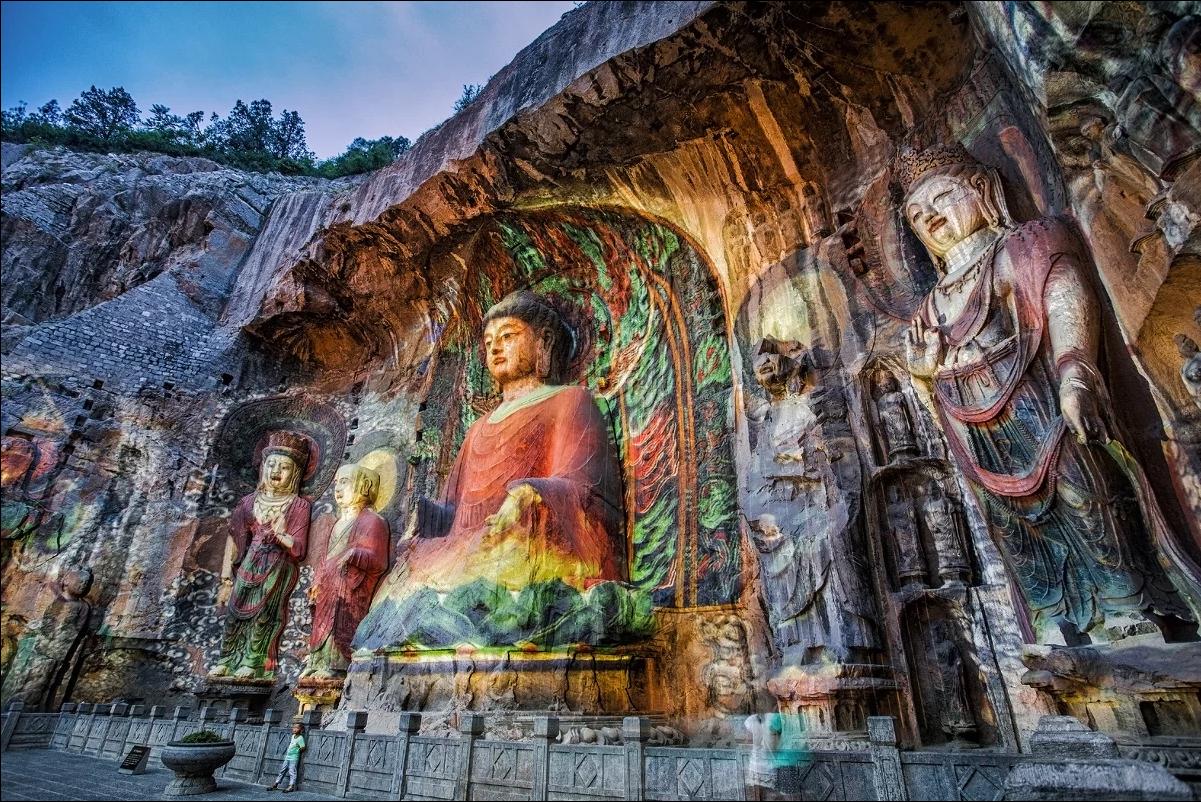
- Northern Wei: Prioritize Buddhist art, imperial patronage, tomb culture, and the early phases of the Longmen Grottoes.
- Sui and Tang: Focus on the planned eastern capital, gates, urban districts, palace-related archaeology, and later Buddhist sculpture at Longmen.
The best reason to use this framework is comparison. If you visit a Northern Wei grotto before looking at objects and maps in a museum, the carving may seem isolated. If you first establish the court, city, and religious setting, you can ask better questions on site: who commissioned it, what visual program survives, and which period is actually visible?
Use an era-to-site method to match ruins, museums, temples, and grottoes with the dynasties that shaped them
The most reliable luo yang research method is to match each historical era with a site category, then verify whether the surviving evidence belongs to the same era as the site’s founding story. This is especially useful for travelers planning routes around historical interpretation. It is less useful for visitors who prefer to choose only by landscape, photography, or accessibility.
| Historical focus | Best site type | What to look for | Key checkpoint | Common mismatch |
|---|---|---|---|---|
| Eastern Zhou capital culture | Archaeological ruins and museum displays | Royal-city evidence, burial material, ritual objects, and excavation interpretation | Confirm that the display explains the Eastern Zhou context rather than presenting a general ancient-history collection | Assuming every “royal” attraction represents the same dynasty |
| Eastern Han to Northern Wei urban sequence | City ruins and archaeological museums | Walls, palace-area interpretation, urban layout, and layered occupation | Check which dynasty is tied to each excavated zone or reconstruction model | Calling the entire site “Han” or “Wei” without recognizing multiple phases |
| Northern Wei Buddhist patronage | Grottoes, tomb-related museums, and sculpture collections | Early cave programs, donor imagery, religious iconography, and imperial connections | Identify whether a carving is assigned to Northern Wei or to a later phase | Treating all Buddhist sculpture as contemporaneous |
| Sui and Tang capital planning | Urban archaeological parks, gate sites, and city museums | City scale, major gates, road alignments, administrative planning, and capital-city interpretation | Verify whether the remains belong to the Sui-Tang city or a nearby later occupation | Confusing a modern park boundary with the original city boundary |
| Temple history across several eras | Temples and museum collections | Foundation tradition, rebuilding history, inscriptions, and surviving architecture | Separate the claimed founding dynasty from the age of the structures you can see | Assuming an ancient foundation means every building is ancient |
Apply the method in order. First, select one primary era. Second, choose one anchor site with direct physical evidence, such as a city ruin or grotto. Third, add a museum that provides maps, objects, or chronological context. Fourth, add a temple only after checking whether it supports your selected era or represents a later layer. This sequence keeps luo yang from becoming a disconnected collection of stops.
Example of a research-stage route
A traveler interested in Northern Wei can begin with a museum collection that explains Buddhist sculpture and the historical setting, continue to Longmen for the carved evidence, and then compare that religious landscape with city-ruin interpretation from the broader Han-Wei and Northern Wei sequence. The conclusion is not that every stop is exclusively Northern Wei. Rather, each stop answers a different question: what the dynasty ruled, how its city developed, and how its Buddhist art was expressed.
A traveler focused on Sui and Tang should instead place urban archaeology first. Start with the Sui-Tang city landscape or gate-related interpretation, then use museum displays to understand the capital’s organization, and finally visit later phases at Longmen as a comparison in religious art. This route fits visitors who want to connect city planning with court culture. It does not fit someone whose main purpose is early Buddhist sculpture, because the strongest visual emphasis will shift away from Northern Wei material.
Research each landmark with a three-part evidence check
Before adding a stop to a luo yang itinerary, test it against three questions: when was the place founded, which period produced the surviving material, and what does the current interpretation emphasize? This is the most effective way to avoid misleading labels. It fits any self-guided cultural traveler. It is unnecessary only when you are joining a specialist-led tour that already provides documented period-by-period interpretation.
- Record the founding association. Note the dynasty or historical period connected with the site’s origin. For a temple, this may be a traditional foundation account rather than the date of the visible halls.
- Identify surviving evidence. Look for excavated foundations, carved surfaces, objects, inscriptions, masonry, or displayed architectural fragments. Give these more weight than a broad attraction label.
- Read the site’s interpretive scope. Determine whether the museum or park presents one dynasty, several successive regimes, or a wider regional history.
- Assign one itinerary role. Label the site as an anchor ruin, context museum, religious monument, or comparative stop. Avoid giving every site the same role.
- Check the route logic. Group sites by historical question, not merely by map proximity. A short journey is useful, but a coherent comparison is more valuable at the research stage.
For example, the archaeological context of a city wall differs from the devotional context of a grotto. Both can belong in the same luo yang itinerary, but they should not be interpreted in the same way. A wall can help explain urban planning and political control. A carved cave can show patronage, iconography, workshop practice, and changing religious priorities.
Prevent the mistakes that flatten several capital eras into one visit
The main risk in luo yang is historical compression: treating all ancient sites as if they belong to one undifferentiated past. The following checks are practical because they reveal where an itinerary has lost chronological precision.
- Mistake: selecting sites only by fame. A famous monument may be essential, but popularity does not tell you which dynasty it best represents. Use it as an anchor only after checking its strongest historical layer.
- Mistake: treating reconstruction as excavation. Reconstructions can clarify scale and layout, but they are interpretive tools. Distinguish reconstructed forms from excavated remains when taking notes or photographs.
- Mistake: using a temple’s founding date as the date of every structure. This fails when a sacred site was rebuilt, repaired, expanded, or reinterpreted across later periods. Look for building-specific information.
- Mistake: assuming one grotto complex belongs to one reign or dynasty. Rock-cut sites often developed over extended periods. Compare individual caves or sculpture groups rather than assigning a single label to the whole complex.
- Mistake: visiting museums last. This can work for casual travel, but it weakens a research-focused itinerary. A museum visit early in the route gives you vocabulary, maps, and visual references for later sites.
- Mistake: overlooking the city itself. A grotto or temple becomes more meaningful when connected to the capital landscape, roads, gates, administrative areas, and burial traditions around it.
The practical conclusion is simple: each stop should answer one historical question. If a site cannot be assigned a question, it may still be enjoyable, but it should not carry the main interpretive weight of your route through luo yang.
Choose a route structure that matches your research goal
A dynasty-based plan should be flexible. Weather, opening arrangements, transport conditions, and personal interests can change the visit order. What should remain stable is the relationship between your chosen era and the type of evidence you expect to see.
| If your main interest is | Make this your anchor | Add this for context | Do not rely on |
|---|---|---|---|
| Early capital and ritual history | Eastern Zhou archaeological interpretation | Collections explaining excavated objects and urban context | Later religious monuments as your only evidence |
| Political transition and city development | Han-Wei city ruins | Maps, models, and museum displays covering successive regimes | A single palace label without phase-by-phase explanation |
| Buddhist art and patronage | Longmen and related sculpture interpretation | Museum material that distinguishes Northern Wei and Tang visual language | General temple visits without checking surviving dates |
| Sui-Tang urban history | City and gate archaeology | Capital-planning interpretation and relevant museum collections | Modern street patterns as direct proof of ancient layout |
For most independent visitors, the strongest luo yang itinerary has one primary dynasty, one comparison period, one archaeological site, one museum, and one religious monument. That structure prevents overload while preserving a clear historical argument. It does not mean you must ignore other eras; it means each additional stop should deepen, challenge, or contrast your main theme.
If you are organizing a cultural itinerary, request route-planning advice based on the dynasty, site type, and level of historical detail you want to prioritize.
