 By
By Tracing the Silk Road Role of Luoyang Henan China Through Routes and Finds
Which evidence actually places Luoyang Henan China on the Silk Road? The question matters for students, researchers, and historically minded visitors. The answer is not a single monument. It is a chain of dated documents, surviving roadbeds, and excavated objects. This guide shows how to separate documented connections from the broad, often inflated claims that circulate online.
Luoyang served as a capital for several dynasties, including the Eastern Han and Northern Wei. That status alone does not make every site in the city a Silk Road landmark. The defensible links come from specific evidence: recorded journeys, physical trade goods, and diplomatic exchanges. We will walk through each category.
Why the Eastern Han Capital Matters for Trade Routes
The Eastern Han court at Luoyang generated records that anchor the city in long-distance exchange. Court chronicles mention missions arriving from the Western Regions. These are not vague references. They name envoys, dates, and goods. The Book of the Later Han preserves many of these entries. A reader can cross-check them against other dynastic histories.
One concrete link is the arrival of Buddhist teachers and texts. The White Horse Temple, traditionally dated to the first century CE, is tied to this exchange. The temple’s founding story involves emissaries sent westward. While the narrative contains legendary elements, the site’s association with early Buddhist transmission is documented in later steles and gazetteers. The key point: the link is institutional and textual, not merely architectural.
What does this mean for a researcher? Start with the textual layer. If a claim about Luoyang’s Silk Road role cannot point to a specific passage in a dynastic history, a dated inscription, or a published excavation report, treat it as unverified. The city’s importance does not need exaggeration. The surviving record is strong enough on its own.
Documented Routes, Finds, and Diplomatic Links vs. Broad Claims
This section is the core filter. It distinguishes what is proven from what is asserted. Many articles state that “Luoyang was the eastern terminus of the Silk Road.” That statement is partly true and partly misleading. The precise formulation is narrower.
Luoyang functioned as a primary eastern capital during periods when the overland routes were active. It was connected to the route network via the Han-period roads and, later, the Sui-Tang canal system. However, Chang’an (modern Xi’an) was the more frequent administrative starting point for westward caravans in several eras. Luoyang’s role was that of a political and consumption center — a destination for goods and missions, not always the logistical origin point.
Here is a checklist to apply to any claim about a specific Luoyang site:
- Does a dated excavation report exist? If the site has not been formally excavated or published, its Silk Road link is speculative.
- Is the object of foreign origin? Glass, metalwork, or coins must be analyzed for composition and manufacturing technique. Local imitations do not prove direct contact.
- Does a written record name the site? A place name in a Tang or Han text is strong evidence. A modern plaque is not.
- Is the timeline consistent? A site from the Shang dynasty cannot be a Silk Road site. The route network in the form usually discussed postdates the second century BCE.
Common failure mode: a museum display labels a local artifact as “Silk Road evidence” because it looks exotic. Without provenance, context, and comparative analysis, that label is meaningless. Another failure: conflating the Grand Canal with the Silk Road. The canal moved grain and taxes internally. It connected to the Silk Road economy but was not itself the overland route.
What the Excavated Finds Actually Show
Tombs and hoards around Luoyang have yielded objects that document exchange. Sasanian silver coins from Persia appear in some contexts. Glass vessels with Western Asian chemical signatures have been recovered. These finds are valuable because they are physical. A coin is a dated, traceable object. A glass bowl can be tested for its raw materials.
But context is everything. A Sasanian coin found in a later tomb might have been an heirloom or a modern intrusion. A glass vessel could have arrived via maritime trade, not overland. The strongest cases combine multiple lines of evidence: a foreign object, in a securely dated context, accompanied by local written records describing similar goods.
For students, the practical step is to request the excavation report. Reputable museums and journals publish these. If a site lacks a report, note that gap. Do not fill it with assumptions.
Diplomatic Records as Evidence
Diplomatic missions are another pillar. The New Book of Tang and earlier histories record embassies from Sogdia, Persia, and other polities. These missions often traveled to the capital. When the capital was Luoyang, the missions went to Luoyang. The records sometimes note the gifts exchanged, the number of envoys, and the route taken.
This is a different kind of evidence from a trade good. A diplomatic mission is a state action. It leaves paperwork. It involves named individuals. For a researcher, these records are gold. They provide exact dates and political context. They also show that “Silk Road” exchange was not only about silk. Horses, glass, metals, and knowledge moved alongside textiles.
How to Compare Luoyang with Other Silk Road Cities
Comparative analysis prevents overclaiming. Luoyang is not Samarkand. It is not Dunhuang. Each city played a different role. Understanding the difference sharpens your research.
| City | Primary Function | Key Evidence Type | Common Overclaim |
|---|---|---|---|
| Luoyang | Political capital, consumption center, Buddhist transmission hub | Dynastic histories, tomb finds, temple steles | Labeling every ancient site as Silk Road |
| Chang’an (Xi’an) | Administrative origin for westward caravans, garrison command | Route maps, official documents, city archaeology | Assuming it was the only eastern terminus |
| Dunhuang | Garrison town, border checkpoint, monastic center | Manuscript cache, cave paintings, military records | Treating all caves as trade-related |
| Samarkand | Sogdian merchant hub, craft production center | Urban excavations, wall paintings, merchant letters | Reducing it to a passive stopover |
The table shows the difference. Luoyang’s evidence is heavily textual and tomb-based. Dunhuang’s is manuscript-based. Samarkand’s is urban and commercial. A comparative approach prevents the mistake of expecting the same kind of evidence from every site.
A Step-by-Step Procedure for Verifying a Luoyang Silk Road Claim
Use this procedure when you encounter a specific claim — in a travel article, a museum label, or a social media post.
- Identify the claim precisely. “Luoyang was a Silk Road city” is too vague. “Luoyang received Sogdian envoys in 631 CE” is testable.
- Find the primary source. For diplomatic claims, check the dynastic histories. For objects, search for excavation reports in journals like Kaogu or Wenwu.
- Check the dating. What is the date range of the site or object? Does it fall within the active Silk Road period (roughly 2nd century BCE to 10th century CE)?
- Assess the context. Where exactly was the object found? In a tomb? A hoard? A workshop? The context changes the interpretation.
- Look for corroboration. Does a second, independent line of evidence support the first? A text plus an object is much stronger than either alone.
- Note the limits. What does this evidence NOT prove? A single foreign coin does not prove a trade route terminus. It proves one object moved.
This procedure takes time. It will also save you from repeating errors. The most common error is step six. People take one data point and build a narrative on it. That is how broad claims spread.
Common Mistakes When Researching Luoyang’s Silk Road History
These errors appear repeatedly in online content. Watch for them in your own work.
- Conflating the Grand Canal with the Silk Road. The canal was an internal transport network. It fed the Silk Road economy but was a separate system.
- Using the term “Silk Road” anachronistically. The term is a 19th-century invention. Ancient people did not use it. That does not invalidate the routes, but it should caution against assuming a single, unified network.
- Treating legend as history. The White Horse Temple’s founding story is important. It is also partly legendary. Distinguish the documented donations and steles from the miraculous elements.
- Ignoring chronological shifts. Luoyang was not always the capital. Its importance waxed and waned. A claim about “Luoyang” in 500 CE is not the same as one about 700 CE.
- Assuming all foreign goods came overland. Maritime routes also reached China. A Roman glass bowl in Luoyang could have arrived by sea to a southern port, then moved north internally.
What This Means for Your Visit or Research Project
If you visit Luoyang, you will see sites labeled as Silk Road heritage. Some labels are accurate. Others are optimistic. The filter above helps you tell them apart. The Longmen Grottoes, for example, are a major Buddhist site. They reflect patronage, art, and international Buddhist networks. Are they “Silk Road”? In the sense of Buddhist transmission along those routes, yes. In the sense of a caravan stop, no.
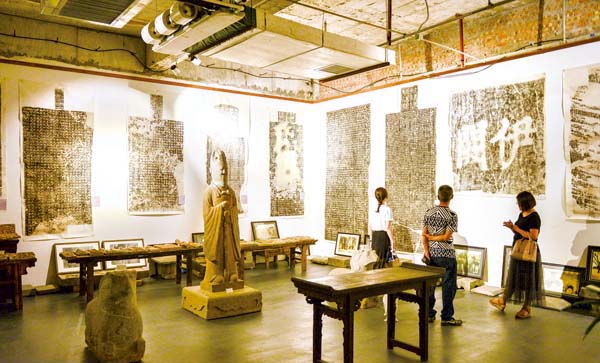
The Luoyang Museum and the Luoyang Ancient Tombs Museum hold the physical evidence. Look for objects with clear foreign origins and dated contexts. Ask staff for published reports. A good museum will point you to them. A weak one will repeat the same vague phrases.
The broader point is methodological. Luoyang Henan China deserves a precise, evidence-based place in Silk Road history. That place is significant. It does not require inflating every site into a Silk Road landmark. Precision is more persuasive than enthusiasm.
If you are preparing a research paper, a curriculum unit, or a travel itinerary focused on verifiable Silk Road heritage, start with the textual and archaeological record. Build your narrative from dated evidence. If you need help locating specific excavation reports or primary source passages for Luoyang Henan China, ask a specialist librarian or send a query to a university East Asian studies department.