
Blog
Understanding Luoyang and Its Shifting Imperial Significance

Understanding Luoyang and Its Shifting Imperial Significance
For anyone studying the grand narrative of imperial China, a recurring point of confusion arises with the city of Luoyang. Why is it sometimes referred to as an “eastern capital” and at other times simply the primary capital? This distinction is not merely semantic; it reflects fundamental shifts in political power, economic gravity, and military strategy across successive dynasties. Understanding this changing role is crucial for accurately assessing the city’s immense historical importance relative to its perennial rival, Chang’an (modern Xi’an).
The designation of “eastern” or “western” for a capital was always relative to another major political center. When a dynasty’s primary seat of power was in the west (like Chang’an), Luoyang functioned as the secondary, eastern capital. Conversely, when the imperial court moved to Luoyang, it became the dynasty’s principal center of governance. This article clarifies these shifts, providing a framework for analyzing the city’s dynamic status through China’s long history.
Luoyang as Eastern vs. Western Capital: A Dynastic Comparison
The role of Luoyang was not static. Its status as a primary or secondary capital, and its designation as “eastern” or “western,” directly mirrored the geopolitical realities of each era. A period-by-period analysis reveals a clear pattern of movement and strategic repositioning between the Wei River Valley (home to Chang’an/Xi’an) and the Central Plains (home to Luoyang).
This dynamic is best understood through a direct comparison of key dynasties that utilized the city as a center of power. The following table breaks down Luoyang’s changing role, the rationale behind its status, and the key developments during each period.
| Period / Dynasty | Capital Status & Designation | Geopolitical Rationale | Key Developments & Legacy |
|---|---|---|---|
| Western Han (206 BCE – 9 CE) | Secondary Capital (Eastern) | The primary capital was at Chang’an in the west, a more defensible position. Luoyang served as the economic and logistical hub for the eastern part of the empire. | Major grain depots were established. The city became a center for scholarship and a crucial link between the political center and the fertile eastern plains. |
| Eastern Han (25–220 CE) | Primary Capital | After a period of civil war, Emperor Guangwu moved the capital from the ruins of Chang’an to Luoyang, which was economically stronger and closer to his power base. | Luoyang became one of the largest cities in the world. It was a major terminus of the Silk Road, saw the official introduction of Buddhism to China, and was home to the first imperial university. |
| Western Jin (266–316 CE) | Primary Capital | The Jin dynasty, after unifying the Three Kingdoms, established its capital in the prosperous and culturally significant city of Luoyang. | A period of immense wealth and cultural flourishing, known for its aristocratic luxury. The city was later sacked, marking a major turning point in Chinese history. |
| Northern Wei (386–534 CE) | Primary Capital (from 493 CE) | Emperor Xiaowen moved the capital from Pingcheng (modern Datong) to Luoyang to better administer the Chinese heartland and promote the Sinicization of his Xianbei people. | Massive construction projects reshaped the city. The nearby Longmen Grottoes were extensively carved, becoming a pinnacle of Buddhist art. The city’s layout became a model for later capitals. |
Key Factors Driving Luoyang’s Capital Status
A city does not become an imperial capital by accident. Luoyang’s repeated selection was the result of a powerful combination of geographic, economic, and strategic advantages. For researchers or business analysts evaluating historical trade and urban development, understanding these core drivers is essential to grasp the city’s enduring power.

Core Strategic Advantages
- Centrality and Control: Located on the Central Plains, Luoyang was often described as being at the “center of the world.” From here, an emperor could effectively command the most populous and fertile regions of the empire, easily dispatching troops and officials in all directions.
- Economic Powerhouse: The city sits at the confluence of several rivers, including the Luo and Yi, and is near the Yellow River. This made it a natural hub for grain transport via the canal system, connecting the agricultural heartlands with the political center. This logistical advantage was a critical factor, especially for the Eastern Han dynasty.
- Defensible Position: While not as formidably fortified by mountains as Chang’an, Luoyang was protected by surrounding hills and rivers, including the strategic Hangu Pass to the west. It offered a balance between defensibility and accessibility that was often preferable to the isolation of Chang’an.
Common Mistakes in Evaluating Ancient Capitals
When analyzing the historical significance of a city like Luoyang, it is easy to fall into common analytical traps. Avoiding these ensures a more accurate assessment of its role.
- Mistake 1: Underestimating Waterways. Viewing a map today, one might overlook the importance of rivers and canals. In pre-industrial China, water transport was the most efficient way to move bulk goods, especially grain for the capital’s massive population and armies. Luoyang’s position on this network was a primary asset.
- Mistake 2: Ignoring the Political Context. A capital’s location is often a political statement. The Northern Wei’s move to Luoyang was a deliberate policy of cultural integration. The Eastern Han’s choice was a rejection of the old western-based aristocracy and an embrace of the eastern clans that supported the new emperor.
- Mistake 3: Static Geographical Analysis. The “best” location for a capital changed over time. Early dynasties prioritized the military defensibility of the Wei River Valley (Chang’an). Later, as the economic center of gravity shifted east, the logistical advantages of the Central Plains (Luoyang) became paramount.
A Researcher’s Checklist for Site Prioritization
For those planning a field study or historical tour of Luoyang, the sheer number of dynastic layers can be overwhelming. A structured approach is necessary to maximize insights. This checklist helps prioritize sites based on their relevance to Luoyang’s function as an imperial capital.
| Decision Point | Key Criterion | Recommended Action & Rationale |
|---|---|---|
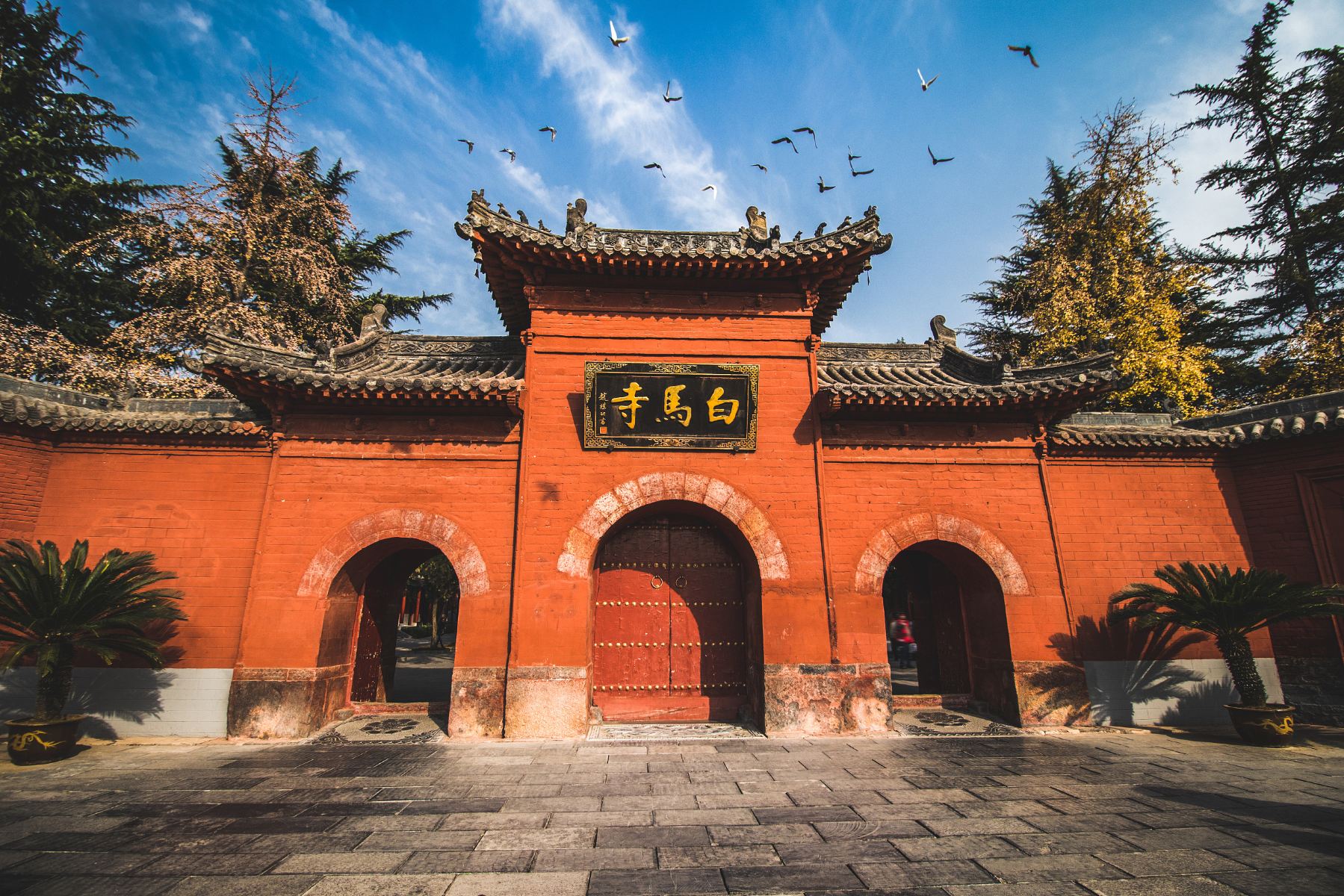
| Primary Research Goal | Are you focused on Buddhism’s influence or urban planning? | For Buddhism: Prioritize the Longmen Grottoes and the White Horse Temple. These sites directly reflect Luoyang’s role as a religious center. For Urban Planning: Focus on the Museum of the Han-Wei Luoyang Capital City to understand the grid layout that influenced later East Asian cities. |
| Time Allocation | How many days are available? | 1-2 Days: Focus on the Longmen Grottoes and the Luoyang Museum. This provides the best overview of artistic achievement and general history. 3+ Days: Add the Han-Wei capital ruins and the Luoyang Eastern Zhou Royal Horse and Chariot Museum for deeper dynastic context. |
| Logistical Scope | Are you limited to the city center or can you travel to surrounding areas? | City Center: The Luoyang Museum and parts of the old town are easily accessible. Wider Region: The Longmen Grottoes and the Han-Wei ruins are outside the modern city center and require dedicated transport. Plan these as half-day trips. |
| Comparative Analysis | Are you comparing Luoyang with other capitals like Xi’an? | Focus on sites that highlight Luoyang’s unique strengths, such as its river-based logistics (visit old canal sites if possible) and its role as a melting pot of cultures (evidenced in Northern Wei-era art). |
The city’s legacy is not just one of imperial grandeur but of resilience and adaptability. Its fluctuating status offers a compelling case study in how political, economic, and cultural forces shape the destiny of a great urban center. By understanding why and when Luoyang rose to prominence, we gain a clearer picture of the mechanics of power in ancient China.
For more detailed analysis of historical trade routes and their modern-day relevance, our team is available for consultation.
