 By
By What the 68 AD Date at White Horse Temple Really Means
Does the 68 AD date mean that the buildings at White Horse Temple have stood unchanged since the first century? No. That is the central point to understand before visiting this historic site in Luoyang. The date refers to a traditional foundation story connected with the arrival and establishment of Buddhism in China, rather than a claim that every visible structure dates from that year.
The horse temple is widely presented as China’s first Buddhist temple. Its traditional founding date is 68 AD, during the Eastern Han dynasty. For culture-focused travelers, the useful approach is to treat that date as the beginning of the temple’s religious and historical identity, then examine the present complex as a layered place shaped by rebuilding, restoration, inscriptions, changing patronage, and modern conservation.
What does the 68 AD date actually claim?
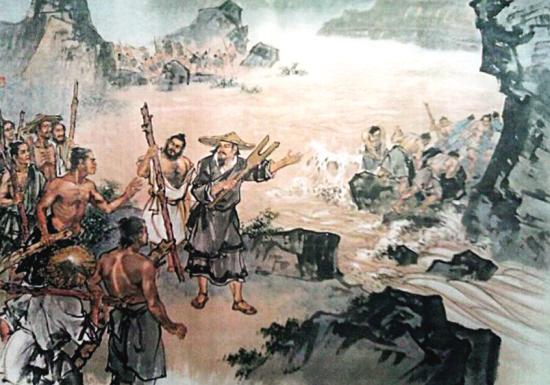
The traditional 68 AD date claims that the site was established as an early Buddhist institution under the Han imperial court. It is associated with a well-known account in which Emperor Ming of Han sought Buddhist teachings from the west after a dream or vision, then welcomed Buddhist monks and scriptures to the capital region.
According to the traditional story, sacred texts and images arrived carried by white horses. The temple’s name commemorates those animals. This is why the horse temple matters far beyond its architecture: it is a symbolic starting point in the history of Buddhism’s transmission into China.
Does 68 AD prove that the current temple was built in 68 AD?
No. A foundation date and the age of surviving fabric are different historical questions. The 68 AD tradition concerns the establishment of an institution and the meaning attached to a location. It does not automatically date the halls, gateways, steles, courtyards, statues, or decorative details seen by visitors today.
This distinction applies to many ancient religious sites. Temples remain active for centuries because communities repair them, rulers fund reconstruction, buildings burn or decay, and later generations alter layouts to suit new religious, political, or practical needs. The horse temple should be read in this same way: as an old institution with a much more complex physical history.
How certain is the founding story?
The story is historically important, but it should be described carefully. Early accounts of Buddhism’s introduction into China were recorded and shaped over time. They combine court history, religious tradition, memory, and later interpretation. Scholars may debate details such as the exact sequence of events, the identities of individuals involved, and how literally the account should be read.
The most reliable visitor conclusion is not that every detail is proven beyond question. Rather, the story shows how Chinese Buddhist communities understood the beginning of their tradition and why this site became a major destination for pilgrimage, historical study, and cultural tourism.
- Reasonable conclusion: 68 AD is the traditional date for the temple’s establishment.
- Why it matters: It connects the site to early narratives of Buddhism entering China.
- Best fit for: Visitors researching religious history, cultural memory, and the temple’s symbolic status.
- Limit: It should not be treated as a construction date for every surviving building.
Where is the boundary between the 68 AD foundation and later surviving evidence?
This is the key distinction for interpreting the horse temple. The traditional foundation date belongs to institutional history. Surviving halls, inscriptions, statues, and reconstructed features belong to the material history of the site. They may preserve older plans, names, practices, and artistic themes, but they are not necessarily physically original to the first-century foundation.
| What a visitor encounters | What it can tell you | What it cannot prove by itself |
|---|---|---|
| Traditional 68 AD foundation date | The site’s claimed origin and its role in Buddhist historical memory | That visible buildings survive from 68 AD |
| Later temple halls and gates | How the complex was rebuilt and used in subsequent periods | The exact design of the original Han-era temple |
| Stone inscriptions and steles | How later donors, officials, monks, and visitors described the temple | That the inscription’s date is the date of the temple’s founding |
| Reconstructed or restored features | Modern efforts to interpret, preserve, or present the site | That the feature is untouched ancient fabric |
| Later statues and decorative programs | Changing Buddhist art, devotional priorities, and temple patronage | A direct visual record of first-century Buddhist practice |
The practical lesson is simple. When a label, guide, or travel article calls the horse temple “founded in 68 AD,” read it as a statement about origin and continuity. When evaluating a particular hall or monument, look for a separate date identifying its construction, restoration, inscription, or relocation.
This boundary matters because visitors often make one of two opposite mistakes. Some assume the entire site is original to the Han period. Others dismiss it as “not ancient” because later rebuilding occurred. Both views miss the point. A continually rebuilt temple can still be an exceptionally important historic place because its identity, location, religious function, and accumulated record of patronage have endured.
How should travelers read buildings, inscriptions, and reconstructions on site?
A useful visit to the horse temple requires looking at each object on its own terms. Do not ask only, “Is it original?” Ask a more precise question: “Original to which period, and what does that period reveal?” A later inscription may offer valuable evidence about a donor or restoration. A rebuilt hall may show how a religious institution preserved its identity after damage or decline.
Use this four-step reading method
- Identify the object. Determine whether you are looking at a hall, pagoda, statue, stele, gate, courtyard feature, or modern interpretive installation.
- Find its stated date. Read plaques and museum-style labels carefully. Look for whether the wording says “founded,” “rebuilt,” “restored,” “inscribed,” or “reconstructed.” These terms are not interchangeable.
- Separate function from fabric. A hall can preserve an old religious function while its timber, roof, and decoration belong to a later rebuilding phase.
- Compare the claim with the evidence. If a presentation links an object to 68 AD, determine whether it means direct survival, a traditional association, or a modern commemoration.
This method fits travelers who want more than a quick photo stop. It is especially useful for readers comparing the horse temple with other long-lived sacred sites in China, where continuity often depends on repair and reconstruction rather than uninterrupted survival of the same materials.
Its limit is equally clear: site signage may summarize complicated scholarship, and a short visit cannot settle every debate. If a precise architectural date matters for academic work, consulting specialist publications, catalogues, or archaeological reports is more appropriate than relying solely on a guidebook description.
Why do later reconstructions not erase the temple’s significance?
Later rebuilding does not cancel the importance of the horse temple. Religious places are not frozen artifacts. They are institutions maintained by communities. Their physical changes often document changing beliefs, political support, artistic styles, economic conditions, and preservation priorities.
Consider a simple scenario. A visitor sees a hall associated with the early transmission of Buddhism and assumes that its beams, roof tiles, and interior arrangement must date to the Han dynasty. A more accurate interpretation would be: the hall stands within a temple founded in traditional memory in 68 AD; the present structure may be from a later rebuilding phase; and its continued placement or function may preserve the importance of the earlier sacred site.
That second interpretation is more useful because it avoids a false choice between “completely original” and “historically meaningless.” The horse temple is significant precisely because it contains multiple layers of time.
- Institutional continuity: The site remained associated with an early Buddhist foundation narrative.
- Material continuity: Later structures can preserve a long record of maintenance and religious use.
- Interpretive continuity: Inscriptions and commemorative features show how later generations understood the temple.
- Modern continuity: Restoration and visitor interpretation demonstrate that the site still carries cultural importance.
However, reconstruction has limits. A reconstructed feature should not be described as an excavated Han-era building unless evidence specifically supports that claim. Travelers should distinguish between a historical site, an old surviving monument within that site, and a modern representation of an earlier form.
What questions should you ask before and during a visit?
Travelers researching the horse temple can avoid confusion by using a short evidence checklist. This is particularly helpful when online travel pages repeat the 68 AD date without explaining what it refers to.
| Question to ask | Why it helps | What a careful answer looks like |
|---|---|---|
| Is this date a foundation date or a construction date? | It prevents the most common misunderstanding. | “The institution was traditionally founded in 68 AD; the visible structure is later.” |
| What period does this building or inscription belong to? | It places each feature in its own historical context. | A specific period is identified, or the label states that the dating is uncertain. |
| Has this feature been rebuilt or restored? | It clarifies whether you are seeing preserved fabric or a later intervention. | The explanation distinguishes restoration from complete reconstruction. |
| What evidence supports the claim? | It separates tradition, documentation, archaeology, and modern interpretation. | The source identifies whether it relies on texts, inscriptions, excavations, or later records. |
For general orientation, the horse temple is best understood as a historical institution with a traditional first-century origin and a physical landscape shaped over many later periods. That framing is both respectful and accurate. It recognizes the power of the founding narrative without turning it into an unsupported claim about every visible object.
What is the most accurate one-sentence explanation?
The most accurate short explanation is this: White Horse Temple was traditionally founded in 68 AD and is closely associated with the early transmission of Buddhism into China, while the buildings, inscriptions, and reconstructed elements visible today represent later layers of the site’s long history.
Use that wording when planning a visit, discussing the horse temple, or comparing sources. It preserves the traditional claim, states its meaning clearly, and avoids confusing institutional age with the age of surviving architecture.
For a deeper visit, ask a qualified local guide or museum interpreter to identify the date and restoration history of the specific structures that interest you most.