
 By
By Which Hangu Pass Site Is in Xin’an?
The question seems simple, but the answer trips up many travelers. You search for “hangu pass” on a map and see multiple pins scattered across Henan and Shaanxi provinces. If you are planning a visit to the site in Xin’an County, you need to know exactly which archaeological location you are looking for. The surviving ruins in Xin’an belong to the Han dynasty Hangu Pass, not the older Qin dynasty fortification. This distinction matters for navigation and for understanding what you are actually seeing on the ground.
This guide explains the specific site in Xin’an, why the name causes so much confusion, and how to approach a visit with clear expectations.
The Correct Site: Han Hangu Pass in Xin’an County
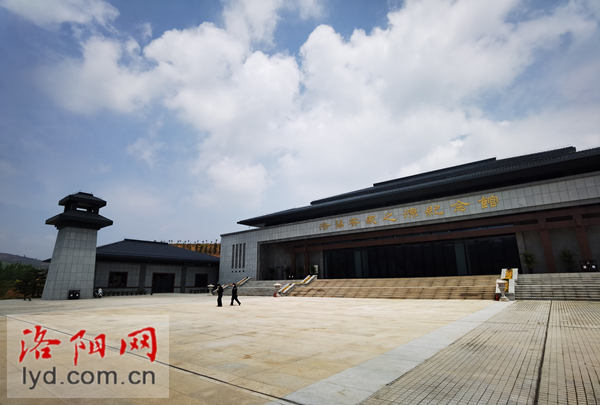
The archaeological remains located within modern Xin’an County belong to the Hangu Pass built during the reign of Emperor Wu of the Han dynasty. The site sits near the present-day village of Dongguan, roughly 10 kilometers east of Xin’an county seat in Luoyang, Henan Province. When you see references to the “Xin’an Hangu Pass” or the “Han Hangu Pass,” this is the location being discussed.
Visitors arriving at the site will find the remnants of a pass complex that once controlled movement along the ancient road connecting the Central Plains with the Guanzhong region to the west. The surviving features include sections of rammed-earth walls, gate foundations, and a distinctive layout that reflects Han-era military architecture. The site is managed as a cultural heritage area, and interpretive signage helps visitors understand the scale of the original fortification.
The Han pass served a different strategic purpose than its Qin predecessor. While the Qin pass guarded the narrowest choke point in the mountains, the Han pass was positioned further east to control a broader approach. This shift in location is one of the key reasons multiple sites now share the Hangu Pass name.
Why Multiple Sites Are Called Hangu Pass
The confusion surrounding the hangu pass name is not a modern problem. It stems from genuine historical changes in where the pass was built and how the name was reused over centuries. Understanding this history clears up most of the location errors travelers make.
The Qin Hangu Pass vs. The Han Hangu Pass
The original Hangu Pass was constructed during the Warring States period by the state of Qin and later became a critical defensive point for the Qin dynasty. That earlier pass sat further west, in what is now Lingbao County, Henan Province. The Qin site occupied a narrow gorge where steep loess cliffs pinched the road into a tight corridor. It was, in effect, a natural gate.
When the Han dynasty rose to power, the strategic needs changed. Emperor Wu ordered the construction of a new pass at a different location to better control the movement of people and goods along the expanded road network. This new fortification was placed in the area now belonging to Xin’an County. The Han rulers kept the prestigious name “Hangu Pass” even though the physical location had shifted.
Today, both sites are protected heritage locations. The Qin-era pass is often called the “Qin Hangu Pass” or “Old Hangu Pass,” while the Xin’an site is called the “Han Hangu Pass.” Many maps and travel guides fail to make this distinction clearly, leading visitors to the wrong location.
Other Locations Using the Name
Beyond the Qin and Han passes, the name appears in other contexts that add to the confusion. Some historical texts refer to a “Hangu Pass” during the Wei and Jin dynasties, which may have been a restored or relocated version of the Han structure. Local tourism signage in several counties uses the name to promote scenic areas, even when those areas do not contain the primary archaeological ruins.
A visitor searching for “hangu pass” without specifying the dynasty or county may end up at:
- Qin Hangu Pass in Lingbao County: The older Warring States and Qin dynasty site, located in a narrow gorge setting.
- Han Hangu Pass in Xin’an County: The Han dynasty reconstruction, located on a broader plain east of the Qin site.
- Modern scenic areas or parks: Some locations use the name for tourism branding without containing substantial archaeological remains.
This multiplicity is not a case of one site being “fake” and another “real.” Each location reflects a different period in the long use of the Hangu Pass name. But for a visitor wanting to see the Xin’an archaeological site, the distinction is essential.
How to Verify You Are Going to the Right Site
Before you set out, take a few practical steps to confirm the location. These checks prevent wasted trips and ensure you see the site you intended to visit.
- Check the county name in the address. The Xin’an site is in Xin’an County, Luoyang, Henan. If the address says Lingbao, Sanmenxia, or anywhere in Shaanxi, you are looking at a different site.
- Look for the dynasty label. Reliable sources will specify “Han Hangu Pass” or “Han dynasty Hangu Pass” for the Xin’an location. If the source only says “Hangu Pass” without a dynasty, dig deeper.
- Use Chinese place names when navigating locally. The Xin’an site is often labeled as 汉函谷关 (Han Hangu Pass) in Chinese. The Qin site is 秦函谷关 (Qin Hangu Pass). Showing a driver or guide the Chinese characters removes ambiguity.
- Check the distance from Luoyang. The Xin’an site is roughly 30–40 kilometers west of central Luoyang. The Qin site in Lingbao is significantly further west, around 100 kilometers from Luoyang.
- Look for the Dongguan village reference. The Han pass ruins are near Dongguan village in Xin’an. This local landmark confirms you are in the right area.
Visitor Considerations for the Xin’an Site
The Han Hangu Pass site in Xin’an offers a different experience from a fully restored tourist attraction. It is an archaeological site with visible ruins rather than a reconstructed fortress. Knowing what to expect helps you plan appropriately.
The site is relatively compact. Most visitors spend one to two hours walking the remains and reading the interpretive materials. The rammed-earth walls are the most prominent features, showing the construction technique used in Han military architecture. Some sections have been stabilized to prevent further erosion, but the overall presentation remains archaeological rather than theatrical.
Access is straightforward by road from Luoyang. Public transportation options are limited, so most visitors arrive by private car or hired vehicle. There is no major visitor center, so bringing water and sun protection is advisable during warmer months. The site’s simplicity is part of its appeal for history-focused travelers who prefer authentic remains over elaborate reconstructions.
Comparison: Qin Site vs. Han Site
| Feature | Qin Hangu Pass (Lingbao) | Han Hangu Pass (Xin’an) |
|---|---|---|
| Dynasty | Warring States / Qin | Han (Emperor Wu) |
| Location | Lingbao County, Sanmenxia | Xin’an County, Luoyang |
| Terrain | Narrow gorge, steep cliffs | Broader plain, open approach |
| Distance from Luoyang | ~100 km west | ~30–40 km west |
| Site character | Dramatic natural setting | Archaeological ruins on flat land |
| Best for | Scenery and strategic context | Han dynasty history and archaeology |
Historical Context: Why the Pass Moved
The relocation of Hangu Pass from Lingbao to Xin’an was not a random decision. It reflected a fundamental shift in how the Han dynasty governed its territory. The Qin pass had been designed for a state that viewed the Guanzhong plain as its core and the eastern regions as potential threats. The narrow gorge at Lingbao was a hard defensive line.
The Han dynasty, after unifying the empire, faced different challenges. The threat was no longer an invading army from the east but the need to control trade, migration, and taxation across a vast territory. A pass positioned on a broader plain allowed for more systematic inspection of travelers and goods. It also connected more directly to the road network leading to the new Han capital at Chang’an.
Emperor Wu’s reign was marked by territorial expansion and administrative reform. Moving the Hangu Pass was one piece of that larger project. The new pass at Xin’an served as a customs and control point more than a purely military fortification. This functional shift is visible in the archaeological record, where the Han site shows more emphasis on gate structures and administrative spaces than on defensive walls alone.
Common Mistakes When Searching for the Xin’an Site
Travelers repeatedly make the same errors when trying to locate the Han Hangu Pass in Xin’an. Here are the most frequent mistakes and how to avoid them.
- Searching only in English. English-language maps and guides often merge the Qin and Han sites into a single pin. Searching in Chinese (汉函谷关) returns accurate results.
- Assuming there is only one Hangu Pass. The name was used for multiple sites over centuries. Always confirm the dynasty and county.
- Following tourism signage without checking the location. Some scenic areas use the Hangu Pass name for marketing. Verify the county before driving.
- Expecting a fully restored fortress. The Xin’an site is an archaeological ruin, not a theme park. Visitors expecting reconstructed gates and walls may be disappointed.
- Confusing Xin’an with Xi’an. Xin’an is a county in Henan. Xi’an is the capital of Shaanxi Province. The similar spelling causes real navigation errors.
Is the Xin’an Site Worth Visiting?
For travelers interested in Han dynasty history and archaeology, the Xin’an Hangu Pass site is a worthwhile stop. It offers something that reconstructed attractions cannot: direct contact with the material remains of a critical Han infrastructure project. The lack of heavy tourism infrastructure means you can walk the site at your own pace and observe the construction details without crowds.
The site is less rewarding for travelers seeking dramatic scenery or a visually spectacular landmark. The Qin pass at Lingbao, with its narrow gorge and steep cliffs, delivers a more striking landscape. If your interest is primarily photographic or scenic, the Qin site may be a better fit. If your interest is the Han dynasty specifically, or if you are already traveling in the Luoyang area, the Xin’an site is a logical and convenient addition to your itinerary.
The two sites are not interchangeable substitutes. They represent different periods, different functions, and different historical questions. Visiting both, if time allows, provides a fuller picture of how the pass system evolved from the Warring States through the Han dynasty.
Practical Tips for Your Visit
Before you go, consider these practical points to make the visit smoother.
- Best time to visit: Spring and autumn offer comfortable temperatures. Summer is hot on the open plain, and winter can be cold and windy.
- Transportation: A private car or hired driver is the most reliable option. If using public transit, check local bus routes from Luoyang to Xin’an and then arrange a short taxi ride to the site.
- Time needed: One to two hours is sufficient for most visitors. Combine the visit with other Xin’an or Luoyang attractions for a full day.
- Facilities: Do not expect extensive visitor services. Bring water, snacks, and sun protection. Restrooms may be basic or absent.
- Guides: Local guides are not always available on site. Reading about the Han pass before your visit will significantly improve your understanding of what you are seeing.
The question “which hangu pass site is in Xin’an” has a clear answer: the Han dynasty Hangu Pass, built under Emperor Wu, located near Dongguan village in Xin’an County, Henan. But that answer only becomes useful when you understand why the question exists in the first place. The name Hangu Pass belonged to multiple sites across multiple dynasties, and the Xin’an location is just one chapter in that long history.
If you are planning a visit to the Xin’an Hangu Pass site and want current access information or help coordinating with other historical sites in the Luoyang area, contact us with your travel dates and interests. We can help you confirm the correct location and plan a route that matches your historical focus.