 By
By White Horse Temple China: The Story of Buddhism’s First Temple
White Horse Temple in China isn’t just a relic. It’s the root of a spiritual transformation that reshaped an empire. Founded in 68 AD just outside Luoyang, this is the place where Buddhist scriptures first entered the Middle Kingdom on the backs of two white horses. What began as a guesthouse for foreign monks became the blueprint for every Chinese temple that followed.
The Vision That Sparked a Spiritual Revolution
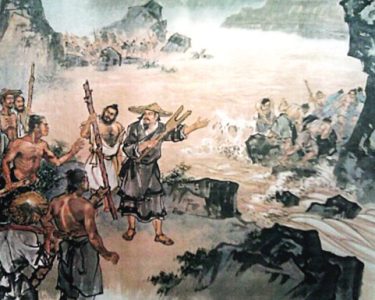
Emperor Ming of the Eastern Han Dynasty had a dream in 64 AD that wouldn’t let go. A radiant golden man with a halo hovered above his palace. His advisors interpreted the vision as the Buddha—a sage from the West. Curiosity turned to action. He dispatched envoys, including Cai Yin and Qin Jing, to the Western Regions to search for this wisdom.
The delegation reached what is now Afghanistan and met two Indian monks: Kasyapa Matanga and Dharmaratna. They were carrying Buddhist scriptures and an image of the Buddha. The envoys invited them back. In 68 AD, they arrived in Luoyang—the Eastern Han capital—accompanied by two white horses loaded with precious texts. The emperor ordered a monastery built for them, naming it White Horse Temple.
The Legend of the White Horse
Why white horses? The animal was a symbol of purity, strength, and long journeys. In Chinese lore, white horses often carried sacred objects across dangerous terrain. Tang dynasty records claim the temple’s name commemorates the loyal horses that died from exhaustion upon arrival. Whether fact or embellished history, the imagery stuck. Two stone horses now stand before the temple gate, silent guardians of that legendary first trip.
When Was White Horse Temple Built?
The accepted founding year is 68 AD. That date makes White Horse Temple the oldest Buddhist temple in China—and by some accounts, the oldest continuously operating Buddhist monastery in the world. Most of the visible wooden halls date from the Ming and Qing dynasties, but the core layout still reflects the original Han dynasty footprint. Excavations revealed rammed earth foundations from the Eastern Han period beneath later pavilions, confirming the layers of history beneath your feet.
White Horse Temple History: A Journey Through Dynasties
From the moment its red walls went up, the temple became a crucible for Buddhist thought. Emperor Ming’s patronage gave it political protection, but the real engine was translation. Kasyapa Matanga and Dharmaratna worked on the Qingliang Terrace—a cool, elevated platform inside the compound—to render the “Sutra of Forty-two Chapters” into Chinese. That book, a collection of the Buddha’s core teachings, is the first Buddhist scripture ever translated into Chinese.
Tang Dynasty Golden Age
By the seventh century, White Horse Temple had grown into a sprawling campus. Monks from India, Central Asia, and Korea flocked there. It wasn’t just a temple; it was a university of Buddhist philosophy. The famous pilgrim Xuanzang—who later inspired Journey to the West—visited before his epic journey to India. The temple’s library swelled with Sanskrit palm-leaf manuscripts. At its peak, over a thousand monks lived and studied within the compound.
Decline and Repeated Revival
War wasn’t kind. During the An Lushan Rebellion in the eighth century, fires gutted large sections. Later dynasties saw cycles of neglect and restoration. The Jin, Yuan, and Ming each left their architectural fingerprints. In the twentieth century, the Cultural Revolution dealt another blow; statues were smashed and priceless texts burned. Yet the temple endured. A massive reconstruction effort in the 1970s restored much of the lost grandeur. Today, international donations—especially from Thailand, Myanmar, and India—have added new halls, making the site a unique pan-Asian Buddhist landscape within one compound.
How White Horse Temple Shaped Buddhism in China
Before White Horse Temple, Buddhism was a foreign curiosity whispered along Silk Road trade routes. After, it became native. The translation work that began on the Qingliang Terrace set the template for how Chinese scholars would absorb Indian thought. They didn’t just copy; they adapted. Concepts like karma and rebirth were given Chinese names and linked to local philosophies like Daoism. This cultural fusion happened first within these walls.
The temple also housed China’s first ordination platform. The first Chinese monk, Zhu Shixing, received his vows here before setting off to bring back the Prajnaparamita sutras. The ritual patterns developed at White Horse Temple—chanting, prostration, incense offerings—spread to every corner of the empire. Buddhism in China would have looked radically different without this incubator in Luoyang.
Luoyang Buddhist Heritage: More Than a Single Temple
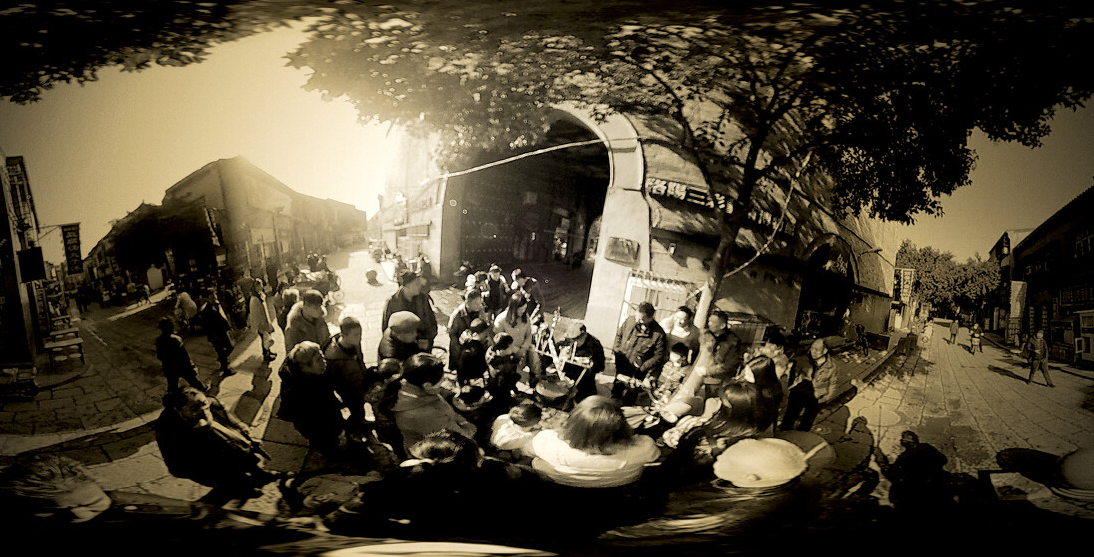
White Horse Temple isn’t an isolated landmark. It’s the anchor of a much broader Luoyang Buddhist heritage. The city was one of the four great ancient capitals, and its religious landscape is dense. Just south of the city, the Longmen Grottoes house over 100,000 Buddha statues carved into limestone cliffs—a direct descendant of the devotional fervor that White Horse Temple ignited. The Baima Temple complex also inspired the architectural layout of later imperial monasteries like Shaolin, which lies a half-day’s journey away.
Luoyang’s soil still yields broken votive stupas and fragments of early sutras. Archaeology in the last decade uncovered a seventh-century Sanskrit-inscribed stone pillar inside the temple grounds, linking it directly to the India-China knowledge corridor. When you study White Horse Temple, you’re essentially pulling the thread that unravels the entire story of Buddhism in northern China.
Chinese Temple History Embedded in Architecture
Walk through the temple today, and you’ll see a living textbook of Chinese temple history. The original Han design was simple: a central courtyard with a pagoda to venerate relics, surrounded by monks’ quarters. Over centuries, that model evolved. The Hall of Heavenly Kings—the first building you encounter after the entrance—features Ming statues of the Four Heavenly Kings, each standing on a vanquished demon. The Mahavira Hall behind it houses a gilded triad of Sakyamuni, Manjusri, and Samantabhadra. These are Qing-era masterpieces.
Interestingly, Indian and Southeast Asian architectural styles have crept back in. A Thai-style hall with a soaring white spire, donated by the Thai government, rises to the west of the original nucleus. A Myanmar-style golden pagoda glints in the sun nearby. The result is a cross-dialogue of Buddhist architectural forms spanning two thousand years—all on the single site where Chinese temple architecture first took root.
Why Is White Horse Temple Important in China?
The simplest answer: it’s the beginning. Not just chronologically, but conceptually. Every Buddhist institution in China traces its lineage back to this one monastery. The ordination ceremonies, the sutra-chanting liturgies, the relationship between monk and state—all were prototyped here. When modern Chinese leaders host visiting Buddhist dignitaries, they often choose White Horse Temple as the symbolic venue. In 2015, Indian Prime Minister Narendra Modi visited, underlining its role as a living bridge between two ancient civilizations.
Beyond symbolism, the temple still functions as a practicing monastery. Monks rise at 4 a.m. for morning chanting, just as they have for centuries. The Qingliang Terrace still holds accumulated incense ash from daily devotions. It’s not a museum frozen in time; it’s a beating heart. For a nation that has seen belief systems come and go, White Horse Temple China remains a quiet, resilient anchor of spiritual continuity.
Frequently Asked Questions
What is the history of Buddhism at White Horse Temple?
Buddhism arrived at White Horse Temple in 68 AD when two Indian monks, Kasyapa Matanga and Dharmaratna, brought scriptures to Luoyang. They translated the first Chinese Buddhist text, the “Sutra of Forty-two Chapters,” on site. Over the next centuries, the temple became the main translation center, ordination ground, and philosophical hub for the new faith. Its lineage of abbots and resident scholars directly shaped the development of Chinese Buddhist schools like Tiantai and Huayan.
When was White Horse Temple built?
Construction began in 68 AD under Emperor Ming of the Eastern Han Dynasty, immediately after the monks’ arrival. The core monastery was likely completed within the year. While wars and fires have necessitated many rebuilds—most extant halls are Ming and Qing restorations—the date of founding is unequivocally placed in the first century CE, making it 1,900-plus years old.
Why is White Horse Temple important in China?
It is the first Buddhist temple ever built in China. All subsequent Buddhist architecture, ritual, and monastic codes flowed from its example. Politically, it cemented state support for a foreign religion that would become one of China’s three great traditions alongside Confucianism and Daoism. It remains a potent symbol of Sino-Indian cultural exchange and holds active lay and monastic communities to this day.
The thread of faith spun at White Horse Temple China weaves through every Chinese dynasty since the Han. From the first translated sutra to the global pilgrimages of the twenty-first century, the temple persists as proof that ideas can travel farther than empires—and last much longer. If you are sourcing cultural products tied to this deep heritage, our team at Guangzhou SanYuan Foods curates authentic Chinese artifacts, teas, and ceremonial wares that echo the craftsmanship and spirituality born in places like Luoyang. Discover our range today—each piece carries a story centuries in the making.