 By
By White Horse Temple and the Founding Narrative of the Oldest Temple in China
How did a foreign faith gain a permanent institutional foothold in Han-era China? The question often leads to a single site outside Luoyang. White Horse Temple (Baima Si) is widely cited as the oldest temple in china. That claim rests on a layered story. It combines an imperial dream, a diplomatic mission, and a long process of architectural reinvention.
Visitors looking for a pristine Han-dynasty building will be disappointed. The current halls date mostly from the Ming and Qing periods. The temple’s real significance lies elsewhere. It sits at the intersection of state sponsorship, early Buddhist textual work, and a continuous tradition of rebuilding that kept the site relevant for nearly two millennia.

How Imperial Patronage, Translation, and Rebuilding Shaped the 68 CE Founding Narrative
The standard account dates the temple to 68 CE, during the reign of Emperor Ming of the Eastern Han. The narrative is straightforward on the surface. The emperor dreamed of a golden figure. Advisors identified it as the Buddha. Envoys traveled west, returned with two monks and scriptures on white horses, and the emperor ordered a temple built. Reality is more complex. The story we have today is a composite. Three forces shaped it: imperial legitimation, the practical needs of translators, and the physical reality of rebuilding.
Imperial Patronage as a Legitimation Tool
For a foreign teaching to survive in a centralized state, it needed elite backing. The dream narrative provided that. It made the emperor an active participant rather than a passive recipient. A temple founded by decree signaled tolerance and state oversight. That mattered for early monastic communities. They needed land, tax exemptions, and protection. The 68 CE date served a political purpose. It anchored the faith’s presence to a specific, memorable imperial act.
Translation Traditions and the Site’s Function
The temple’s early reputation grew around texts, not buildings. Monks like Kasyapa Matanga and Dharmaratna are linked to the site. They are credited with translating the Sutra of Forty-two Sections. That work required quiet, stable quarters. The temple functioned as a translation bureau. Its value lay in housing foreign monks and local assistants. The founding story emphasizes the white horse carrying scriptures. That detail is not incidental. It reframes the site as a place of textual transmission, not just worship. The horse became a symbol of the Dharma’s arrival.
Later Rebuilding and the Elasticity of the Date
No standing structure at the temple dates to 68 CE. Fires, wars, and dynastic changes destroyed the original halls. Each rebuilding project referenced the Han founding. Ming and Qing patrons restored the site because the story mattered. They added halls, statues, and inscriptions that reinforced the narrative. The 68 CE date became a brand. It survived because each generation rebuilt the physical shell around that founding claim. The temple’s authority is thus a historical argument made in wood and stone.
| Force | Practical Effect | What Happens Without It |
|---|---|---|
| Imperial patronage | Land grants, legal protection, state recognition | Monks remain itinerant; no permanent institution forms |
| Translation tradition | Stable quarters for foreign monks and local scribes | Texts circulate slowly; no canonical anchor for Chinese Buddhism |
| Later rebuilding | Physical continuity across dynasties | The site fades into obscurity; the 68 CE date loses its anchor |
The comparative view clarifies why this temple, rather than another, became the reference point. Other early Buddhist sites existed. None combined these three forces so consistently. The temple’s identity is not a single event. It is a continuous argument about origins.
What the Han-Era Sources Actually Support
Historians debate the literal accuracy of the 68 CE date. The earliest detailed account appears in texts written centuries later. The Book of Later Han does not describe the temple in detail. The dream story appears in sources like the Mouzi Lihuo Lun and later monastic chronicles. That does not make the temple irrelevant. It makes the founding narrative a later construction built around a real site.
What can be said with confidence? Buddhism reached China through Central Asian trade routes during the first century CE. Luoyang, as the Han capital, was a natural entry point. Foreign merchants and envoys brought Buddhist ideas. A temple outside the capital fits that pattern. The 68 CE date may be symbolic. It marks the moment when private devotion became public, state-sanctioned religion.
Readers researching the oldest temple in china should treat the date as a traditional attribution. It is not an archaeological fact. Excavations at the site have not uncovered Han-dynasty foundations that conclusively date to 68 CE. The physical evidence points to continuous use from later periods. The temple’s claim rests on textual tradition and institutional memory.
Architectural Evolution: From Han Compound to Ming Courtyard
The temple’s layout follows a standard Chinese monastic pattern. A central axis runs north-south. Halls open onto successive courtyards. The main gate faces south. The Hall of Heavenly Kings comes first, followed by the Great Buddha Hall, the Hall of Mahavira, and finally the Hall of the Buddha’s Relics. This arrangement is typical of Ming and Qing Buddhist architecture.
The Han-period compound would have looked different. Early Buddhist sites often adapted existing Chinese building types. A courtyard house or official compound could serve as a worship space. The pagoda, a hallmark of later Chinese temples, arrived with more developed architectural traditions. The current Qiyun Pagoda on the temple grounds dates from the Jin dynasty (1115–1234), not the Han. Its presence shows how later patrons added features to match evolving expectations of what a major temple should contain.
Materials and Construction Choices
The current halls use timber frames with tile roofs. Brick and stone appear in gateways, pagodas, and retaining walls. This mix is typical of north-central China. Local materials shaped the construction. The temple sits on the loess plain near the Luo River. Stone for foundations and steles came from nearby quarries. Timber came from managed forests. The result is a site that feels both monumental and regionally grounded.
For visitors and researchers, the architectural lesson is clear. The temple’s physical form does not preserve Han construction. It preserves a Han idea of centrality and order, expressed through later building techniques. The axis, the courtyard sequence, and the gate-to-hall progression all reinforce the founding narrative. Each hall tells the visitor: this is an orderly, state-recognized institution.
A Step-by-Step Procedure for Tracing the Temple’s Historical Layers
How do you separate the founding story from later additions? A methodical approach works best. Here is a practical procedure:
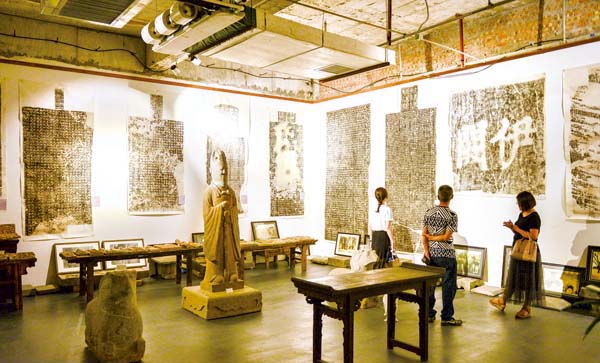
- Start with the steles. Read the inscriptions in the courtyards. They record patronage, repairs, and the names of donors. Dates on steles reveal when each narrative layer was added.
- Identify the oldest standing structure. The Qiyun Pagoda is the best candidate. Note its brick construction and Jin-dynasty style. Compare it to the timber halls around it.
- Look for the white horse motif. Stone horses stand near the entrance. They are not Han sculptures. They are later additions that visualize the founding story. Treat them as narrative markers, not historical artifacts.
- Check the hall dedications. The names of halls — Great Buddha, Mahavira — reflect mature Mahayana Buddhism, not the earliest phase of Chinese practice. Early worship likely centered on the Buddha, but the full pantheon developed over centuries.
- Compare with textual accounts. Bring a copy of the traditional founding story. Read it on site. Note which physical features match and which do not. The gaps are instructive.
This procedure works for any historical temple, not just White Horse. It trains you to read architecture as a layered document. Each layer records a different period’s priorities.
Common Mistakes When Interpreting the Temple’s History
- Assuming the current buildings are Han-era. They are not. The oldest standing structure is the Jin-dynasty pagoda. The halls are mostly Ming and Qing.
- Treating the dream story as a literal court record. It appears in later sources. It is a foundation legend, not a contemporary diary entry.
- Ignoring the translation function. The temple’s early importance lay in textual work. Focusing only on architecture misses half the story.
- Expecting a single “original” temple. The site has been rebuilt repeatedly. There is no single Han building to discover.
- Overlooking the white horse symbolism. The horse is not decorative. It ties the temple to the story of scriptures arriving from the west.
Each of these mistakes leads to a distorted picture. The temple is not a fossil. It is a living institution with a long memory. Understanding that memory requires reading both texts and buildings critically.
Why the 68 CE Date Still Matters for Researchers and Visitors
The date’s importance is cultural, not archaeological. It marks a point of no return. After 68 CE, Buddhism in China had an address. Foreign monks knew where to go. Local rulers knew what to protect. The temple became a node in a network that stretched from India through Central Asia to the Han capital. That network carried more than texts. It carried art, ritual practice, and the idea of monasticism.
For researchers, the oldest temple in china offers a case study in how institutions construct their own histories. The founding narrative is a form of institutional memory. It selects certain details — the dream, the horse, the emperor — and omits others. The omissions are as telling as the inclusions. We hear little about the merchants who likely carried Buddhism before the official mission. We hear little about the local communities who first supported the monks. The official story focuses on the state, because the state’s backing is what made the temple durable.
For visitors, the temple offers a different kind of experience. It is not a ruin. It is an active monastery. Monks still live and practice there. The morning chanting, the incense, and the pilgrims are part of the site’s reality. The history is not behind glass. It is woven into daily life. That continuity is perhaps the strongest argument for the temple’s significance.
Decision Checklist for Historical Site Visits
Planning a visit to White Horse Temple or a similar site? Use this checklist to get more from the experience:
- Bring the founding story. Read it before arriving. Compare it to what you see.
- Check the stele dates. Inscriptions tell you when each part of the narrative was formalized.
- Ask about the translation hall. Does the current site mark where early translation work happened? If not, why?
- Look for later additions. Identify which features are Ming, Qing, or modern. This reveals what later patrons wanted to emphasize.
- Observe current use. How do monks and pilgrims interact with the historical spaces? That interaction is part of the temple’s ongoing story.
This checklist turns a passive visit into an active inquiry. You stop seeing a postcard and start seeing a historical argument.
The White Horse Temple’s claim to be the oldest temple in china is best understood as a tradition with deep roots. The 68 CE date, the imperial dream, and the white horse are not simply facts to accept or reject. They are elements of a narrative that has kept the site alive for centuries. Imperial patronage gave it legal standing. Translation work gave it intellectual weight. Rebuilding gave it physical continuity. Together, they created an institution that still functions today.
If you are researching the early transmission of Buddhism along the Silk Road, or planning a focused visit to Luoyang’s religious sites, start with the textual record before you arrive. The temple reads differently when you know which layers are Han, which are Jin, and which are Ming. For a deeper look at the translation tradition and the site’s role in early Chinese Buddhism, review the monastic chronicles and recent archaeological reports from the Luoyang region.