 By
By White Horse Temple Translation Legacy
Why did Buddhism survive in China when so many other foreign systems faded? The answer often starts with a translation problem. Before a single Chinese layperson could practice meditation or chant a sutra, someone had to render Pali, Sanskrit, and Prakrit terms into literary Chinese. The white horse temple in Luoyang sits at the center of that technical challenge. It was not simply a place of worship. It functioned as an early translation bureau, a philological workshop where foreign monks and local scholars wrestled with concepts that had no existing Chinese equivalent.
Understanding this legacy requires looking past the famous legend of the white horse carrying scriptures from the Western Regions. The more consequential story involves terminology, translation strategy, and the slow creation of a Buddhist vocabulary that ordinary Chinese readers could understand. For a researcher planning a visit, knowing this history changes what you see in the temple courtyards.
How Early Translators at White Horse Temple Established Buddhist Teaching in China
The first challenge was not linguistic. It was conceptual. Classical Chinese possessed a rich vocabulary for ethics, governance, and cosmology. But it lacked precise terms for Sanskrit ideas like dharma, nirvana, or prajna. The translators working near the white horse temple had to make a critical choice: borrow the sound of the Sanskrit word, or approximate its meaning using existing Chinese characters.
This decision affected everything downstream. A phonetic loan like niepan (涅槃) for nirvana preserved the foreign resonance but offered zero semantic clues to a Han dynasty reader. A semantic translation like “extinction of suffering” conveyed meaning but risked collapsing Buddhist concepts into native Daoist frameworks. Early translators at Luoyang experimented with both methods. The results shaped how Chinese audiences first encountered Buddhist thought.
Key Translation Parameters and Their Practical Effects
Here is what each technical parameter actually affected in practice — and what happened when a team got it wrong.
| Parameter | What It Controls | Failure Mode If Mishandled |
|---|---|---|
| Phonetic loan vs. semantic rendering | Whether a term sounds foreign or feels native to Chinese readers. | Pure phonetic loans produce unreadable texts; pure semantic loans erase doctrinal precision and blur Buddhism into Daoism. |
| Team composition | Whether a translation reflects both Indic source accuracy and idiomatic Chinese style. | A foreign monk working alone produces clumsy Chinese; a Chinese scholar working alone mistranslates technical Sanskrit compounds. |
| Source text selection | Which Buddhist schools and practices reached China first. | Translating only meditation manuals delays the arrival of philosophical treatises, skewing early Chinese Buddhism toward practice over doctrine. |
| Patronage stability | Whether a translation project survives political shifts or collapses mid-sutra. | Loss of a patron means incomplete canons, lost drafts, and translators forced to relocate. |
The early teams at the white horse temple settled on a hybrid approach. Core doctrinal terms were often transliterated phonetically, then glossed with short Chinese explanations. This preserved the authority of the Indian original while giving readers a foothold. Later translators like Kumarajiva would refine this method, but the basic architecture was tested first in Luoyang.
The Translation Workshop Model: Who Did What
Modern visitors often imagine a lone monk bent over a desk. The reality was closer to a small production team. A typical translation session near the white horse temple involved at least three roles.
- The reciter: A monk trained in memorized Sanskrit or Prakrit texts. He recited the source material aloud, since many early sutras were not yet written down in China.
- The interpreter: A bilingual figure who converted the recitation into rough spoken Chinese. This person needed enough Indic language training to catch nuance and enough Chinese fluency to avoid garbled syntax.
- The scribe-polishers: Local Chinese literati who took the rough Chinese and rewrote it into acceptable literary form. They fixed grammar, chose elegant characters, and ensured the text matched Han dynasty prose conventions.
This division of labor mattered. A translation produced by this method was not a single author’s work. It was a negotiated document. Disagreements over a term could stall a session for days. The resulting text bore the marks of those compromises — sometimes awkward, sometimes brilliantly clear.
For a visitor, this explains why different early Chinese sutras display wildly different styles. Some read like native Chinese philosophy. Others feel stiff and foreign. The difference was not the source text; it was the team composition and the translation choices they made.
Key Translators Associated with the Luoyang Tradition
The white horse temple tradition is often linked to the shadowy figures of the Eastern Han and Three Kingdoms periods. Records are fragmentary, but a few names recur in standard histories.
An Shigao
A Parthian prince who renounced his throne and traveled to Luoyang around 148 CE. An Shigao focused on meditation and breath-control texts. His translations are terse, almost telegraphic. He favored semantic rendering over phonetic loans, which made his work more readable but occasionally flattened technical distinctions. His influence shows in the practical, practice-oriented strain of early Chinese Buddhism.
Lokaksema
A Kushan monk who arrived in Luoyang around 167 CE. Unlike An Shigao, Lokaksema tackled Mahayana philosophical texts, including early Prajnaparamita literature. His translations are notoriously difficult — full of phonetic loans and unpolished syntax. But he introduced Chinese readers to concepts like emptiness and the bodhisattva path. His work demonstrates the trade-off between fidelity and readability. He chose fidelity, and his texts suffered in style as a result.
Dharmaraksha
Active slightly later, Dharmaraksha represents the maturation of the Luoyang translation tradition. He worked with larger teams and produced more polished texts. His translations of the Lotus Sutra and other Mahayana works circulated widely. He showed that a well-resourced team could produce both accurate and elegant Chinese.

Common Mistakes in Understanding the Translation Legacy
Visitors and students often carry several misconceptions about the white horse temple translation project. Correcting these changes how you interpret the site.
- Mistake: The temple translated the entire Buddhist canon at once. Reality: Early translation was piecemeal. Individual sutras arrived and were translated one at a time. There was no master plan to render the whole Tripitaka.
- Mistake: Translation happened inside the temple walls. Reality: The “temple” as a physical institution evolved gradually. Early translation work likely occurred in nearby residences or government-sponsored halls. The temple became a symbol of that work later.
- Mistake: The first translations were accurate by modern standards. Reality: Early translators had limited Sanskrit manuscripts and often worked from memory or Prakrit versions. Errors and omissions were common. Later generations spent centuries revising these texts.
- Mistake: Chinese scholars passively received Indian Buddhism. Reality: Chinese literati actively shaped translations. They chose which terms to use, which literary allusions to insert, and which passages to emphasize. The result was a genuinely Sino-Indian hybrid.
A Step-by-Step Procedure for Tracing the Legacy on Site
If you are planning a visit to the white horse temple, here is a concrete sequence for following the translation story through the physical space.
- Start at the main gate and read the stele inscriptions carefully. Look for references to early monks, not just the white horse legend. The inscriptions often mention translation activity in passing.
- Locate the Qiyun Pagoda and surrounding courtyards. While the pagoda postdates the Han dynasty, the area near it is traditionally associated with early monastic quarters. Imagine the workshop model here — reciter, interpreter, scribe.
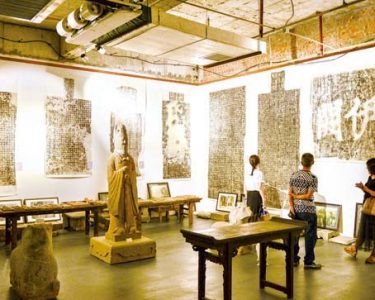
- Examine any displayed sutra fragments or calligraphy. Note whether terms are rendered phonetically or semantically. This tells you which translation philosophy dominated a given period.
- Compare the temple’s textual exhibits with a modern Chinese Buddhist sutra. The differences in terminology reveal the long history of revision that began at Luoyang.
- Ask a resident monk or guide about the temple’s role in the Han dynasty translation bureau. Not all guides know this angle. Asking the question frames your visit around scholarship rather than tourism.
Why the Translation Method Still Matters
The choices made by those early teams continue to shape Chinese Buddhism today. When a modern Chinese Buddhist chants Amitofo, they are using a phonetic loan that traces back to the early Luoyang approach. When a scholar debates the meaning of sunyata, they are engaging with a translation problem first confronted near the white horse temple.
The legacy is not just historical curiosity. It demonstrates a principle relevant to any cross-cultural knowledge transfer: terminology is never neutral. The words chosen to translate a concept determine how that concept is understood, practiced, and transmitted. The early translators at Luoyang did not simply move texts from one language to another. They built the conceptual infrastructure for a new religion in China.
For a researcher planning an itinerary, this background turns a standard temple visit into a focused investigation. You stop looking at buildings and start looking at decisions — the choice to transliterate, the choice to paraphrase, the choice to prioritize practice over philosophy. Those decisions echo through every hall.
Before you finalize your cultural itinerary, request a detailed historical briefing from a local Buddhist studies scholar or temple guide. Ask specifically about the Eastern Han translation teams and which sutras they produced. A targeted question gets you past the standard tourist narrative and into the philological history that makes the white horse temple significant.