
Blog
Why Your Search for Louyang Shows Two Different Worlds

Why Your Search for Louyang Shows Two Different Worlds
If your search for “louyang” has returned a confusing mix of ancient Chinese history and online gaming guides, you’ve encountered a common point of digital ambiguity. The term refers to two distinct entities: a real-world, historically significant city in China and a fictional town within the popular online game, Ragnarok Online. For B2B professionals conducting market research, supplier verification, or logistical planning, distinguishing between the two is not trivial—it’s essential for ensuring the accuracy of your data.
This confusion stems from a simple variation in romanization. The Chinese city is correctly spelled Luoyang, while the game developers used the alternative spelling Louyang. Search engines, designed to find relevant results even with minor misspellings, often present content for both. This guide provides the tools to instantly differentiate these results, ensuring your research remains focused on the correct geographical and commercial entity.
The Source of Confusion: Louyang vs. Luoyang Spelling and History
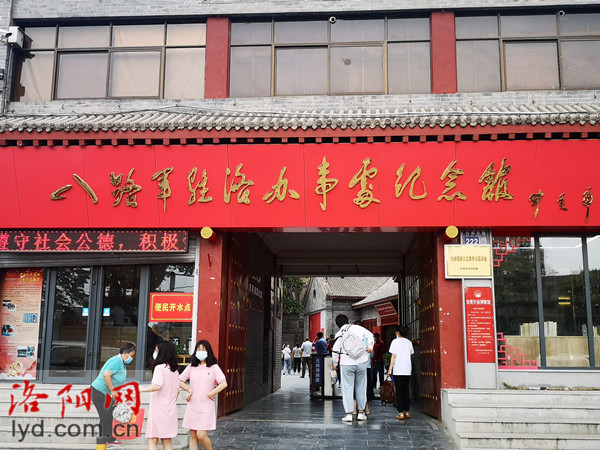
Understanding why this mix-up occurs begins with the Pinyin system, the official method for romanizing Chinese characters. The correct Pinyin for the city located in the Henan province of China is “Luoyang” (洛阳). It is one of the Four Great Ancient Capitals of China and a major industrial and cultural hub today.
The spelling “Louyang” is a non-standard, older romanization that has largely fallen out of use in official and academic contexts. However, its phonetic similarity made it a suitable and evocative name for the developers of the game Ragnarok Online. They created a fictional, China-themed town within their game world and named it Louyang. This act solidified the “Louyang” spelling’s association with the gaming world, creating a separate digital identity that now competes with the real city for search engine attention.
- Luoyang (洛阳): The official Pinyin spelling. This refers exclusively to the prefecture-level city in central China. It has a rich history spanning thousands of years and is home to numerous industries, UNESCO World Heritage Sites like the Longmen Grottoes, and a modern population.
- Louyang: The alternate, non-standard spelling. This is almost exclusively associated with the fictional location in Ragnarok Online. The in-game area features architecture, music, and characters inspired by ancient China, further linking it thematically to the real city.
For any business activity, from logistics to sourcing, using the correct “Luoyang spelling” is critical for accurate communication and documentation. Using the alternate spelling could lead to confusion with partners, shipping errors, or failed database lookups.
Comparison: How to Differentiate the City from the Game
When you encounter the term “Louyang,” you need a quick method to determine the context. Is it the major industrial city or the digital fantasy world? Getting this wrong can waste significant time, leading you down a rabbit hole of game quests instead of supplier data sheets. The following table breaks down the key signals that separate the two entities.
| Signal / Attribute | Louyang (Ragnarok Online) | Luoyang (Chinese City) |
|---|---|---|
| Entity Type | Fictional town and dungeon complex in a Massively Multiplayer Online Role-Playing Game (MMORPG). | Real-world prefecture-level city in Henan province, China. A major industrial, cultural, and historical center. |
| Associated Keywords | NPC, quest, guide, map, zeny, server, build, dungeon, field, RO. | Henan, industry, travel, airport, hotel, history, Longmen Grottoes, economy, population, zip code. |
| Visuals & Imagery | Animated screenshots, 2.5D sprite-based graphics, character art, fantasy architecture. | Real-world photographs of cityscapes, factories, historical landmarks, modern infrastructure, and people. |
| Geographic Context | Accessed via an in-game “Warp Agent” from other fictional towns. The Lou Yang map is a digital file. | Located on the central plain of China. Has a physical address, coordinates, and is accessible by plane, train, and road. |
| Information Sources | Gaming wikis (e.g., Fandom), fan sites, forums, Twitch, YouTube gaming channels. | Government websites (.gov.cn), encyclopedias (Wikipedia), news outlets, Google Maps, trade publications, travel agencies. |
| Core “Louyang Meaning” | A themed game area for players to complete quests, fight monsters, and acquire in-game items. | A historically significant capital city and a modern center for heavy industry, including manufacturing and technology. |
Decoding Search Results and Identifying Intent
Applying the knowledge from the comparison table allows you to quickly parse search engine results pages (SERPs) and filter out irrelevant content. When your research is time-sensitive, you can’t afford to click on every link. Use this checklist to evaluate search results for “louyang” or related terms at a glance.
Buyer’s Checklist for Identifying Search Result Context
-
Examine the URL and Domain:
- Is it a gaming site? Look for domains like
fandom.com,ratemyserver.net,divine-pride.net, or any URL containing “wiki,” “gaming,” or “RO.” These are definitively about Louyang Ragnarok Online. - Is it an informational or commercial site? Look for domains like
wikipedia.org,britannica.com,travelchinaguide.com, or news sites like Reuters and BBC. These refer to the city of Luoyang.
- Is it a gaming site? Look for domains like
-
Analyze the Page Title and Meta Description:
- Do they contain game-specific jargon? Words like “NPC List,” “Quest Guide,” “Dungeon Access,” or “Monster Database” are clear indicators of game content.
- Do they contain real-world terms? Phrases like “Economic Profile,” “Travel Information,” “Historical Significance,” or “Industrial Park” point directly to the Chinese city.
-
Review the Image Search Thumbnails:
- A quick switch to image results is often the fastest way to disambiguate. Are the images photos of streets, buildings, and landscapes? That’s the city of Luoyang.
- Are the images colorful, pixelated, or anime-style illustrations? That’s the game, Louyang.
-
Check for Map-Related Features:
- Does the search result include an interactive map widget from Google or Baidu Maps? This will always point to the physical city of Luoyang.
- Does the result mention “field maps,” “dungeon levels,” or show a stylized, non-geographic layout? This refers to the in-game Lou Yang map.
By consciously applying these filters, you can effectively teach yourself to ignore the digital noise and focus only on the results relevant to your business objectives.
Frequently Asked Questions About Louyang and Luoyang
Even with the right tools, some specific questions frequently arise. Here are direct answers to the most common points of confusion.
Is Louyang the same as Luoyang?
No, they are not the same, but one is based on the other. Luoyang is the correct, official name for the major city in Henan, China. Louyang is an alternative, non-standard spelling adopted by the video game Ragnarok Online for its China-themed town. Think of them as a real place and its fictional, digitally-named counterpart.
What is Louyang in Ragnarok Online?
In Ragnarok Online, Louyang is a town designed with aesthetics inspired by ancient China. It serves as a hub for players, offering services like item storage, shops, and access to nearby monster-filled areas (a field and a dungeon). Players visit Louyang to complete specific quests, fight unique monsters like the “Yao Jun” and “Zhu Po Long,” and explore its distinct environment, which includes a grand palace and a towering pagoda.
Why do search results show Louyang and Luoyang?
Search engines like Google use sophisticated algorithms that aim to understand user intent, even with misspellings. Because “Louyang” is phonetically very similar to “Luoyang” and was once a valid (though now outdated) romanization, the search engine assumes users might be looking for the Chinese city. However, due to the massive amount of content created by the Ragnarok Online player community over two decades, “Louyang” has also become a strong signal for the game. The algorithm therefore presents both sets of results, trying to satisfy either possible intent.
For any professional research, it is best practice to use the official spelling, Luoyang, to minimize irrelevant gaming results and improve the quality of your findings from the start.
Navigating the complexities of international information requires precision. If you encounter similar ambiguities in your sourcing or market research, our team can provide the clarity needed to make informed decisions.
About LyWOW Tours
LyWOW is a locally based travel agency in Luoyang, specializing in private tours for international travelers across Luoyang, Shaolin, Xi’an and Central China. English-speaking guides, flexible itineraries and door-to-door service.
Learn more about us or browse all our tours.