
 By
By Luoyang City Henan: A B2B Administrative Profile
Luoyang city Henan is a prefecture-level city situated in the western part of Henan province. For a B2B procurement professional, Luoyang is not a single point on a map. It is a complex administrative area comprising multiple districts and counties. Understanding this structure is the first step in verifying a potential supplier’s actual location and operational context. A factory address in “Luoyang” could mean a downtown research hub or a heavy-industry plant 80 kilometers from the city center. The administrative identity shapes logistics, regulatory oversight, and industrial capability.
We often see overseas buyers treating Luoyang as a monolithic urban zone. This assumption creates risk. The city governs a vast area where urban precision manufacturing and rural mineral processing coexist under the same municipal name. Our technical team has observed that knowing the exact district often clarifies a supplier’s access to raw materials, labor pools, and transport gateways. Let us walk through the administrative map without the tourist brochure language. The goal here is clarity for sourcing decisions.
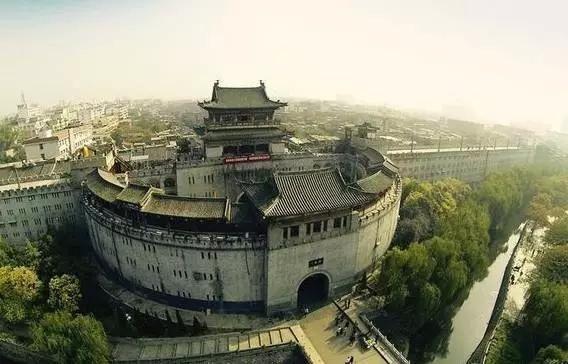
Luoyang’s Position Within Henan Province
Luoyang Henan China sits along the middle reaches of the Yellow River. The city’s administrative borders stretch from the river’s southern bank deep into the surrounding mountainous terrain. This geographic spread directly influences the types of manufacturing you will find. The Luoyang city location places it at a historical intersection of raw material corridors. It is not a coastal city. It relies on dense rail and expressway networks to move heavy machinery and components to major ports.
When a supplier lists their address simply as “Luoyang, Henan,” you need more granular data. The prefecture’s total administrative area covers over 15,000 square kilometers. This scale means two suppliers both claiming to be in Luoyang might operate in fundamentally different economic ecosystems. One might be inside a state-level industrial zone with streamlined customs clearance. Another might be in a rural county with lower operating costs but longer logistics chains. We always recommend mapping the supplier’s registered address to the specific administrative division before signing any agreement.
The jurisdiction of the Luoyang municipal government extends over a diverse landscape. The urban core is dense and service-oriented. The periphery is where heavy industry and raw material extraction dominate. This is a common pattern in Chinese prefecture-level cities, but Luoyang’s historical role as a heavy industry base makes the contrast particularly sharp.
Decoding Luoyang Administrative Divisions
The Luoyang administrative divisions system is the key to unlocking local supplier verification. The prefecture-level city currently governs seven urban districts and seven counties. This 7+7 structure is not static. Administrative adjustments occur periodically, and a supplier’s stationery might reflect an outdated district name. We have seen this create confusion during audit preparations.
Here is a practical breakdown of the current structure. Use this table as a reference when you see a full address on a supplier’s business license.
| Type | Name | B2B Sourcing Context |
|---|---|---|
| Urban District | Jianxi District | Heavy machinery, bearing research, state-owned enterprise clusters |
| Urban District | Xigong District | Commercial center, logistics dispatch offices, some precision manufacturing |
| Urban District | Laocheng District | Historic core, tourism commerce, limited large-scale export manufacturing |
| Urban District | Chanhe District | Ethnic Hui community, food processing, mixed light industry |
| Urban District | Luolong District | New administrative center, R&D parks, modern service industries |
| Urban District | Mengjin District | Petrochemical processing, advanced equipment manufacturing, north of Yellow River |
| Urban District | Yanshi District | Light industry, machinery accessories, eastern gateway to Zhengzhou |
| County | Xin’an County | Aluminum processing, raw materials, energy-intensive industries |
| County | Luanchuan County | Molybdenum and tungsten mining, mineral processing |
| County | Song County | Mineral resources, traditional Chinese medicine materials |
| County | Ruyang County | Building materials, glass manufacturing, agricultural by-products |
| County | Yiyang County | Equipment parts, chemical materials, emerging industrial parks |
| County | Luoning County | Timber processing, agricultural goods, light manufacturing |
| County | Yichuan County | Aluminum and coal-related industries, mechanical processing |
This table is a starting point for due diligence. A factory in Jianxi District likely has deep ties to legacy heavy industry supply chains. A facility in Luanchuan County is almost certainly connected to the mining sector. The administrative label gives you a hypothesis to test during supplier qualification.
Navigating the Luoyang Industrial Districts
The Luoyang industrial districts do not always align perfectly with administrative boundaries. Some development zones span multiple districts or operate with special economic management rights. However, understanding the administrative map helps you locate these zones. The Luoyang National High-Tech Industrial Development Zone, for example, sits primarily within Jianxi District. This zone hosts many of the city’s advanced bearing and machinery exporters.
We find that buyers often confuse the industrial zone management committee with the district government. They are separate entities. A supplier might be registered with a district-level administration but operate physically inside a nationally recognized development zone. This dual oversight can affect regulatory compliance, tax status, and even export licensing. When you review a supplier’s qualifications, check for both the administrative district registration and the industrial park affiliation. This dual check reveals a lot about a company’s operational maturity.
The shift of municipal government functions to Luolong District has also created a new axis of service-oriented business. Many companies keep their sales offices there while maintaining production bases in Yanshi or Xin’an. This split operation is a practical response to Luoyang’s administrative geography. A modern office address does not guarantee a modern factory. Request the production site address separately and verify it against the county or district list.
What is Luoyang City in Henan Known For?
From a B2B sourcing perspective, the question what is Luoyang City in Henan known for has a direct answer: heavy machinery and industrial bearings. The city’s manufacturing identity was built around large state-owned enterprises established decades ago. These enterprises spun off countless smaller private workshops and component makers. The ecosystem is deep. You can find raw forging, precision grinding, and heat treatment services all within a tight radius in Jianxi District.
Beyond machinery, the city is a significant node for non-ferrous metals processing. The surrounding counties feed raw minerals into city-based smelting and refining operations. This industrial chain is less visible to overseas buyers of finished goods, but it underpins much of the local economy. For a buyer of castings, forgings, or metal components, Luoyang offers a vertically integrated supply base that is hard to replicate elsewhere in the region.
The city is also known for peony cultivation, a fact that appears in every general guide. We mention it only because the annual Peony Cultural Festival in April can affect business schedules. Hotel availability drops, and some factory managers may be less available. Plan your visits accordingly. It is a cultural reality with a minor business impact.
Which Province is Luoyang City In and Why It Matters
The answer to which province is Luoyang City in is Henan. But the implication for trade is the city’s position relative to provincial logistics arteries. Henan province is a central plains transport hub. Luoyang connects to the provincial capital, Zhengzhou, via high-speed rail and expressway. Zhengzhou is a major air freight center and rail hub for China-Europe freight trains. Your supplier’s ability to get goods to Zhengzhou efficiently is a direct function of their location within Luoyang’s administrative area. A factory in Yanshi District is closer to Zhengzhou than one in Luanchuan County. Transit time and domestic freight cost calculations must account for this.
Henan’s provincial government also sets industrial policies that cascade down to Luoyang. Environmental enforcement, for example, can be particularly strict in certain seasons. A supplier operating in a county-level administrative area might face different inspection schedules than one in a centrally managed development zone. Provincial directives on energy consumption also hit heavy industry first. Luoyang’s status as a prefecture-level city within Henan means it is subject to these provincial policy swings. Understanding this administrative hierarchy helps you anticipate supply chain disruptions.
What Districts Are in Luoyang: A Practical Verification Checklist
A direct question we receive is what districts are in Luoyang. The seven urban districts are Jianxi, Xigong, Laocheng, Chanhe, Luolong, Mengjin, and Yanshi. The seven counties are Xin’an, Luanchuan, Song, Ruyang, Yiyang, Luoning, and Yichuan. Use this list as a verification checklist. When a supplier provides a business license, the registered address must contain one of these fourteen names. If you see a district name not on this list, it might be an old administrative designation or a simple error. Both require clarification.
We have also seen suppliers list their address as “Luoyang City, Henan Province” without a district. This is incomplete. A complete legal address in China begins with the province, then the prefecture-level city, then the district or county, then the street. Insist on the full address. The absence of a district-level identifier often means the supplier is operating from a rural township and is being vague about it. This vagueness does not automatically indicate a bad supplier, but it is a red flag for transparency.
The administrative structure also affects how you send legal documents. Court jurisdictions and arbitration enforcement follow district lines. If a dispute arises, you will be dealing with the local administrative apparatus of that specific district or county. Knowing the precise division is not just academic. It has hard legal and commercial consequences.
Using Administrative Knowledge in Supplier Evaluation
We integrate this administrative profile into our supplier evaluation process. The location tells a story. A precision bearing workshop in Jianxi District inherits a different industrial culture than a metal fabricator in Yichuan County. The Jianxi workshop likely has access to a pool of experienced machinists trained in state-owned factories. The Yichuan fabricator might compete on cost and flexibility. Neither is inherently better. The match depends entirely on your product requirements and volume.
Logistics cost modeling also starts with the administrative map. A heavy casting shipped from Xin’an County must travel by road to a rail terminal. A smaller, high-value component from Luolong District might move by air freight from Zhengzhou. The internal Luoyang transport leg varies significantly by district. We recommend asking suppliers for the exact kilometer distance from their factory to the nearest highway entrance. This single number often reveals more about logistics efficiency than any glossy brochure.
Finally, the administrative profile helps you understand a supplier’s relationship with local government. A company in a state-level development zone typically has a dedicated liaison office that handles customs, tax, and compliance. A company in a rural county deals with a more generalized county administration. The level of bureaucratic support differs. For complex export documentation, the zone-based supplier often has smoother processes. This is a practical consideration that does not appear on a certificate of incorporation but emerges directly from the administrative geography.
We hope this administrative profile provides a useful framework. The next step is to apply this structure to your specific supplier list. Map the addresses. Note the districts. Ask about the transport distances. The administrative identity of Luoyang city Henan is a data layer that, once decoded, adds significant rigor to your sourcing decisions.
