
 By
By Luoyang Grottoes Longmen Reveal How Dynasties Shaped a Sacred Landscape
Luoyang Grottoes Longmen is a major Buddhist rock-cut complex beside the Yi River in Henan, China. Its importance lies not only in the surviving statues and inscriptions, but also in the way successive rulers used the site to express faith, authority, memory, and political renewal. For researchers, cultural-tourism planners, educators, and first-time visitors, the Luoyang Grottoes Longmen timeline offers a practical way to understand why the landscape appears layered rather than uniform.
The site developed over centuries. Different patrons commissioned caves, images, temples, and inscriptions, and each phase reshaped the meaning of what came before. As capitals moved, religious influence changed, and political structures shifted, new construction altered the wider sacred landscape. This overview traces that process through a dated comparison of the principal Longmen Grottoes dynasties.
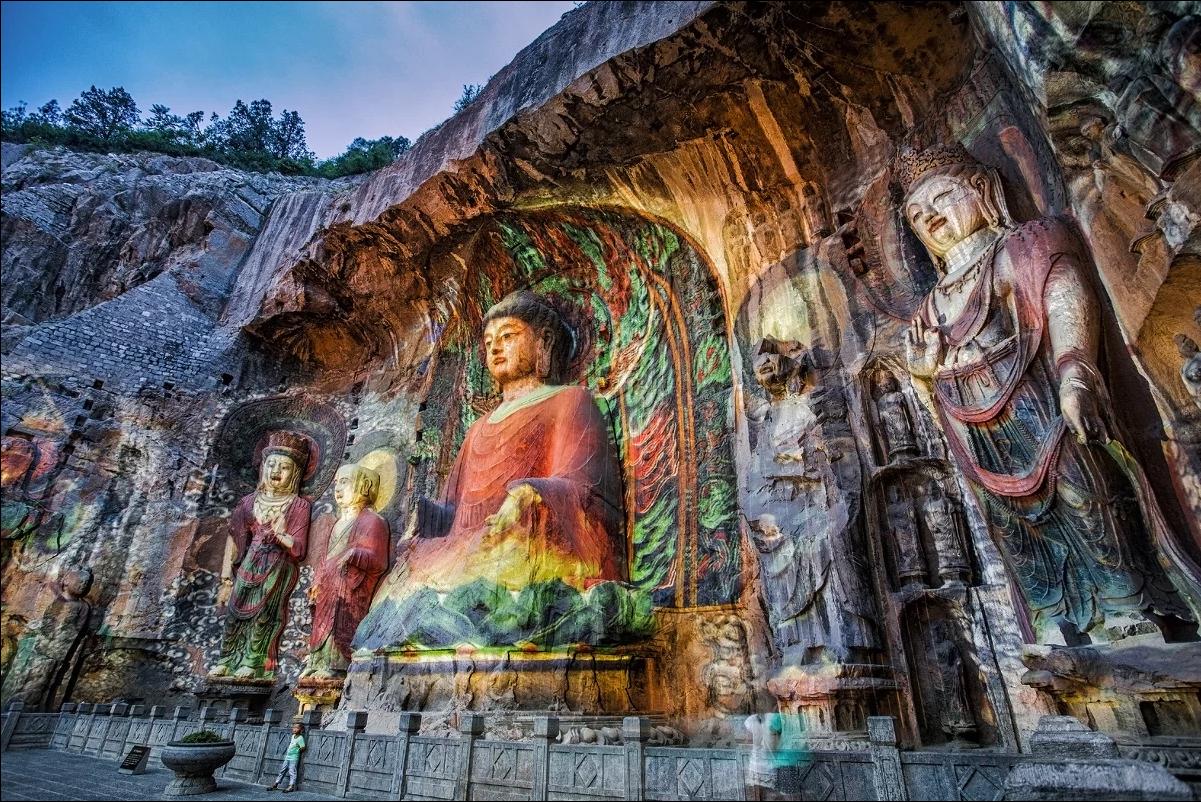
What the Luoyang Grottoes Longmen Timeline Explains
A single visit can make the caves seem as though they belong to one artistic period. They do not. The Luoyang Grottoes Longmen complex is better understood as a historical record in stone. Its carvings document changing approaches to Buddhist devotion, imperial representation, donor visibility, and artistic style.
The earliest large-scale phase followed the Northern Wei court’s relocation of its capital to Luoyang. Later rulers expanded the site, repaired earlier sanctuaries, and commissioned increasingly ambitious sculptures. The Tang period produced some of the most recognizable monumental works, while later dynasties preserved, adapted, or supplemented the religious landscape.
For context, Buddhist art often connects religious imagery with the values of its patrons. At Longmen, that connection is especially visible because inscriptions identify donors, commemorate events, and place sculptures within a changing political environment. The result is both a sacred site and a long-form historical archive.
A Dated Dynasty-by-Dynasty Timeline Linking Major Caves, Patrons, Construction Phases, and Historical Turning Points
The table below brings the main stages of the Luoyang Grottoes Longmen chronology into a single comparison. Dates are conventional historical markers for major phases; individual caves could remain active, altered, or repaired beyond the period in which work first began.
| Dynasty and date | Major caves or areas | Principal patrons | Construction phase | Historical turning point |
|---|---|---|---|---|
| Northern Wei, 493–534 | Guyang Cave, Lotus Cave, early central cliff sanctuaries | Emperor Xiaowen, the court, aristocratic and religious donors | Large-scale carving begins after the capital moves to Luoyang; early inscriptions and canonical images establish the site’s visual language. | The court’s relocation strengthens Luoyang as a political and Buddhist center. |
| Eastern Wei, 534–550 | Existing Northern Wei caves and associated niches | Regional elites, monks, and continuing local patrons | Earlier traditions continue while political authority becomes more divided. | The Northern Wei political order fragments, changing the relationship between court sponsorship and local devotion. |
| Northern Qi, 550–577 | Additional niches and continued work near established sanctuaries | Royal and regional patrons | Carving and devotional activity persist, although the record is less dominated by one unified capital court. | Competing states maintain Buddhist patronage as a source of legitimacy. |
| Sui, 581–618 | Binyang Cave and earlier foundations receiving attention | Imperial authorities and elite donors | Projects begun in earlier periods are completed or reinterpreted under a reunified empire. | Political reunification restores a broader imperial framework around Luoyang. |
| Tang, 618–907 | Fengxian Temple, Binyang Cave, Xiangshan area, and many donor caves | Emperor Gaozong, Empress Wu Zetian, court officials, nobles, monks, and private donors | Monumental images and dense donor activity expand the scale and social range of the complex. | Tang imperial power and religious patronage produce some of the site’s most influential works. |
| Song, 960–1279 | Earlier caves, inscriptions, temples, and selected repairs | Local officials, religious communities, and regional patrons | Maintenance and continued worship keep the site active after the Tang period. | The caves remain a living religious landscape rather than a closed ancient monument. |
| Later imperial periods, from the Yuan through the Qing | Existing sanctuaries, temple areas, inscriptions, and repaired surfaces | Local religious communities, officials, and individual donors | Preservation, adaptation, and occasional additions shape the later appearance of the site. | Longmen’s meaning shifts from an active imperial project toward inherited cultural and religious heritage. |
This comparison clarifies why the Luoyang Grottoes Longmen should not be assigned to one dynasty alone. The Northern Wei created the foundation of the monumental program, but later rulers gave the site new political and devotional meanings. The Tang phase, in particular, transformed the scale of imperial representation without erasing earlier Northern Wei traditions.
Longmen Grottoes History Through Its Major Construction Phases
Northern Wei foundations
The first decisive phase began after Emperor Xiaowen moved the Northern Wei capital to Luoyang in 493. A capital required religious institutions, ceremonial spaces, and visible expressions of imperial virtue. Carving sanctuaries into the cliffs near the city served several purposes at once: it supported Buddhist practice, demonstrated court patronage, and linked the ruling house with a sacred landscape.
Guyang Cave is central to this early phase. Its inscriptions and images show how elite donors participated in a culture that linked personal merit with public religious display. Northern Wei style is often associated with elongated figures, controlled drapery, and a formal visual language shaped by the court. These characteristics help researchers distinguish the first major layer of the Longmen cave chronology.
Transition and continuity
Political division after the Northern Wei did not end activity at the site. Eastern Wei and Northern Qi patrons continued to support Buddhist images, although sponsorship became more dispersed. The cave complex therefore preserves both continuity and change. Older shrines remained meaningful, while new niches reflected the priorities of regional officials, monks, families, and other donors.
Sui reunification created another transition. Projects associated with earlier periods could be completed within a newly restored imperial order. Binyang Cave is especially useful for considering this overlap because its history extends across political phases rather than fitting neatly into a single reign.
Tang imperial expansion
The Tang dynasty brought a fresh scale of ambition. The most famous example is Fengxian Temple, whose monumental ensemble is associated with Emperor Gaozong and the patronage of Empress Wu Zetian. Work on the principal images took place in the seventh century, when court sponsorship could mobilize resources for large, highly visible religious projects.
The central Vairocana image is often discussed as a statement of sacred kingship, imperial presence, and religious authority. Its scale and placement make the relationship between patronage and representation especially clear. The Tang contribution to the Luoyang Grottoes Longmen was not simply an expansion in size; it also broadened the visual strategies used to express political and spiritual power.
At the same time, the Tang caves preserve evidence of participation beyond the imperial household. Officials, nobles, monastics, and private donors commissioned images and inscriptions. This broader donor network makes Longmen valuable for studying social history as well as court history.
Why the Longmen Grottoes Dynasties Matter to Interpretation
The Longmen Grottoes dynasties matter because each period changed the relationship between image, patron, and place. A statue is not only an isolated artwork. It may also record a ruler’s religious policy, a family’s act of devotion, a monk’s institutional network, or a community’s response to political change.
That layered character helps explain why the Luoyang Grottoes Longmen are useful for more than a basic sightseeing itinerary. A researcher can compare inscription styles across periods. A cultural institution can explain how imperial sponsorship differed from private devotion. A visitor can read the cliffs as a sequence of decisions rather than as a collection of unrelated carvings.
The chronology also guards against a common misunderstanding: later work did not simply replace earlier work. Instead, new patrons reused a respected sacred setting. They added images beside older ones, completed unfinished projects, restored damaged areas, and created new visual statements within an established religious landscape.
Frequently Asked Questions About the Longmen Cave Chronology
When were the Longmen Grottoes built?
The main construction program began in 493 during the Northern Wei period, after the imperial capital moved to Luoyang. Carving, inscription, worship, repair, and patronage continued across later dynasties, particularly during the Tang period. Therefore, the Luoyang Grottoes Longmen are the result of a long development process rather than one short building campaign.
Which dynasties built Longmen Grottoes?
The Northern Wei established the principal early phase. Eastern Wei, Northern Qi, and Sui patrons continued or completed work in connected areas. Tang rulers and donors created major monumental ensembles and many additional caves. Song and later imperial-period communities maintained, repaired, and adapted the site. In this sense, the Luoyang Grottoes Longmen reflect multiple dynasties, with the Northern Wei and Tang phases usually receiving the greatest attention.
How old are the Longmen Grottoes?
The earliest major carvings date to the late fifth century, making the oldest substantial phase more than fifteen centuries old. The complete site is younger than its first carvings in one sense because it continued to develop for many centuries. Its age should therefore be described in two ways: the earliest surviving program belongs to the Northern Wei, while the broader complex records a much longer history of use and change.
Are the Luoyang Longmen Caves all from the same period?
No. The Luoyang Longmen Caves contain work from several historical periods. Their styles, inscriptions, donor groups, and architectural settings reflect different moments in Chinese political and religious history. Reading the site chronologically is more accurate than treating every cave as part of one unified artistic campaign.
Using This Timeline Before Research or a Visit
Begin with the political frame: Northern Wei capital relocation, later reunification under the Sui, and Tang imperial expansion. Then compare a major imperial commission with a smaller donor cave. This approach reveals how scale, inscription, location, and subject matter can shift between patronage contexts.
For a research project, organize notes under four headings: dynasty, patron, cave or temple area, and historical purpose. For cultural interpretation, explain both continuity and change. The Luoyang Grottoes Longmen are compelling precisely because they preserve a conversation among dynasties, religious communities, and individual donors.
The most useful conclusion is simple: Longmen is not a single moment carved into rock. It is a chronological landscape in which political change, Buddhist devotion, and artistic innovation remain visible together. Understanding that sequence turns the Longmen Grottoes history from a list of dates into a clearer account of how a sacred site acquired its enduring form.
Seen through the Longmen cave chronology, every major cliff face becomes evidence of a choice: who sponsored it, which tradition it continued, and what new political or religious message it carried. That is the central value of the Luoyang Grottoes Longmen timeline.
