
 By
By Longmen Grottes: Name, Meaning, and Correct Spelling
Longmen Grottes is a common misspelling of Longmen Grottoes, one of China’s most significant ancient Buddhist cave art sites. The term arises from a direct, though incorrect, translation of the French word “grottes” (meaning caves) into English-language searches. For B2B travel planners, cultural exchange coordinators, and heritage researchers, using the precise terminology is the first step in building credible itineraries and academic proposals. This guide resolves the naming confusion, clarifies the official designation, and connects you to the correct cultural reference point.
What Are the Longmen Grottes? Clarifying the Spelling
When a procurement manager searches for “what are the Longmen Grottes,” they are likely preparing a cultural brief or a group travel package. The immediate answer is straightforward: it is a misspelling. The correct English term is Longmen Grottoes. The word “grottoes” refers to small, picturesque caves, often artificial and decorated. The French term “grottes” shares the same root but is not the accepted English nomenclature in official UNESCO documentation, Chinese government tourism materials, or international academic journals.
This linguistic overlap is understandable. In Romance languages, the word for cave is very similar. An Italian planner might naturally type “Grotte di Longmen,” just as a French speaker might search “Grottes de Longmen.” However, for all English-language documentation—from visa support letters to request for proposals (RFPs)—the standard is “Longmen Grottoes.”
Using the term Longmen Grottes in a formal document signals a lack of destination-specific expertise. For a B2B operator, this small detail can erode trust with local ground handlers in Henan province. We recommend standardizing your internal databases with the primary key “Longmen Grottoes” while keeping the variant “Longmen Grottes” as a redirect tag in your search marketing campaigns to capture early-stage research traffic.
Terminology Comparison: Grottes, Grottoes, and Caves
To eliminate internal confusion across multilingual teams, it is useful to distinguish precisely between the related terms. The table below clarifies the usage of Longmen Grottes, Longmen Grottoes, Longmen Caves, and the official geographic designation.
| Term | Usage Context | Official Status | Typical User Profile |
|---|---|---|---|
| Longmen Grottes | Search engine misspelling; direct French/Italian translation. | Incorrect for English use. | European leisure travelers; early-stage researchers. |
| Longmen Grottoes | UNESCO listing; academic papers; official tourism. | Correct standard English term. | Academics; B2B travel buyers; government agencies. |
| Longmen Caves | Casual conversation; simplified news articles. | Acceptable informal variant. | General media; primary education. |
| Luoyang Longmen Grottoes | Geographic disambiguation; logistics planning. | Full official name with city. | Logistics coordinators; transport planners. |
For B2B communications, we strongly advise using Luoyang Longmen Grottoes on first reference in any itinerary or contract. This naming convention immediately clarifies the location for logistics partners. Luoyang is a major city in Henan province, and adding it removes any ambiguity with other “Longmen” sites in China, such as the Longmen Mountain in Shanxi.
Where Are the Longmen Grottoes Located?
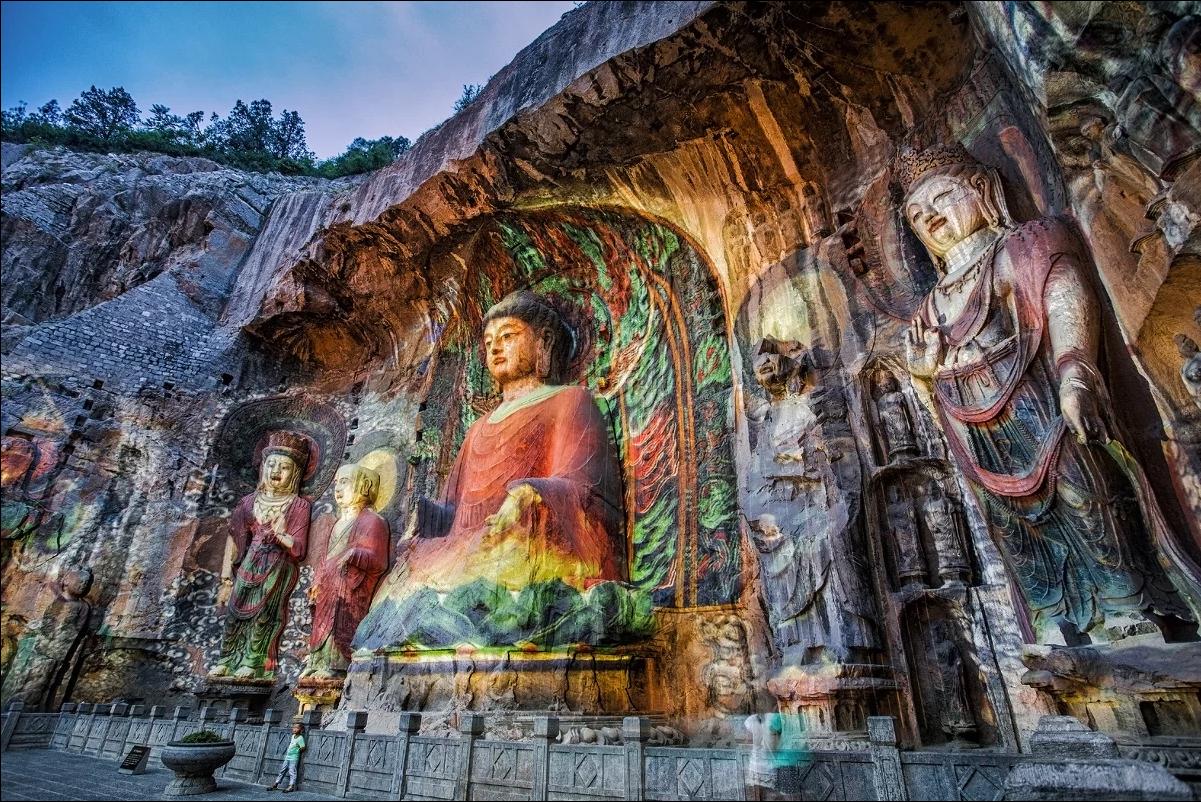
The question “where are the Longmen Grottoes located” is fundamental to logistics planning. The site sits approximately 12 kilometers south of the city of Luoyang in Henan province, central China. The grottoes are carved into the limestone cliffs along the banks of the Yi River. The site stretches for about one kilometer, creating a dramatic natural gallery of ancient stonework.
For B2B partners arranging transport, the nearest major aviation hub is Zhengzhou Xinzheng International Airport (CGO), followed by a high-speed train connection to Luoyang Longmen Station. The station name itself is a useful landmark—it uses the correct English spelling and sits conveniently close to the site. When preparing a request for proposal for ground transport, specifying “transfer from Luoyang Longmen Station to the Longmen Grottoes UNESCO site” leaves no room for driver error.
The location is not just a point on a map. It is a strategic stop on the classic “Three Grottoes” cultural route, alongside Yungang and Mogao. For a B2B cultural tour operator, understanding this geographic link allows for the creation of a high-value, multi-day heritage circuit. Our team often advises partners that the Luoyang area also includes the White Horse Temple, allowing for a dense, two-day itinerary that maximizes cultural depth while minimizing dead transit hours.
Longmen Grottoes China: A UNESCO World Heritage Asset
When we talk about Longmen Grottoes China, we are addressing a pinnacle of human artistic achievement. The site contains over 2,300 caves and niches carved into the steep limestone cliffs. Inside, there are more than 100,000 statues of the Buddha and his disciples, ranging in size from a few centimeters to the monumental 17-meter high Vairocana Buddha. This is not just a tourist stop; it is a massive, open-air museum of Tang Dynasty aesthetics.
For B2B buyers curating high-end cultural experiences, the value proposition of Longmen is unmatched. The craftsmanship represents the zenith of Chinese stone carving, a skill directly relevant to industries concerned with precision, detail, and material integrity. The sheer scale of the project—a continuous effort across multiple dynasties—mirrors the long-term planning required in major infrastructure or manufacturing contracts. When we present Longmen to our partners, we frame it as a case study in sustainable project management spanning centuries.
The site earned UNESCO World Heritage status in 2000. The official UNESCO citation uses the spelling “Longmen Grottoes.” This is the definitive source for name verification. Any B2B partner can confidently cite this standard in their marketing materials. For further reading on the historical context, UNESCO provides detailed documentation that can be referenced in client-facing cultural briefs.
Why the Spelling Matters for B2B Research
A single spelling error might seem trivial, but in the context of B2B exports and cultural exchange, precision is a signal of professionalism. Imagine a tour operator presenting a proposal to a university alumni travel club. The proposal uses “Longmen Grottes” throughout. A well-read member of the club board might question the operator’s firsthand knowledge of the destination. Trust erodes. The contract goes to a competitor who used the correct term, “Longmen Grottoes.”
Furthermore, search engine algorithms distinguish between these terms. Content optimized for Longmen Grottes captures users who are still in the definition phase. Content for Longmen Grottoes captures users ready to book or plan. A sophisticated B2B content strategy must cover both. We maintain a dual-layer approach: our FAQ and definition pages target the misspelling, while our core service pages and case studies use the official terminology. This ensures we capture the entire sales funnel, from the first confused search to the final booking confirmation.
Internal training is also crucial. Sales teams must be fluent in the correct nomenclature. When a client asks, “Is Longmen Grottes the correct spelling?” the representative should not just say no. They should provide a brief, value-added explanation: “The French influence sometimes leads to that spelling, but the official English name is Longmen Grottoes. We use the UNESCO standard in all our documentation to ensure smooth permit processing.” This transforms a simple correction into a demonstration of expertise.
The Origin of the “Longmen Grottes” Misspelling
Why does this specific error persist? The word “grotto” derives from the Italian “grotta,” via Latin. The French “grotte” is a direct cognate. For many European travelers, “grottes” is the intuitive plural. When these travelers search for the site in English, their brain defaults to the familiar spelling. This is especially common among French, Belgian, and Swiss travel planners.
Additionally, some outdated travel guides and poorly translated websites perpetuate the error. A B2B content manager might inadvertently import the term “Longmen Grottes” from an old database. We recommend a systematic audit of all digital assets. Search your internal catalogs for “Longmen Grottes” and replace it with the standard term in all client-facing fields. Keep the misspelling only in backend meta-tags and hidden keywords if your analytics show significant traffic from that source.
The confusion is also fed by direct translations of Chinese characters. The Chinese name, 龙门石窟 (Lóngmén Shíkū), translates literally to “Dragon Gate Stone Caves.” The word “caves” is broad. The choice of “grottoes” in the official English name was a deliberate stylistic decision to convey the artistic and religious sanctity of the space, distinguishing it from a natural cavern. Understanding this nuance helps B2B storytellers craft more compelling narratives around the destination.
Integrating Longmen Into Cultural Itineraries
Beyond the name, the practical value for B2B partners lies in itinerary design. The Longmen Grottoes are not a standalone attraction. They are the anchor of a broader Luoyang cultural experience. A standard half-day visit allows guests to see the core西山 (West Hill) caves. A full-day, in-depth program can include a visit to the East Hill, a panoramic view from the opposite bank, and a night tour where the caves are dramatically illuminated.
For high-end B2B clients—such as luxury travel designers or corporate retreat planners—we recommend arranging a private lecture with a local conservation expert. This adds an educational layer that generic group tours lack. The topic of stone preservation and weathering at the site can also be framed as a fascinating parallel to modern material science challenges. The ancient artisans chose limestone for its workability but now face the long-term costs of that choice, a trade-off familiar to any engineer.
Accessibility is another key B2B planning point. The site involves significant walking on uneven stone paths. While some areas have been retrofitted with ramps, full wheelchair access across the entire cliff face is not possible. Transparent communication about these limitations is essential for building trust with clients who have mobility concerns. We always provide a detailed physicality rating in our partner-facing trip notes.
Frequently Asked Questions About the Longmen Grottes
What are the Longmen Grottes?
The term Longmen Grottes refers to a UNESCO World Heritage site in China, more correctly known as the Longmen Grottoes. It is a vast complex of Buddhist cave sculptures carved into limestone cliffs. The site features tens of thousands of statues, making it one of the finest examples of Chinese Buddhist art. The name “Grottes” is a French-language variant not used in official English documentation.
Is Longmen Grottes the correct spelling?
No, Longmen Grottes is not the correct standard English spelling. The officially recognized English spelling is “Longmen Grottoes.” While “grottes” is correct in French, all English academic, governmental, and tourism authorities use “Longmen Grottoes.” Using the correct spelling is critical for professional credibility in B2B travel and research contexts.
Where are the Longmen Grottoes located?
The Longmen Grottoes are located 12 kilometers south of Luoyang City in Henan Province, China. They stretch along the banks of the Yi River. The nearest major transport hub is Luoyang Longmen Station for high-speed rail. For more context on this geographic area, you might explore resources on Luoyang’s historical significance.
Conclusion: Precision in Language, Precision in Service
The journey from a simple query about the Longmen Grottes to a fully realized visit to the Luoyang Longmen Grottoes begins with correct terminology. For B2B professionals, this precision is more than academic. It is the foundation of clear logistical planning, credible client communication, and effective digital marketing. By understanding the distinction between the French-influenced misspelling and the official UNESCO designation, you position your business as a knowledgeable and reliable partner.
We encourage all our partners to update their internal style guides. Replace “Longmen Grottes” with “Longmen Grottoes” in all public materials. Use “Longmen Caves” only as an informal explanatory note. And always prefix the site with “Luoyang” when communicating with logistics providers. This small investment in linguistic accuracy pays dividends in operational efficiency and brand authority.
